

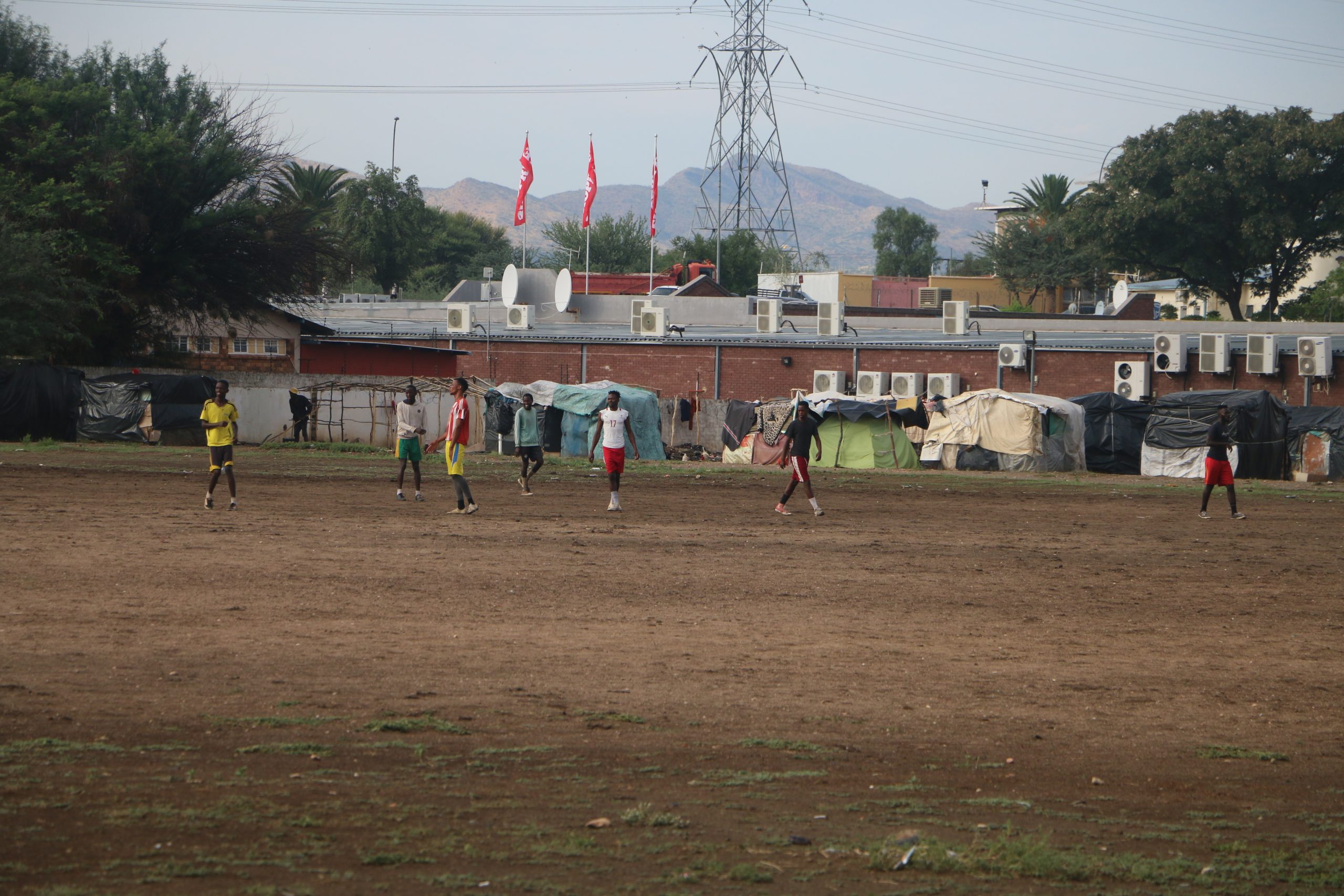

As Namibia marks 36 years of independence, questions continue to arise about whether the country’s sports sector has truly progressed or stagnated.
This is particularly when it comes to infrastructure development, athlete support systems and the overall growth of the industry.
While Namibia has produced internationally recognised athletes and memorable sporting achievements, concerns remain about inadequate facilities, limited funding and the absence of structured grassroots development programmes.
New Era engaged former sports journalists Carlos Kambaekwa and Kaino Nghitongo as well as sports consultant Mathew Haikali to reflect on the progress, achievements and challenges that have shaped Namibian sport since independence in 1990.
Infrastructure concerns
Veteran sports journalist Carlos Kambaekwa described the state of sports infrastructure in the country as a “painful experience”.
He said Namibia has struggled to build new facilities, while existing ones continue to deteriorate due to poor maintenance.
“We have not been able to build new sport facilities, whilst the little we had been gravely neglected because of poor maintenance,” he said.
Kambaekwa added that the infrastructure tender process is often flawed, with contracts sometimes awarded to contractors who deliver substandard work.
“There are hopelessly too many shortcuts when it comes to the tender process for infrastructure, resulting in tenders being awarded to the wrong constructors doing substandard work,” he noted.
He stressed that there is often confusion between the concepts of development and transformation in sport.
He added that development should focus on talent identification and structured nurturing of athletes, while transformation should aim at giving opportunities to disadvantaged athletes who lack the means to compete on equal footing.
“Development programmes are a hoax when they are not properly designed for long-term assessment. You cannot have a two-day gathering and call it development. It should be a monitored process over a certain period,” he said.
Decline
Kambaekwa also expressed concern about the state of school sport, saying it has lost its competitive edge, particularly in public schools.
“We have the Namibia Schools Sports Union (NSSU) with no defined programmes. There is more emphasis on participating in regional or international competitions with less attention on the nurturing of talent.
School sport has lost the competitive edge, except in private schools,” he said.
He also raised concerns about the increasing number of sporting codes in Namibia, arguing that stricter requirements should be introduced before a sport is recognised by the Namibia Sports Commission (NSC).
“There are hopelessly too many sporting disciplines. There should be a set of requirements for any sport code to be represented in at least three quarters of the 14 regions before being accepted as a bona fide member of the NSC,” he suggested.
Achievements
Despite these challenges, Kambaekwa acknowledged several major achievements by Namibian athletes on the international stage.
He said athletes with disabilities have made significant inroads internationally, bringing pride to the country through their performances.
Namibia has also experienced success in certain sporting codes due to sound management and financial backing.
“Namibian hockey and cricket teams have performed well, chiefly because of sound management and strong financial backing,” he noted.
Individual athletes have also excelled, particularly in professional boxing, where Namibia has produced no fewer than five world champions.
Football has also delivered notable moments, with the Brave Warriors qualifying for the Africa Cup of Nations four times.
Additionally, several Namibian footballers have made their mark in South Africa’s top-flight league.
Players such as Mohammed Ouseb, Cardo Manetti, Ronnie Kanalelo, Henrico Botes, Peter Shalulile, Deon Hotto and Riaan Hanamub have all enjoyed success across the border.
On the athletics front, the achievements of Christine Mboma and Beatrice Masilingi have also placed Namibia firmly on the global stage.
Funding
Kambaekwa believes that inadequate funding continues to be one of the biggest obstacles facing Namibian sport.
“It’s painful to be overtaken by nations such as Botswana and Zimbabwe,” he said.
He added that, while some sporting codes have progressed, others such as netball, tennis and athletics have experienced setbacks in recent years.
“Elite sport codes remain exclusive for those with deep pockets. Athletes must be selected strictly on merit and should never be allowed to buy their places in teams,” he stressed.
Participation
Former sports reporter Nghitongo acknowledged that Namibia has made progress since independence, particularly in terms of participation and interest among young people.
“Sport in Namibia has made notable progress since independence, particularly in terms of participation and the growing interest among young people to take part in various sporting disciplines,” he said.
However, she believes Namibia still needs stronger systems to convert participation into consistent international success.
“Namibia has the talent and potential, but we need stronger systems, better resources and more consistent support structures to convert participation into sustained international success,” Nghitongo added.
Among Namibia’s most significant achievements, she highlighted Christine Mboma’s silver medal at the 2020 Olympic Games, which remains one of the country’s proudest sporting moments.
Urgent attention
Nghitongo stressed that grassroots development remains one of the most critical areas requiring improvement.
While Namibia has abundant talent, many development structures lack the funding and resources necessary to nurture young athletes effectively.
“Too often, corporate sponsors only come in once a team or athlete has already achieved success. If the corporate sector invests earlier at grassroots level, it can unlock the incredible talent that exists in Namibia,” he said.
He believes stronger partnerships between government and the private sector could significantly boost athlete development.
Modern facilities
Nghitongo also highlighted the importance of investing in modern sporting infrastructure.
Quality facilities, she said, play a vital role in preparing athletes for international competition.
“For example, if two or three major corporates were to partner with government to build a state-of-the-art multi-sport stadium or training complex, it could transform the sporting landscape in the country,” he said.
She commended the ministry’s plans to develop new sports facilities.
Sport participation
Sports consultant Haikali noted that Namibia has made important policy progress since independence.
He pointed out that sport has gradually gained recognition within national development planning, evolving from a single-line mention in earlier national development plans to a full chapter in NDP6.
“This shows that the country has evolved and that there is now a clearer understanding of the role sport plays in national development,” he said.
The Namibia Statistics Agency said more than 600 000 Namibians participate in sport, representing about 20% of the population.
“The majority of these participants are between the ages of 15 and 35. This is an active group that, if resources are availed, can bring medals to the country,” Haikali stated.
Underfunding
Haikali warned that chronic underfunding continues to hamper the development of sport in Namibia.
“The continued underfunding of the sports ministry and federations remains the Achilles heel for sport,” he said.
He noted that only a small portion of the ministry’s budget is allocated directly to sporting activities, making it difficult to implement policies and development programmes effectively.
Government has approved policies aimed at rewarding athletes who win international medals and improving sports facilities, but implementation has often been delayed due to limited financial resources.
Importance
Haikali stressed that the Integrated Physical Education for School Sports initiative could play a crucial role in revitalising school sport.
The programme presents an opportunity for Namibia’s more than 60 sports federations to collaborate with schools in identifying and nurturing talent.
“There is a need to develop a comprehensive talent development pathway across all sports codes,” he said.
Such a system would not only strengthen sport development but also create employment opportunities within the sports industry.