

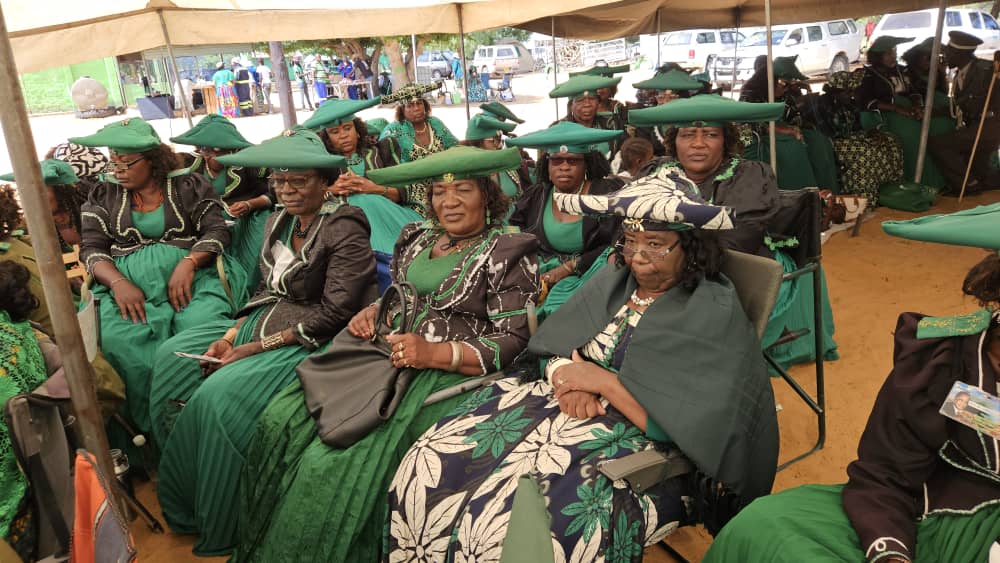

EPUKIRO – Hundreds of Ovambanderu gathered at Ezorongondo village in the Epukiro constituency of Omaheke region at the weekend to pay tribute to the chief Munjuku Nguvauva II.
Chief Nguvauva led the Ovambanderu community from the early 1950s until his passing in 2008.
Speakers at the commemoration described him as a gallant leader, who played a significant role in Namibia’s fight against colonialism and in uplifting his community.
His contributions to Namibia’s independence started in the early 1950s while he was in Botswana, and gave financial support to the fight against colonialism.
Current Ovambanderu chief Eben Tjozohongo II Nguvauva, the late chief Nguvauva II’s son, said his father worked tirelessly for the community.
“I was fortunate to witness some of his work. He hated colonialism, he loved his community, and prioritised the interests of Ovambanderu,” Nguvauva said.
He also highlighted that his father attended the United Nations conference in Lusaka, Zambia in 1962 as Ovambanderu leader, to further the cause for independence.
He also relocated Ovambanderu individuals living under harsh conditions on commercial farms in the Okorukambe area to Okombomi village.
He added that today, the Ovambanderu is recognised as a traditional authority because of his father’s efforts.
Senior Ovambanderu councillor Arnold Ripuree Tjozongoro said the late Nguvauva was a brave man who wanted to see Namibia liberated through the correct means.
“The colonisers tried by all means to bribe him, but he never accepted their offers.
He asked himself what he would tell his grandfather, the late Kahimemua Nguvauva, who refused to give up land, and was murdered by the German colonial troops,” he said.
Tjozongoro, who is also a historian, added that the late chief also refused to let Ovambanderu youth join the then-apartheid South African colonial army.
“Our late chief cared for his people, and he proposed that an Ovambanderu school be built in Okovimburu. He collected cattle and goats from the community to help with operations at the school,” he recalled.
The school, situated in the Epukiro constituency, is now known as the Good Hope Primary School.
The event included traditional activities such as drills, horse riding, omuhiva and traditional songs.
-Nampa