


Rudolf Gaiseb
Higher education minister Itah Kandjii-Murangi said environmental conservation cannot be an isolated effort, but must be embedded in all facets of Namibia’s education system and national development agenda.
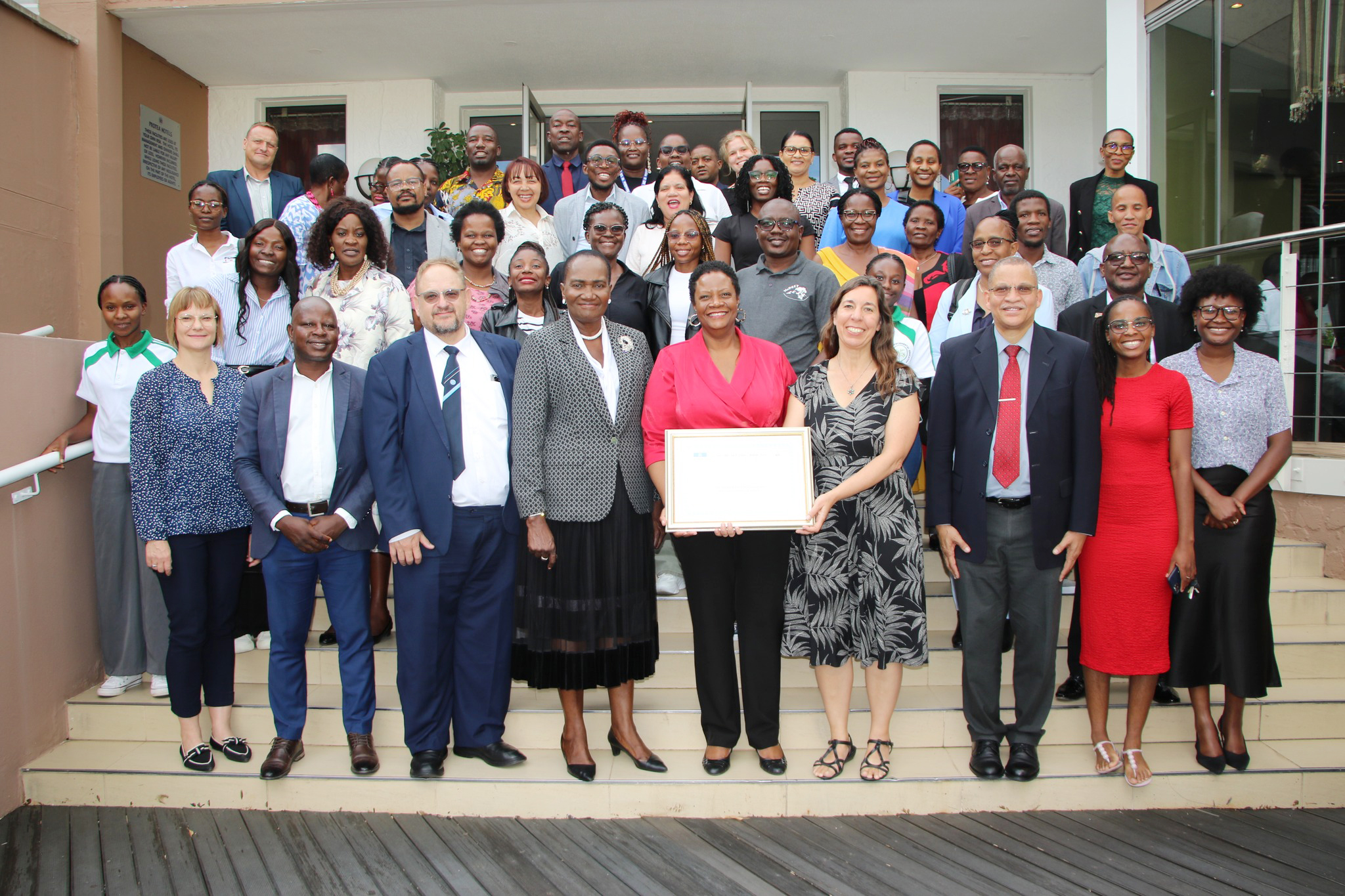
She made these remarks last week when the Namib Desert Environmental Education Trust (NaDEET) hosted a celebration after bagging the United Nations Educational, Scientific and Cultural Organisation (Unesco) Sultan Qaboos Prize.
The prize was awarded to NaDEET in Budapest, Hungary last November 2024, in recognition of its exceptional contributions to sustainable development, its leadership in national environmental education policy, and its innovative and practical approach to sustainability education.
“Target 4.7 of Sustainable Development Goal (SDG) 4 explicitly calls upon us to ensure that learners acquire the necessary knowledge and skills to promote sustainable development, including climate action, biodiversity and responsible citizenship. However, education for sustainability is not limited to SDG4 alone; it is a cross-cutting priority that underpins all SDG goals, reinforcing our shared commitment to achieving a just and sustainable future for all,” Kandjii-Murangi said.
The minister applauded NaDEET’s instrumental role in shaping Namibia’s environmental policies, including drafting the National Environmental Education and Education for Sustainable Development (EE/ESD) Policy.
“Since 2019, its urban sustainability centre in Swakopmund has been addressing the complexities of sustainability in urban settings, a crucial intervention as Namibia’s population continues to grow,” she noted.
She said the teacher professional development programme has reached over 400 educators, empowering them to instil environmental literacy in over 60 000 children.
NaDEET’s executive director Victoria Keding highlighted the organisation’s significant role in promoting ecological living by providing hands-on programmes to adults and children to build sustainable practices by championing solar cooking, water conservation and recycling.
“The actual validation of our work we see in the eyes of our participants, but by receiving this prize, it gives us and our transformative approach to ESD increased international exposure as a vital component to addressing our global issues. We are excited that it will assist us in scaling up our work, as we are currently expanding our urban centre in Swakopmund,” she noted.
“I also see this prize as a recognition of the importance of working in partnership with all stakeholders to accelerate ESD throughout the country. We have the policies, strategies, networks and dedicated teachers ready.
We now need political will and resource mobilisation to ensure its implementation,” she added.
Head of office and Unesco representative Eunice Smith encouraged more local participation in the nominations for the awards that will again open this year.
“In a world which is experiencing global warming of our oceans, loss of glaciers and rainforests, longer and more frequent droughts, dramatic climate change and increasing loss of biodiversity, we need to build resilience, even as we empower people with the knowledge, skills, values, attitudes and behaviour needed to live a way that is good for the environment, economy and society,” she highlighted.