


Lahja Nashuuta
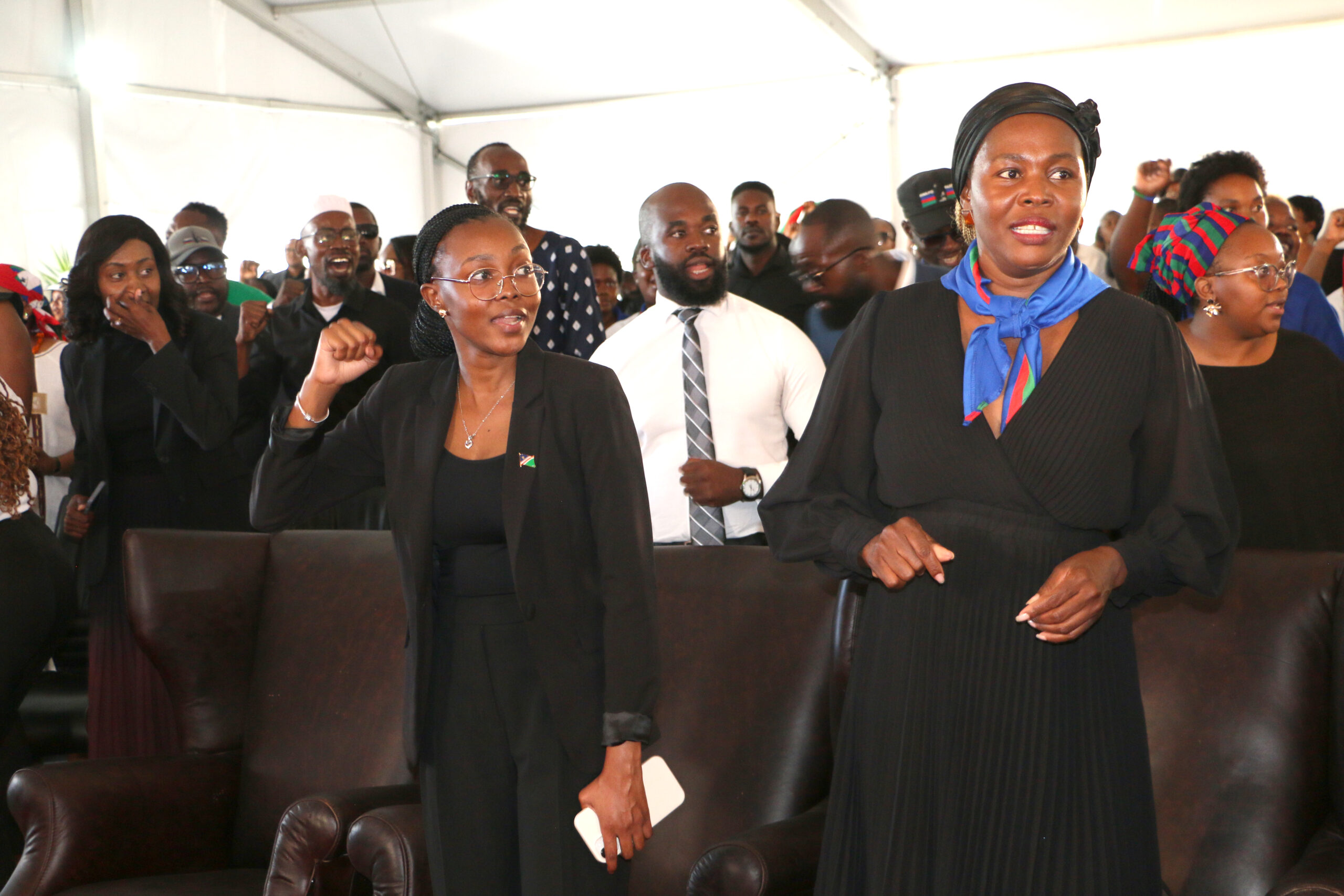
Representatives from various youth organisations and students unions are mourning late Founding Father Sam Nujoma. They remember him for his life of sacrifice, selfless service, principled, courage and determination.
Addressing hundreds of youths who flocked to pay tribute to Nujoma’s legacy, speaker after speaker described him as a commander par excellence and a brilliant military strategist, whose tactical genius helped shape the course of the liberation struggle. Namibian Exile Kids Association (NEKA)’s founding president Benita Nakaambo narrated that Nujoma was the father and beacon of hope for many orphans of war, especially after the Cassinga massacre.
“After the Cassinga massacre, many Namibians exiled in Angola faced dire conditions, needing safety, medical care, food and shelter. The Swapo leadership, with international solidarity, secured refuge for many, leading to 400 Namibian children and caretakers being taken to East Germany. Others went to Czechoslovakia, Russia, Cuba and Poland (1978-1990).
“There, we were nurtured, educated and reminded that we were the children of the liberation struggle, destined to free and govern Namibia upon independence,” she chronicled.
She continued: “In the camps of Kwanza-Sul and Nyango, life was tough. But Tate Sam’s visits were moments of joy and hope. His presence lifted our spirits. For the younger ones, it was a rare chance to enjoy festive food, sweets and balloons. We cherished occasions like Swapo’s anniversaries (19 April and 26 August), or the days he visited. They were among our few joyful experiences in exile,” she recalled.
Nakaambo acknowledged the role and influence of the founding president in the formation of the NEKA. “Seeing that we are no longer children, our role is no longer just to remember, but actively contribute to the struggle for economic emancipation and participate in Namibia’s economic development as the rightful heirs of Namibia’s struggle and custodians of its future.
NANSO
Namibia National Students Organisation (NANSO) president Dorthea Nangolo described the late founding president as an architect of the Namibian freedom, and father of the country’s education system.
They said Nujoma dedicated his post-independence years to ensuring that every Namibian child had access to quality education. “It was through his vision that the pillars of our education system were built. The University of Namibia became a beacon of knowledge, producing graduates who would go on to shape the nation. The Namibia University of Science and Technology, another testament to his foresight, ensures that Namibians can excel in science, technology and innovation,” she said.
Nangolo attributes the creation of the Namibia Students Financial Assistance Fund to the late Nujoma’s commitment to ensuring that Namibian students are not denied access to education due to their financial background.
“Today, thousands of students have received financial aid. Thousands received access to tertiary education. This is the work of a man who dedicated his life to building a nation,” she said.
Iyaloo Shiimi, the first National Secretary of the Pioneers Movement, waxed lyrical about how the late founding president’s courageous sacrifices and relentless commitment to justice led Namibia from the shackles of colonial oppression to the dawn of freedom on 21 March 1990.
“Tatekulu was more than just a leader of the liberation struggle. He was a champion of education, a pioneer of economic empowerment, and an advocate for social transformation. His vision of a self-sufficient and industrialised Namibia continues to guide our journey towards prosperity,” she remarked.
SPYL
Secretary of the Swapo Party Youth League Efraim Nekongo said Nujoma’s death leaves a void in the nation.
He maintained that the founding father was not only a leader, but the very embodiment of the country’s struggle for freedom, justice and solidarity. “Nujoma worked tirelessly to promote reconciliation and national unity in a country with a history of ethnic divisions. He encouraged dialogue and inclusivity. Through his leadership, he implemented policies that improved education, healthcare and housing, contributing significantly to social development.
“On the international stage, he established Namibia as a respected member of the global community, fostering diplomatic relations and joining organisations such as the African Union and the Southern African Development Community,” he stated.
Nekongo used the opportunity to urge all Namibians to reject tribalism and regionalism, and instead strive for unity and prosperity. -lnashuuta@gmail.com