

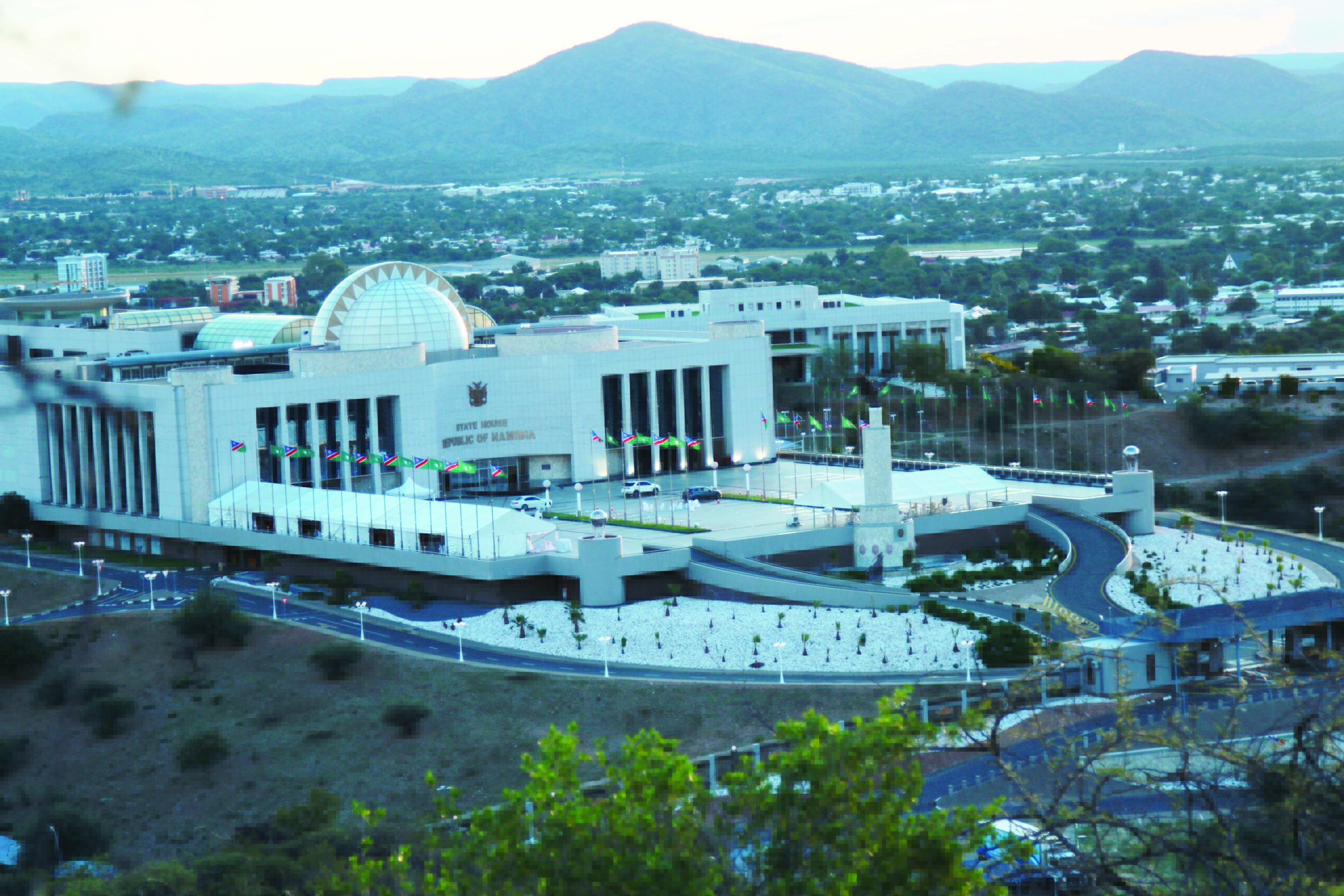

The Office of the President has come under scrutiny after the National Assembly Parliamentary Standing Committee on Public Accounts flagged irregularities in its financial management for the 2019/20 financial year.
The committee’s report, tabled in the National Assembly recently, pointed to a range of financial discrepancies, including unaccounted-for expenditure and unauthorised budget overruns.
The report states that the highest office in the land failed to fully comply with financial regulations, leading to instances where spending was not adequately documented.
“There were cases where supporting documents were either missing or incomplete, making it difficult to verify certain expenditure,” the report states.
One of the key issues flagged was the overspending of budgeted allocations without prior approval.
The State House issued credit cards without treasury authorisation to six officials who worked closely with the President.
The accounting officer, Grace Uushona, admitted they opened credit cards without treasury’s approval.
They later approached treasury to give ex-post facto authorisation.
This was after being questioned by auditors.
The authorisation was then granted.
Despite that, the committee condemned the non-compliance, saying this practice contradicts the State Finance Act, which requires all public entities to operate within approved financial limits unless formal approval is granted for additional spending.
Vouchers
It is also reported that State House made payments in respect of entertainment expenses for the late President Hage Geingob on international as well as local trips from various credit cards.
However, five payment vouchers amounting to N$27 452 were not provided for auditing.
This caused an audit scope limitation, as the auditors could not verify the correctness of the transactions.
Uushona said the office requested expenditure reports with supporting documents from the “cardholder”.
“These were not provided – and in the end, the office had no choice but to request the staff member to refund the money. The funds in question were recovered from his leave gratuity because his employment contract ended,” Uushona said.
Anomalies
In an audit of the San Development Programme bank account, the auditors noticed the office paid various suppliers for the supply and delivery of food items for the feeding programme and monthly allowances for marginalised students, learners, and casual workers from the development account.
However, 13 payment vouchers amounting to N$311 132.56 were not provided for auditing.
Asked why, Uushona said the office eventually found most of the vouchers, except one.
Uushona added that some of the vouchers requested by the auditors were bank charges.
Therefore, the office could not provide proof of vouchers.
The committee, however, disagreed with the explanation, saying by the time of writing the report, they were not furnished with the payment vouchers amounting to N$90 698.
Contracts
Another issue flagged was the payment of N$1.6 million to seven service providers without proper documentation.
Auditors were not provided with Service Level Agreements, which would normally specify rates payable and the duration of contracts.
Due to the lack of agreements, auditors were unable to establish the basis for the selection and payments to food suppliers and funeral service providers.
Missing registers
They also questioned why no attendance register was provided for pay points 5, 8, 9 and 14 (regions), making it impossible for auditors to verify amounts paid to casual workers.
Additionally, the names on the attached attendance register did not match those on the pay sheets.
When questioned, Uushona said they could not locate the attendance registers but said the casual workers in question were those employed on a permanent basis.
The committee expressed dissatisfaction with the poor management as well as handling and control of the marginalised people’s development programme bank account.
The committee recommended that Uushona ensures all relevant documents were submitted before any payments are made.
Other issues include the absence of supervision of staff members (paymasters) tasked with distributing funds to casual workers.
The report reveals that no checks or verifications were conducted after payments were made, exposing public funds to misappropriation and fraud.
In response, Uushona said the deputy director and control administrative officer was responsible for verifying payments, but these reports never reached the Office of the Financial Advisor or Uushona herself for the final verification.
“We dispatched two paymasters to the regions to complement each other’s work. If one made a mistake, the other would verify the work,” said Uushona.
However, the committee remained unconvinced, saying such lax control measures exposed State resources to abuse.
As if that is not enough, the committee expressed concern about the delayed return of outstanding public funds amounting to N$52 669.
Other issues included the practice of withdrawing large sums of cash in Windhoek and transporting it to remote regions to pay casual workers.
Although Uushona admitted to the incident, she said regional banks often lacked sufficient funds or the right note denominations.
“Additionally, some San community members did not have identity documents or bank accounts, making electronic payments impractical,” she told the committee.
The office made payments for cultural performances without supporting documents.
Auditors found that no invoice was attached to the payment.
The withdrawal was made in Windhoek despite the event taking place in Swakopmund.
When questioned, Uushona said the office had verbally requested the staff member to return the funds and was in the process of issuing a formal recovery letter.
Another finding was that N$41 872.48 was handed over to a third party on behalf of intended beneficiaries without appointment letters or verification documents.
Uushona insisted that the money reached the rightful owners, arguing that the office had not received any complaints from beneficiaries.
– ashikololo@nepc.com.na