


In African societies, communal mourning is deeply embedded in cultural traditions, where grief is not an isolated experience, but a shared, collective expression of loss.
The passing of a leader, elder or respected figure becomes a moment of unity, where communities come together in rituals, song and remembrance. As John Mbiti (1969) famously stated, “I am because we are, and since we are, therefore I am,” underscoring the interconnectedness of African social structures. This collective grieving process is not just an emotional response; it is a reaffirmation of identity, resilience and the continuity of communal values.
In the period between February 2024 and March 2025, Namibia was shaken by the loss of two pivotal figures in its history: president Hage Geingob and Founding Father Sam Nujoma. Their passing triggered a national wave of grief which transcended tribal, political and geographical boundaries. This moment in history offers critical insights into how societies process loss, and how national unity can be reinforced through collective mourning.
Mourning nation: A unifying force
Grief is often seen as a personal journey, but in times of national tragedy, it takes on a collective dimension. As Durkheim (1912) posited, collective emotions help reinforce social cohesion and solidarity, particularly in moments of crisis. The deaths of these two national figures saw Namibians across all walks of life come together in an extraordinary display of unity.
The desire to attend memorial services, participate in street processions, visit bereaved families and pay final respects led many to travel long distances.
This was not just an act of personal closure, but a deeply-ingrained cultural response to mourning as a communal duty. As Judith Butler (2004) notes, “grief furnishes a sense of collective responsibility, reminding us of our fundamental interconnectedness.”
Social media and national television played a significant role in creating a shared space for mourning. These platforms allowed citizens to express their emotions, pay tribute, and participate in the grieving process remotely. Employers also acknowledged the gravity of the moment, granting people time off to pay their respects. The nation’s streets, homes and digital spaces became arenas of solidarity, where people embraced, cried and comforted one another, irrespective of race or background.
Leadership in times of loss
The weight of national mourning fell heavily on the country’s leadership, particularly on President Nangolo Mbumba. Leading a nation in grief while simultaneously coping with personal loss is a rare challenge. In early 2024, Mbumba had to announce the passing of president Hage Geingob, a close friend and comrade. Within hours, he assumed the highest office, navigating the immense responsibility of ensuring national stability while grieving. Almost a year later, he was confronted with yet another loss—the passing of Namibia’s Founding Father Sam Nujoma. Despite his grief, he was expected to stand as a pillar of strength for the nation, officiating memorial ceremonies, leading processions, and reassuring the public. His resilience during these trying times echoes the words of Nelson Mandela (1994): “Courage is not the absence of fear—but the triumph over it.”
Mbumba’s leadership during these difficult times highlights the emotional labour that public figures endure in moments of collective trauma. As Kübler-Ross and Kessler (2005) suggest, the role of leaders in such situations is not just to manage the logistics of mourning, but to provide a sense of continuity and hope.
Moving forward as a nation
The passing of national leaders serves as a reminder of the enduring legacies they leave behind. However, mourning should not end with grief—it should inspire action. The unity displayed in these moments must be harnessed to build a stronger nation, preserving the vision of peace, development and inclusivity that both leaders championed.
One of the most critical takeaways from this period is the need for ongoing mental health support. Collective grief, while a source of unity, can also take a psychological toll on individuals and communities. Recognising this, there is a need to promote self-care, counselling and open discussions about grief’s impact on emotional and physical well-being. As Namibia moves forward, the challenge lies in ensuring that the spirit of togetherness does not dissipate. Communities must actively work towards fostering social cohesion beyond moments of tragedy. In the words of Maya Angelou (2014), “People will forget what you said, people will forget what you did, but people will never forget how you made them feel.”
The feelings of unity, solidarity and shared purpose that emerged during this period must be transformed into lasting national consciousness.
Honouring Namibian leaders’ legacy
As we remember the legacies of Sam Nujoma and Hage Geingob, their visions for Namibia must continue to guide the nation’s future. Just as the country mourned collectively, so too should it collectively strive to uphold their ideals of unity, peace and development.
May their souls rest in eternal peace, and may their leadership continue to inspire future generations.
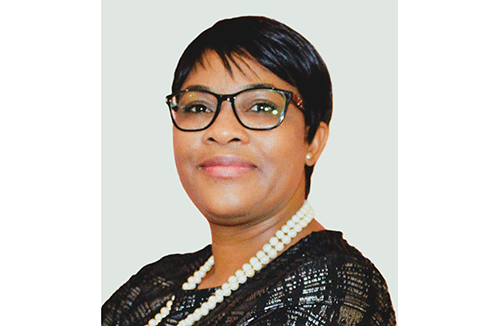
*Dr. Lovisa Nghipandulwa, Social Work Practitioner and Head of the Industry Relations and Cooperative Education Unit, University of Namibia.
*Dr. Oliver Chigariro, Social Work Practitioner and Social Development Consultant, based in New Zealand.
The views expressed in this article are those of the authors, and do not reflect those of their employers.