


The media holds great influence in society and communities.
Whether through visual, audio or print formats, it serves as a powerful tool for education and communication. What gets highlighted in the media often sets the tone for societal values and moral direction.
In Namibia, however, the focus of the media seems skewed towards negative news, with front pages frequently dominated by stories of crime, violence and social problems.
In contrast, when the media is invited to cover events like Life Skills workshops, award functions at schools or training on new curricula, their presence is often minimal. Even if they do attend, such events rarely make the front page.
This raises concerns about the impact of such reporting on the moral compass of the nation, and whether the media is fulfilling its educational role effectively.
When there is a strike or demonstration, however, the media swarms the venue, with both print and visual media flocking around the demonstration ground.
They seem more eager to capture stories of evil, the bad and the ugly.
As long as the media continues to focus predominantly on the negative, we will continue to witness a decline in moral and ethical behaviour.
The constant stream of negative reporting can lead people to develop a “mean world” syndrome, making them feel that the world is inescapably bad and contributing to emotional distress.
Currently, about 60% to 70% of headlines are negative.
In its educational role, the media may inadvertently be teaching that acts like rape, theft and murder are normal by displaying wrongdoers on the front page.
Instead, such stories should be moved to the back pages, while stories about sports or achievements are brought to the fore.
The media should strive for balance in their reporting.
Print media, in particular, should focus on content that inspires, grooms, motivates and educates.
It is critical that media professionals understand their role in educating the nation.
At this point in time, it seems as though the media is sending the message that murder, rape and other crimes are acceptable, simply by the prominence given to these stories.
On radio stations, every Monday and Friday, there is a segment dedicated to crime reports, providing details of crimes from each region.
While this may fall under the exercise of press freedom, imagine the positive impact if these crime reports were replaced with education reports, challenges and highlights on education for that week.
What image is the media portraying?
That we are a nation of evil?
The media has impact, influence and is well-positioned to direct society and shape public perceptions.
It needs to use its platform for education and guidance. While it is true that bad things happen, the constant focus on negative news can have harmful effects, particularly on the young and vulnerable.
High-quality journalism should strive for balance, ensuring that the positive aspects of society, such as education, achievements and inspiration are given as much attention as negative stories.
Media outlets must recognise their educational role and responsibility in guiding the moral and ethical direction of the nation.
By shifting focus toward more constructive content, the media can help build a more informed, motivated and morally-conscious society.
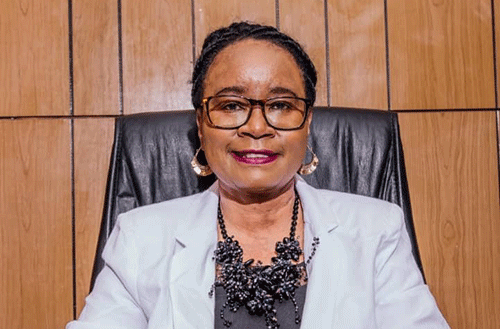
* Aletta Eises is the director of education in the Oshikoto region, as well as the founder and director of VisionCore. This article is written in her personal capacity.