


Rudolf Gaiseb
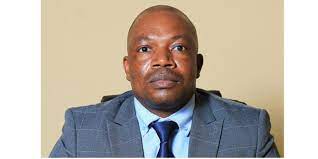
Rundu Rural constituency councillor Paulus Mbangu has blasted transport minister Veikko Nekundi’s development budget as being urban-centric, and having little effect on rural areas.
He said the budget marginalises rural parts of the country by offering almost nothing for those residing there.
Mbangu made the remarks during his contribution to the Roads Amendment Bill in the National Council on Monday.
“When you look at the current developmental budget, Khomas has been allocated the highest, followed by Erongo. The lowest has been allocated to Kavango East. You can also see that the budget is urban-biased. Urban regions are allocated more resources than rural regions. Omusati, Ohangwena, Kavango West and Kavango East have been allocated the least resources.
Such a biased allocation contributes again to skewed development. The rural villages will continue developing at nil pace, while the urban villages will be growing very fast,” he charged.
Nekundi motivated his budget last week.
His ministry needs N$825 million for the development of the transportation infrastructure programme, which intends to upgrade gravel roads to bitumen standard.
Nekundi expressed that bigger portions go to regions with distant roads.
“The issue of regional favouritism is a myth. Roads are measured by distance – not by number. The regions that have the longest roads in Namibia are the //Kharas region, followed by Kavango East. The third one is Hardap, followed by Otjozondjupa,” he stated then.
The minister said the budget to merely maintain the roads in the //Kharas region is N$239 million, compared to Omaheke at N$80 million.
He promised to ensure that all these roads in all the regions will be covered with what the ministry has. He also made it clear the ministry is not responsible for urban roads.
The ministry is responsible for maintaining the national roads network, including the construction, maintenance and rehabilitation of gravel and bitumen roads.
Urban roads are overseen by the Ministry of Urban and Rural Development.
Mbangu criticised Nekundi’s suggestion that the equity of roads should be assessed based on distance alone, rather than considering the number of roads, or the usage-based equity.
He said the idea is not only flawed, but lacks a comprehensive understanding of the realities faced.
As of 2023, the total kilometres of bitumen road per region reveal a different story, Mbangu reasoned.
“The //Kharas region indeed has a significant road length of 1 315.4km, but let us not overlook the figures from other regions,” he remarked.
Otjozondjupa follows with 969.9km, Omaheke with 794.5km, Omusati with 733.3km and Hardap with 645.7km.
Erongo is at 574.9km, Zambezi at 572.2km, Kunene at 515.5km, Oshikoto at 513.3km and Kavango West at 428.0 km.
Additionally, Ohangwena is at 387.8km, Khomas at 370.6 km, Kavango East at 344.4km and Oshana at 139.5km.
Mbangu argued that regions such as Oshana, with only 139.5km of bitumen road, face considerable challenges in connectivity and development.
Additionally, Kavango East, with just 344.4km, ranks amongst the regions with the least amount of road infrastructure.
“It is imperative that we recognise that road equity cannot simply be measured by the length of roads in isolation. We must consider factors such as accessibility, population density and economic activity. The needs of our communities should guide our decisions on where to allocate resources for roads development.
We must strive to ensure that every region has the opportunity for growth and connection, regardless of its current road length. Let us work together to create a transportation network that serves all our citizens fairly and effectively,” he pleaded.
The Bill is amongst those before the National Council for review.
Others debated on the day included the Appropriation Bill (budget), the Judiciary Amendment Bill, and the Public Procurement Amendment Bill.