


Rudolf Gaiseb
About 32.1% of parliamentarians globally are aged 45 or under, compared with 30.2% in 2021.
This is contained in the latest Youth Participation in Parliament report by the Inter-Parliamentary Union (IPU).
Parliaments are getting slightly younger, but the union suggests that despite the progress, parliaments are still a long way from representing young people proportionately.
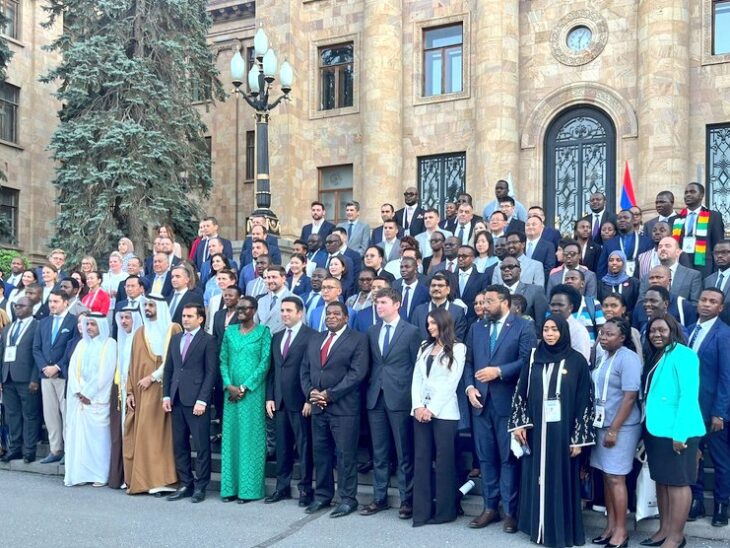
This was highlighted in a recent report released by the Namibian delegation to the 10th IPU Global Conference of Young Parliamentarians in collaboration with the National Assembly of Armenia, held from 12 to 14 September 2024 in Yerevan, Armenia.
The delegation included Members of Parliament (MPs) Deriou Benson and Elder Filipe, alongside IPU board member of young parliamentarians Emma Muteka, National Council deputy director Dorothea Fransman and parliamentary clerk Priskila Kulula.
It was held under the theme “Avoiding lost generations: Preserving education and employment in all circumstances”.
Armenia’s National Assembly president Alen Simonyan said young people must actively participate in the development of their countries.
He added that they have the flexibility to bring about change.
“Knowledge and skills will serve as powerful tools to navigate challenges and create positive change,” he noted.
The young parliamentarians’ conference garnered over 147 participants from 55 countries, with the average age being 37.2 years, and 40% being female.
UPI president Tulia Ackson highlighted the global challenges and conflicts threatening progress in education, employment and equality, and emphasised the need to hear the voices of young people.
“Young people should be involved in the creation of policies that affect them; no decisions should be made about youth without youth. Leaders must ensure that no generation is left behind, especially in these uncertain times,” she stated.
Ackson underscored the importance of education and employment, which are fundamental rights that form the basis of stable, prosperous societies.
“These empower individuals to lead and contribute to their communities, especially in times of crisis. Education and employment should be prioritised on political agendas,” she urged.
She then called for accessible education, especially during crises, and called for investment in job placement and skills’ recognition to help migrants integrate into new communities.
The conference is an initiative from the IPU, and is focused on empowering young parliamentarians by promoting active participation in the political sphere.
It provides a global platform for young MPs to collaboratively identify common and innovative strategies aimed at advancing youth empowerment.
In their report about the conference, Muteka vouched that the National Council will discuss and support the report, and inform the IPU.
The conference highlighted adapting education and employment support services to meet the needs of all segments of society, genders and personal abilities.
“Enhance inter-parliamentary cooperation and the exchange of good practices to better amplify the voices of marginalised groups and those in vulnerable situations, and ensure that public policies address their needs. Also, build inter-parliamentary solidarity for countries in vulnerable situations due to climate change, such as Small Island Developing States,” it reads.
The conference furthermore encouraged strengthening partnerships, both offline and online, with youth grassroots’ organisations, advisory councils, advocacy groups and students associations to better amplify their voices in our legislatures and policy discourses. Amongst other things, it suggests addressing the housing crises faced by many countries, including through increased State investments to build affordable housing and providing subsidies to first-time homeowners in countries where this practice is not prevailing. –rrgaiseb@gmail.com