


Lahja Nashuuta
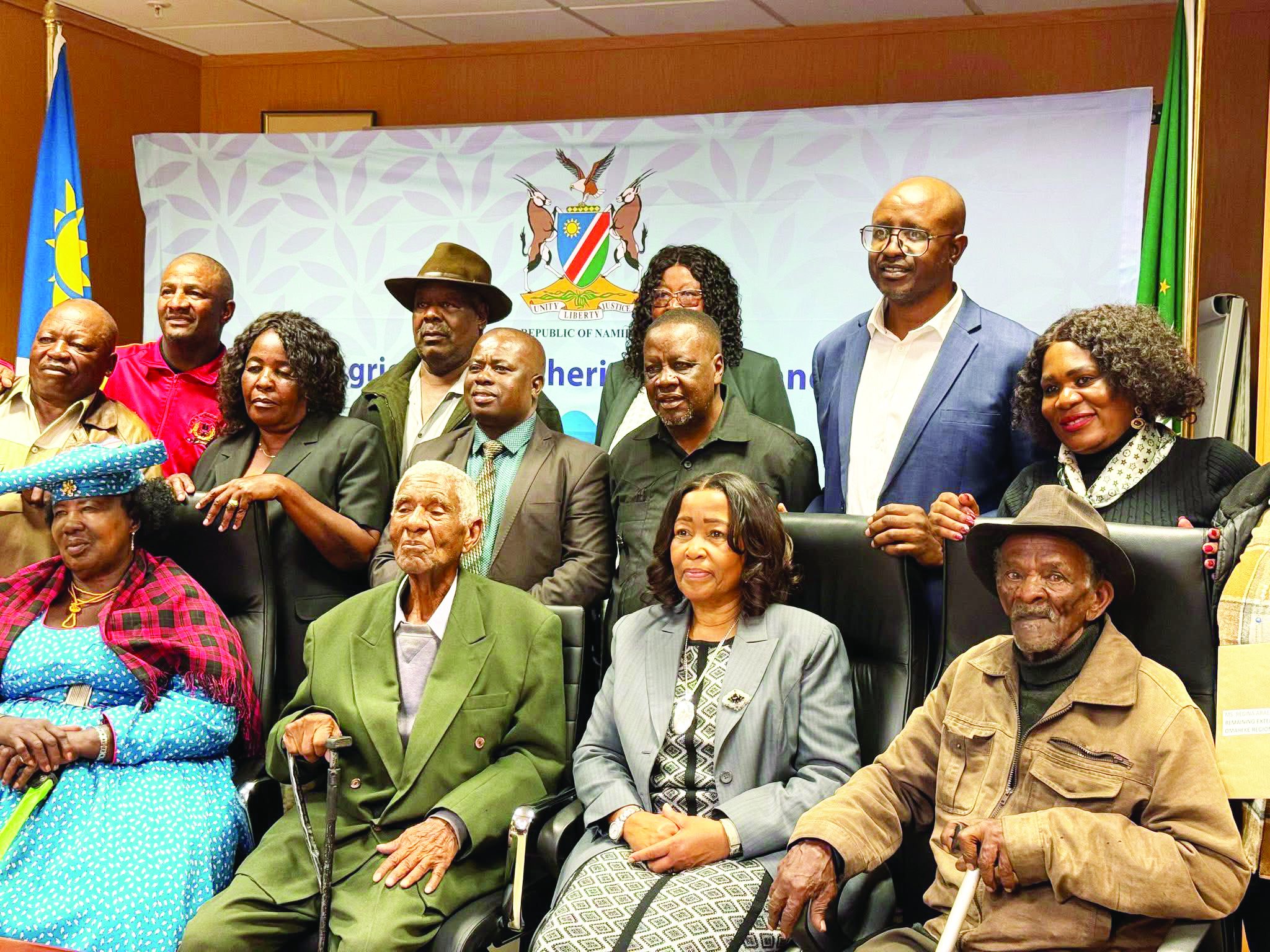
Nine generational farmworkers in the Omaheke region, who have been without their own land for years, were recently allocated farming units.
The government, in response to the plight of the farmers, has allocated Farm Wiums Rus and Farm Fiesta there.
These beneficiaries, long displaced from commercial farms and forced to survive in communal corridors, have now received secure tenure through the government’s land reform programme.
The two farms, which span over 11,000 hectares and carry a combined valuation of N$28 million, were officially handed over by the minister of Agriculture, Water and Land Reform, Inge Zaamwani.
The properties have been sub-divided into eight farming units, six of which were allocated during a formal handover ceremony.
“Today, we are handing over six units to nine deserving beneficiaries. The remaining two units will soon be allocated to other vulnerable groups living in the corridors of Omaheke,” the minister said.
The beneficiaries include generational farmworkers, Namibians who were born, raised and laboured on commercial farms for decades, only to be later evicted and forced into informal living conditions without access to land.
“This is a national crisis that demands urgent and compassionate action from all stakeholders in the agricultural sector,” Zaamwani stressed.
From displacement to dignity
Among the new land recipients is Cecilie Mbaeva, who has lived at Farm Skoonheid since 1992 alongside her late father, a former senior traditional councillor in the Okorukambe constituency.
“We endured many hardships, including disputes with the San community, and being severely hit by droughts in 2013, 2019 and 2024, which wiped out much of our livestock,” “But today, by the grace of God, we have a place to call our own, Farm Fiesta No. 440”, Mbaeva recalled.
Although water was available at Farm Skoonheid, she said grazing land was scarce, and overcrowding led to overstocking. She thus expressed deep gratitude to the government for the relocation.
Also sharing his joy and appreciation to the government was Frans van Wyk, another beneficiary who was residing at Farm Schoonhage for decades.
“That farm was initially designated for the San-speaking people. We were only temporarily resettled there while the government sought a permanent solution” he said. Van Wyk’s family relocated to Schoonhage in 1993 after his father Hendrick van Wyk lost his job at the private commercial farm.
“I was finishing high school then. We moved there after a white commercial farmer chased us off the land we had been working on”, he stated.
Despite the upheaval, the family established their roots. “We built that farm from scratch. As a young boy, I tended to cattle and goats during my school holidays,” he remembered.
Van Wyk revealed that tensions later arose between them and the San community as too many people started to overcrowd the farm, leaving little room for their own farming activities, and thus reaching out to government to intervene.
“The government notified us that we would be moved to a different farm soon. That’s how we first heard the news. Then, on a Tuesday, we were told to report to Windhoek to collect our new allotment letters”, he beamed.
Other beneficiaries include Nikolaas Mootu, Joel Katurota, Ingenesia Kazombaue (Unit A, Farm Wiums Rus), Unomuinjo Mbaeva, Hendrik van Wyk, Regina Araes and Theofelus //Noabeb.
Call for humane land practices
Meanwhile, Zaamwani condemned the ongoing eviction of generational farmworkers from commercial farms as inhumane and unacceptable.
“We appeal to farm owners, employers and all stakeholders to cease evictions and work with government to find sustainable, dignified solutions. Generational workers have contributed immensely to our agricultural sector and deserve respect, not abandonment.”
She also issued a stern warning against fraudulent land claims, stating that the resettlement process will undergo strict vetting to ensure only eligible, genuinely- affected individuals benefit.
“We will not tolerate opportunists using false claims to unlawfully occupy land or corridors. The integrity of this programme must be preserved for the truly-deserving” she emphasised.
She further called on traditional authorities, regional governors and councillors to ensure that the selection of beneficiaries is free of corruption, tribalism, nepotism or favouritism. “This initiative must remain transparent and fair. Any acts of dishonesty will not only derail the progress we’ve made, but will also tarnish a programme designed to restore justice and hope to our people,” she noted.
Zaamwani reiterated the government’s target of acquiring 15 million hectares of land: five million through the National Resettlement Programme (NRP) and 10 million via the Affirmative Action Loan Scheme (AALS). – lnashuuta@nepc.com.na