

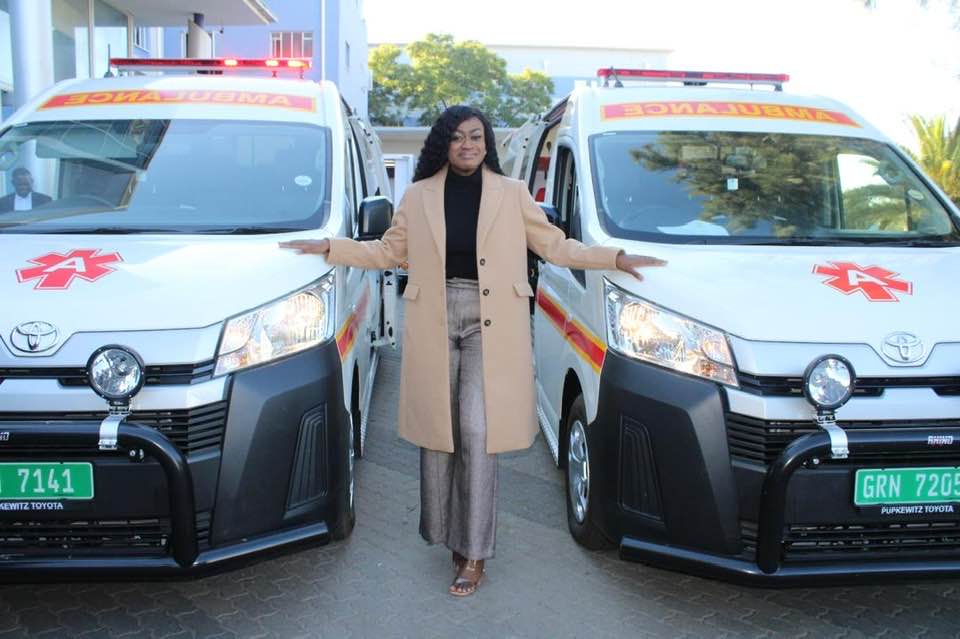

In its quest to deliver quality universal healthcare, the ministry of health procured 36 ambulances to the tune of N$32 million.
This move, minister Dr Esperance Luvindao says, is part of the ministry’s broader goal of rendering a sustainable medical care emergency response service to everyone.
To realise this, there is a need for vital life-saving equipment to be well-maintained, properly equipped, and used efficiently, said Luvindao.
Luvindao said the ambulances will be deployed to serve people across all the regions in the country.
“Getting new vehicles is great; however, we want to see these vehicles maintained. The lack of maintenance is one of the greatest areas for improvement in the public healthcare system, and we wish to highlight that these vehicles must be well-maintained by the regions to ensure sustainability and efficiency. Anything less will not be tolerated,” said Luvindao.
She looks forward to one day soon commissioning Namibian State-owned air ambulances. This will ensure that no life is lost due to unavailability or delayed emergency response.
She noted that timely emergency response can be the difference between the life and death of a patient.
“These ambulances will serve communities in both urban centres and remote areas, ensuring that no citizen is left behind due to lack of access to urgent medical care,” said Luvindao.
Chief Medical Officer in the //Kharas region, Dr Refanus Kooper, welcomed the deployment of the vehicles, adding that they have been struggling over the years but are now relieved.
“We have been struggling in terms of delivering services to our people. With the procurement of these ambulances, I am sure that they will lift a lot of burdens that have been in the health sector,” shared the excited medical practitioner.
Kooper indicated that Luvindao’s plea for the maintenance of the emergency medical vehicles will be taken seriously, as they are now working around the clock to deliver quality healthcare to Namibians and visitors.
“The issue of maintenance will be taken very seriously because we know how it feels to not have ambulances, so we will take good care of them. I can assure you that we will identify and ensure that they are used for intended purposes,” he assured.
As directed by the objectives of Vision 2030 and dedication to universal healthcare, Luvindao said the ministry will keep making investments in health infrastructure, human resources, and technology, and just because they live distant from a hospital, no Namibian should die.
Challenges
The issue of the lack of ambulances has reached an existential crisis, with examples like teachers often using their vehicles to transport sick community members from Omega 3 in the Bwabwata National Park to Chetto, which is about 50km to the nearest clinic.
In a report published by New Era in January this year, teachers do this pro bono and purely out of goodwill as most community members cannot even afford to pay transport fees.
A region that seems to be heavily affected by the shortage of ambulances is Otjozondjupa, which needs about 14, where only four ambulances are reportedly in operational condition. Some of these ambulances have a high mileage of around 600 000 kilometres. This shortage makes it difficult to travel great distances and causes delayed responses, particularly in isolated places like Tsumkwe.