

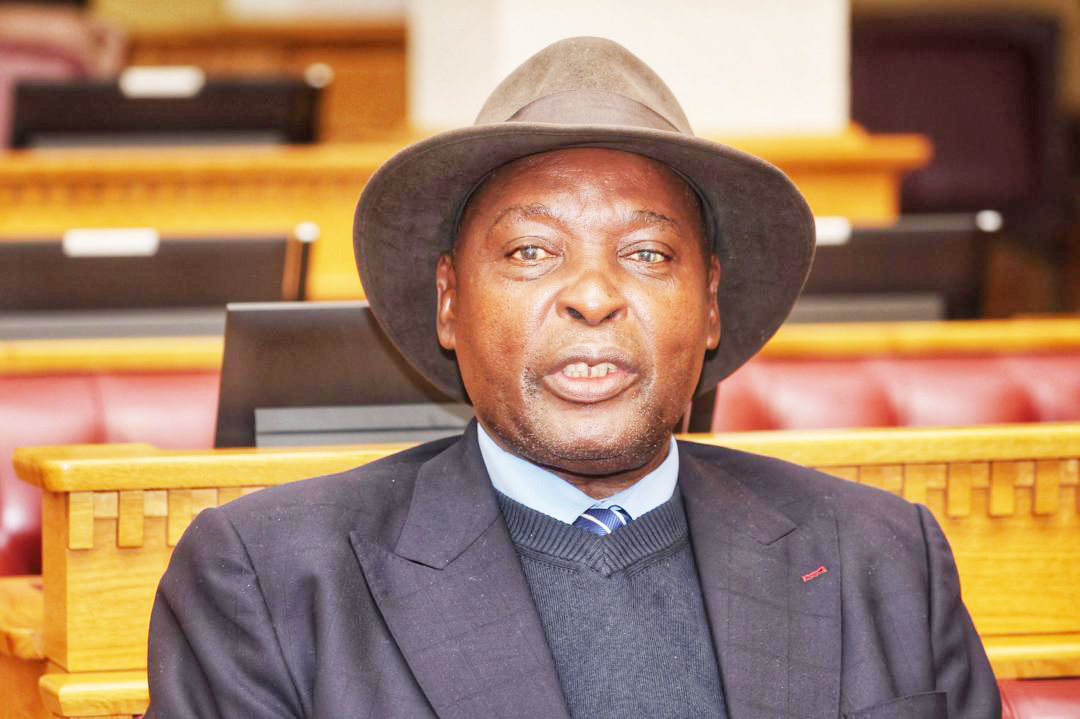

Lahja Nashuuta
Legal experts have raised serious questions about the extent of the Minister of Urban and Rural Development James Sankwasa’s authority over local and regional councils.
They warned that recent interventions may be overstepping legal limits and threatening local democracy.
Legal commentator Natji Tjirera said the Namibian Constitution and relevant laws prioritise the right to a fair hearing and protect elected officials from arbitrary removal.
“Arbitrary dismissals have no place in Namibian law. Any decision that negatively affects someone must be preceded by a fair process, including a chance to be heard. The minister has no legal authority to unilaterally fire elected local authority members,” he stated.
Tjirera referred to Section 13(2) of the Local Authorities Act.
It sets clear conditions for removing a council member: the council must first recommend the removal, and the affected member must be given a proper hearing.
“It is not up to the minister alone. Even with a recommendation, the law insists on fair treatment,” he noted.
“This clause exists to safeguard against central government abusing power over local councils,” he added.
While the minister does have the power to dissolve a council under Section 92, this too is only allowed in specific circumstances, such as when a council fails to perform its duties or manage its finances, and only after giving the council a chance to respond.
Tjirera believes recent actions by the minister appear to be politically driven.
“Even if well-intentioned, acting outside the law ultra vires can erode public trust and disrupt democratic governance,” he stated.
Governance expert Ndumba Kamwanyah offered a more cautious view.
He said the law does give the minister powers to guide and oversee councils under both the Local Authorities Act and the Regional Councils Act.
This includes approving budgets and policies as well as intervening in cases of non-performance.
“From a legal standpoint, the minister does have oversight powers. But the challenge comes when those powers are exercised without proper process,” Kamwanyah stated.
“If the minister appears to override or micromanage elected councils without legal justification, it raises serious concerns about undermining local democracy,” he added.
He said any such actions must follow the procedures set out in law, such as investigations or formal recommendations.
In addition, the actions must not violate constitutional protections for elected leaders.
Dianne Hubbard, coordinator of the Gender Research and Advocacy Project at the Legal Assistance Centre, pointed to Article 111(2) of the Constitution.
It states that matters related to local governance must be handled by Acts of Parliament.
The key piece of legislation is the Local Authorities Act of 1992.
“The Act gives councils the power to appoint or discharge chief executive officers – but even then, it requires the minister’s written approval. For elected councillors, the minister can only act based on a recommendation by the council, and only after a fair hearing,” Hubbard said.
She noted that the Act does not grant the minister any special powers over members of management committees.
The law allows the minister to suspend or remove councillors under certain conditions, such as if a councillor is under investigation for an offence or breach of the code of conduct.
However, this too must follow a strict process.
“Unless those steps are followed, any ministerial interference may be legally challenged,” Hubbard clarified.