

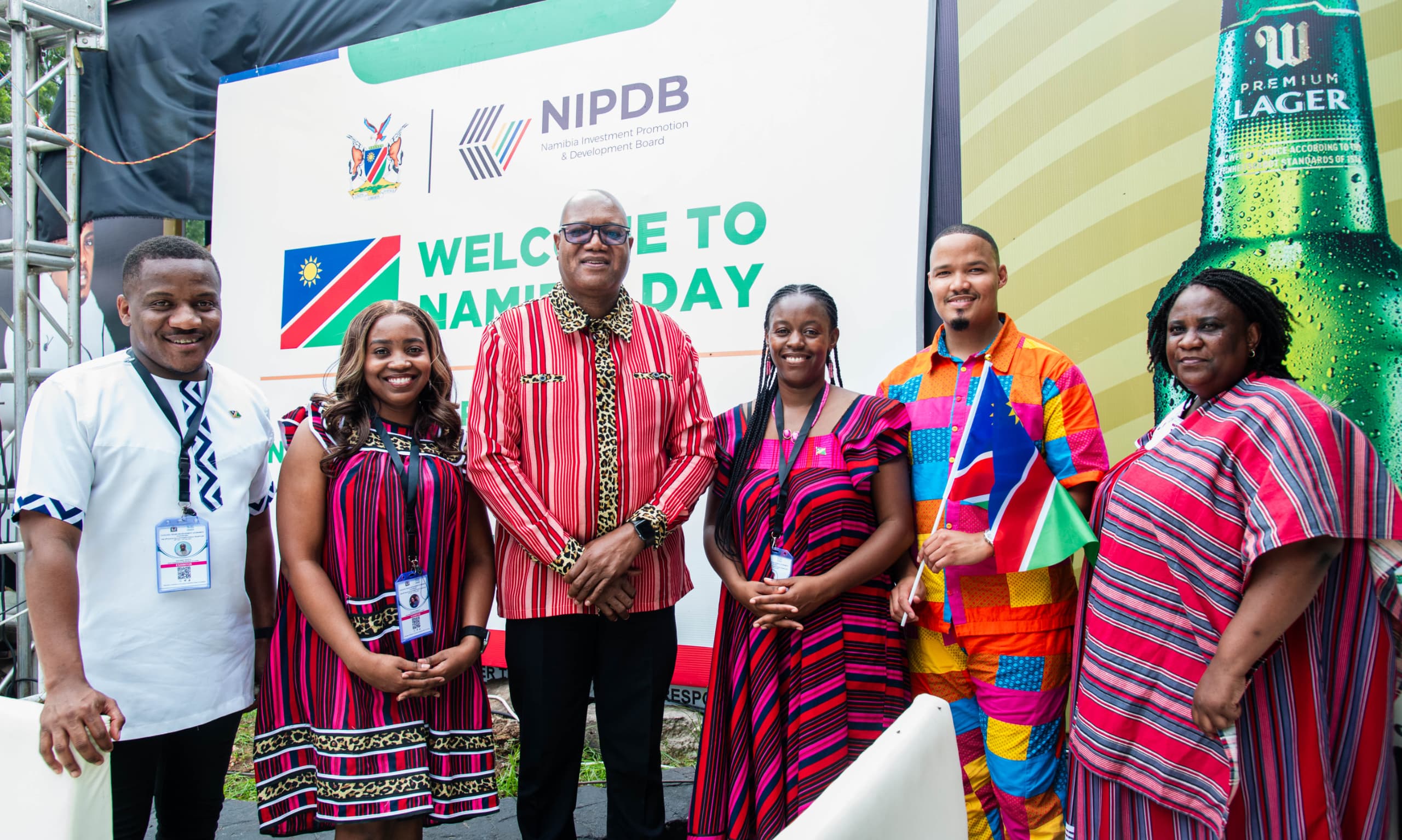

The country is actively working to finalise the Namibia Investment Promotion and Facilitation Bill as well as regulations that will form the foundation of Namibia’s investment landscape and provide incentives to attract investors.
High Commissioner of Namibia to Tanzania Lebbius Tobias told New Era that both countries are members of the Southern African Development Community Free Trade Area (SADC FTA), the Tripartite Free Trade Area (TFTA) and the African Continental Free Trade Area (AfCFTA), which lowers tariffs and simplifies cross-border trade.
“The two countries are only now starting to deepen their bilateral relations, with more targeted initiatives in the pipeline and will be announced in due course. A major gap remains in trade and capital cooperation, as per the Tanzanian president. However, both counterparts have agreed to take joint measures to bridge this gap,” he said on the margins of the just-ended Dar Es Salaam International Trade Fair (DITF).
Namibia’s participation in the DITF acknowledges these commitments and further illustrates the readiness of the country to deepen trade and investment ties.
Tanzania’s president Samia Suluhu Hassan noted that trade with Namibia grew from N$116 million in 2019 to N$137 million in 2023.
Key imports from Tanzania include tea, coffee and cashews.
While Namibia predominantly exports beef, seafood and minerals to the East African nation.
Tobias added that, currently, interested Tanzanian investors can approach the Namibia Investment Promotion Development Board, as they are the first point of call for potential investors wanting to do business in Namibia.
In May 2024, the Tanzania-Namibia Business and Investment Forum held in Windhoek underscored opportunities for collaboration, positioning both nations to strengthen economic ties and private sector partnerships.
“Namibia’s participation was characterised by promoting and attracting trade and investment opportunities in the following sectors: food and beverage, tourism, mining, as well as oil and gas,” Tobias stated.
Organised annually by the Tanzania Trade Development Authority (TanTrade), the event serves as a strategic platform for local and international exhibitors to promote products, technologies and services as well as explore trade and investment opportunities across the East and Southern African region.
This year’s edition was expected to attract more than 4 181 exhibitors and 385 500 visitors.
Given the sheer market size of Tanzania, there was a real opportunity to showcase Namibian products and promote priority sectors to attract trade and investment.
Opportunities
Tobias stated that oil and gas discoveries onshore in the Kavango East region and offshore in the Orange and Walvis Basins have put Namibia in the spotlight.
They position the country as an exploration hotspot.
On the other hand, great strides have been made in the renewable energy space, with several large-scale projects currently in operation or under construction.
“Namibia’s mining sector has also recovered from the decline in commodity prices since 2014. Fortunes have been turned around since the recovery of uranium prices, in particular.
“This upward trend has prompted substantial investment in exploration, new mines and the bringing of mines under care and maintenance back into operation. Similar trends are seen in particular rare earths, lithium, as well as other transition metals and minerals, where demand and prices are both increasing,” he said.
Another area of interest is tourism, especially with natural beauty, characterised by endless horizons and picturesque landscapes, diverse culture and rich wildlife.
“It is no wonder that tourism is amongst the top five priority sectors for investments in Namibia, with opportunities available in luxury accommodation, cruise, boutique adventure and film tourism. These opportunities are cemented by the new and deliberate positioning of Namibia as an emerging MICE destination, with a key focus on large conferencing projects,” stated Tobias.
As the demand for sustainable energy intensifies, he said Namibia is well-positioned to leverage its unparalleled natural endowments, namely solar and wind resources, vast open spaces and a long coastline, to produce Green Hydrogen at highly competitive rates.
Tobias assured that Namibia is in a prime position to attain its bold aspirations of becoming a renewable energy capital for Africa and potentially an international green hydrogen exporter within the next 10 years.
-psiririka@nepc.com.na