


Not every entrepreneur starts off with a booming business and instant profits. For many, the road to success is paved with patience, persistence and small victories.
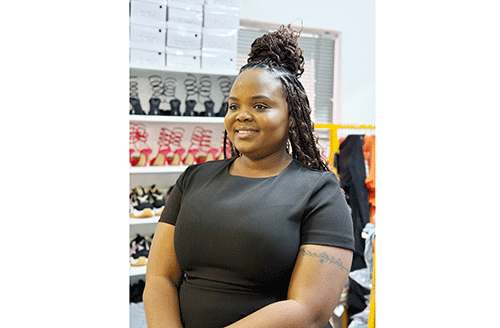
Founder of TFY Investment, Johanna Shinana, turned humble beginnings and unemployment into a dream she has always wanted to be ‘a business owner’.
What began as a one-woman operation selling electronics, fashion items, and household goods through personal deliveries around Windhoek has since grown into a small storefront business. Located in Windhoek, TFY Investment now stocks dresses, shoes, Stanley cups and a variety of consumer electronics.
She started her business with pocket money she had saved up. It was a small start, but it has grown into something she is proud of.
In 2018, she established TFY Investment as a venture selling electronics to big shop. With nothing but determination and a belief in her vision, she would deliver items personally to customers around Windhoek.
“It wasn’t easy and safe. I had to build trust with my customers one order at a time,” she said.
She now employs two people, providing job opportunities and helping reduce unemployment in her community.
“It means a lot to me to be able to help others through my business. We grow together,” Shinana said.
Her ambitions do not stop at TFY Investment. She also runs two other small businesses, though she admits these are still works in progress.
“Everything takes time. Not all my ideas have taken off yet, but I’m learning as I go,” she said.
She added that she started a business because she wanted to be independent and create something for herself. She never imagined it would grow this much. The shop, the employees, it all came step by step.
Like any other business, Shinana faces challenges such as fashion trends which evolve every day, theft, competition, as there are many vendors that have joined the same business and logistic issues, rising costs and stock delays.
“For other aspiring entrepreneurs, this is what I always say: start where you are, with what you have. Be patient with your progress. Growth doesn’t happen overnight,” she said.
According to the Namibia Statistics Agency, at least 40 000 small and medium enterprises (SMEs) are operating in the country, supporting over 200 000 Namibians and contributing approximately 12% to gross domestic product (GDP). SMEs are also a source of innovation and job creation, particularly in rural areas where formal employment opportunities are limited.
Speaking at BaseCamp Founders Nexus Fireside Series last year, the former deputy minister of youth Emma Kantema, said SMEs remain the backbone of Namibia’s economy.
She further explained that despite their significance, the sector faces considerable challenges, including limited access to finance and high failure rates.
Alarmingly, 75% of small-scale businesses in Namibia fail, highlighting the need for targeted support and strategic interventions from stakeholders, including the government and private sector.