


Despite Namibia’s abundant natural resources, there is little to no local beneficiation, with raw materials such as marble and sandstone being exported raw — with the country importing the finished products.
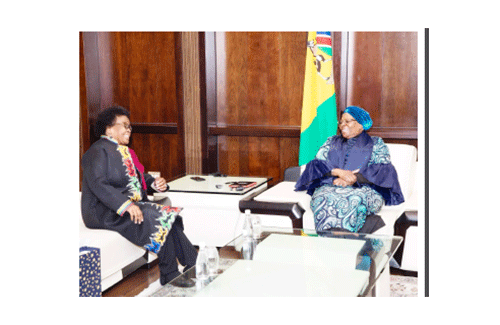
This was highlighted by outgoing South African high commissioner to Namibia, Thenjiwe Ethel Mtintso, during an exclusive interview with New Era, as her diplomatic tenure came to an end.
“This reflects a broader problem across the continent: the urgent need to trade among ourselves, invest in local value addition, and drive our own economic freedom,” she said.
Mtintso stressed that global trade disputes and tariff barriers make it essential for African nations to prioritise trade with one another and build collective economic resilience.
“You’ll see huge blocks of marble and sandstone being transported to Walvis Bay, for export to EU countries and China. Like most of us, Namibia imports finished products,” she added.
She described the African Continental Free Trade Area (AfCFTA) as a strategic priority for South Africa, essential for driving the continent’s industrialisation, economic integration, and development as outlined in Agenda 2063.
Namibia launched its first shipment under the AfCFTA on 30 June 2025, exporting 45 000 tonnes of salt to Nigeria and Cameroon — signalling a new chapter in intra- African trade.
During the launch of the 6th National Development Plan (NDP6) and the 100-day report, President Netumbo Nandi- Ndaitwah praised efforts to strengthen Namibia’s trade and investment footprint.
“This included promoting Namibia as a preferred investment destination at the US-Africa Business Summit in Luanda, Angola, where we engaged the US government on trade tariffs and investment opportunities,” she noted.
She also highlighted Namibia’s hosting of the first-ever Commonwealth Trade Ministers’ Meeting and Business Summit outside the UK, from 16 to 20 June 2025.
“This historic event strengthened public-private dialogue, fostered new partnerships, and unlocked fresh trade and investment opportunities,” she said.
The Ministry of International Relations and Trade says Namibia’s AfCFTA integration will help diversify the economy, reduce reliance on a narrow range of commodities and markets, and improve resilience to global economic shocks.
It further noted that by attracting both intra-African and foreign investment, the AfCFTA is expected to drive innovation, infrastructure development, job creation, and ultimately boost Namibia’s GDP.
South African President Cyril Ramaphosa has also reaffirmed his country’s commitment to the AfCFTA and the G20 presidency, calling for stronger public-private sector collaboration across Africa.
“We want the private sector to move in tandem with the public sector, embrace the AfCFTA, and be active participants,” he said.
-psiririka@nepc.com.na