


Rudolf Gaiseb
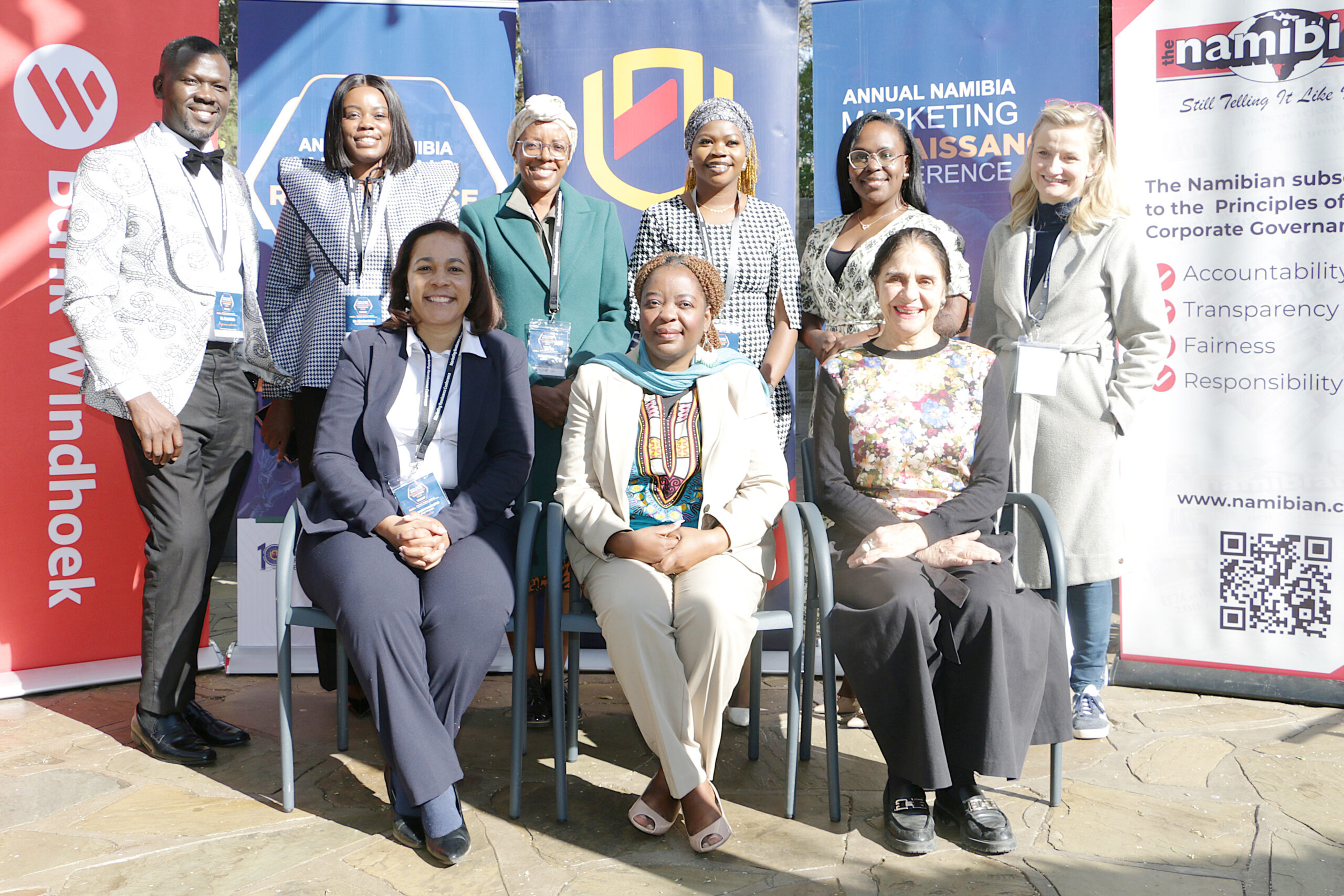
Local marketers have been urged to broaden their marketing tools and strategies for their brands to survive and thrive in the era of digital dominance. This was said during the second Annual Namibia Marketing Renaissance Conference hosted in Windhoek on Wednesday.
Tulip Media Consultancy founder Albertina Kashuupulwa said many local businesses still opt for traditional methods and rely heavily on social media marketing.
She pointed out that there are many digital marketing tools, such as content and email marketing, that Namibian companies, including small and medium-sized enterprises, can utilise to reach clients.
“Social media is great, but it is important that we combine it with other tools to ensure the message reaches a bigger number of people,” she said.
The private firm partnered with the Harold Pupkewitz Graduate School, under the Namibia University of Science and Technology (Nust), to host the conference.
Senior business development coordinator at Harold Pupkewitz Graduate School of Business, Helena Shipanga, told New Era public/private collaboration is important to enhance skills and knowledge in the marketing sphere.
“Marketing is one of the fastest-growing professions in the country, and we just want to make sure what we teach in the classroom is relevant in the industry,” she said.
Held under the theme “Innovate, automate, captivate: Harnessing technology to drive modern marketing,” the two-day event brought together marketing professionals, technology experts, and industry innovators who shared the impact of technology on modern marketing.
Speaking at the conference, sales and marketing manager at The Namibian, Helene Meintjies, noted content marketing is important as it involves creating valuable content to inform, inspire, and engage.
She highlighted local content marketing examples that could inspire marketers, such as indigenous language storytelling in brand campaigns, the Ombura Project by MultiChoice Namibia, and creatives using digital art to explain oil and gas to communities.
She also encouraged marketers to consider cause marketing which she defined as a partnership between brands and causes.
“Cause marketing is about transaction-based campaigns, awareness initiatives, and employee-driven impact programmes,” she said.
Artificial Intelligence
Nust executive dean of the faculty of commerce, human sciences, and education, Efigenia Semente, noted that technology is not a threat to marketing.
“It is an amplifier of creativity, a driver of inclusion, and a tool for impact, but it requires a trained, ethical, and forward-thinking human mind to unlock its full potential,” she said in her address.
Harnessing technology to refine modern marketing is not optional but essential in today’s fast-paced digital economy, she added.
From Artificial Intelligence (AI)-powered customer insights to immersive brand experiences, she said technology is fundamentally redefining how businesses connect with their audiences and how consumers experience value.
The industry aims to educate marketers and build visionary brand architects, data-savvy strategists, and socially conscious entrepreneurs who are equipped to thrive in the Fourth Industrial Revolution, she emphasised.
Bank Windhoek marketing and corporate communications executive officer Jacquiline Pack said in the industry, technology replacing humans is a myth.
“In some sectors it’s real, but in marketing it’s about enhancement and scaling, not replacing marketers,” she said.
According to Pack, in marketing, AI helps with personalising campaigns and audience targeting.
This includes creative development and content generation, advert optimisation and media buying, and analytics and reporting, which are also made easy by AI.
Meanwhile, acknowledging the pros of AI in marketing, Namibian cybersecurity expert, educator, and consultant Iyaloo Waiganjo underlined the dark side of AI in marketing.
“AI tracks everything: clicks, pauses, hesitations, and even that one midnight snack Google search. Algorithms exploit your habits and emotions, sometimes better than your best friend,” she stated.
AI is known to power recommendations and personalise advertisements.
It is powered by machine learning and deep learning, and it predicts what people want before they know it themselves.
Waiganjo said: “Occasionally it gets a little too personal.”
On the other hand, the line between authentic and synthetic is blurred with the emergence of deepfakes generating celebrity endorsements, customer reviews, or influencers.
Waiganjo said harvesting personal data without clear consent and exploitation of emotions by advertisements for antidepressants when you search “sad songs” fall under the category of ethical concerns reported about AI in marketing.
This is alongside showing luxury goods only to one demographic and the emergence of fake influencers, where thousands of followers are seen online but zero human cells.
“Marketers can act responsibly by being transparent, disclosing deepfakes, and using consent-first approaches, which involve letting users know how their data is used and protecting data like gold because it is,” she advised.
Photo: Heather Erdmann