

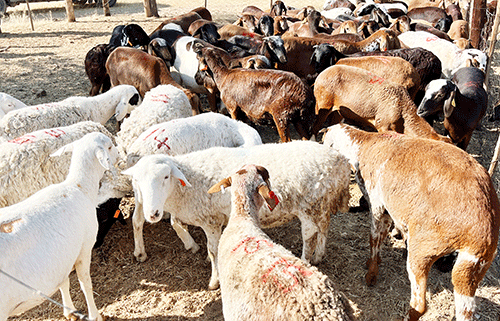

USAKOS – The meat export agreement between Namibia and China in May is fast taking shape, with the Chinese engaging stakeholders to facilitate the export of goat and sheep meat.
This follows an agreement with the General Administration of Customs of the People’s Republic of China, which allows Namibia to export mutton and chevon (goat meat) to the Asian giant.
The agreement outlines strict inspection, quarantine and hygiene requirements that Namibian exporters must meet to access the Chinese market.
Economic counsellor at the Chinese Embassy Wei Jinming confirmed ongoing inspections during a handover ceremony of 1 000 goats and sheep by Swakop Uranium to farmers at Farm Daweb Wes in the Erongo region on Saturday.
He revealed that Chinese companies are already in the country, inspecting abattoirs and engaging local stakeholders to facilitate meat exports.
“China is committed to supporting Namibia’s agricultural sector through investment, skills development and market access,” he said.
He added that the agreement is a testament to the strong bilateral relationship between the two countries.
Namibian goat and sheep meat are expected to appeal to Chinese consumers, who favour lean and organic products. However, local farmers are now challenged to ensure a consistent and bulk supply to meet growing demand.
Scale up
Agriculture minister Inge Zaamwani, who attended the event, called on Namibian farmers to scale up production urgently.
“This could be a game-changing moment for Namibia’s agricultural sector, as it paves the way for our farmers to export meat to the world’s most populous country. Therefore, we must intensify our efforts to produce quality and quantity that can satisfy the market,” she said.
Zaamwani highlighted that the agreement gives Namibia access to over 1.5 billion potential customers.
She urged farmers to maintain consistency and quality in their supply to ensure long-term access to this lucrative market.
“We no longer have an excuse. The market is now open, so we must scale up production and provide quality meat that meets international standards,” she said.
She advised farmers to form cooperatives, expand their herds and improve production standards to fully benefit from the agreement.
“This partnership is not just a trade deal. It is part of our mission to ensure that Namibia becomes self-sufficient in food production. We are currently importing more than 50% of our food. That needs to change,” she said.
Zaamwani added that this agreement supports the objectives of the Sixth National Development Plan, particularly in areas of food security and rural empowerment.