

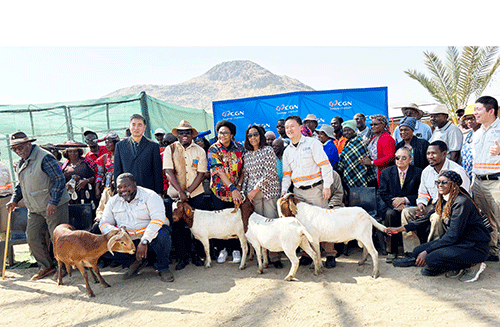

USAKOS – Thirty farmers in the Erongo region were the first recipients of 20 goats and sheep each, thanks to a project launched by the Swakop Uranium Foundation.
The project aims to promote and encourage sustainable livelihoods across the country.
The Hope Farm Project, valued at N$3 million, will see the distribution of 1 000 goats and sheep in 2025. The first phase kicked off on Saturday with 630 animals handed over to 30 local farmers.
The remaining livestock is expected to be distributed later this year.
The project follows a revolving model, where each farmer is required to return 10 young animals after 15 months, allowing others to benefit from future rounds.
Agriculture minister Inge Zaamwani described the initiative as more than just livestock distribution.
She called it a significant step toward achieving Namibia’s Sixth National Development Plan targets.
“This project is not about handouts. It is about building sustainable livelihoods, independence and strengthening food security,” she said.
She stated that the programme will eventually reach farmers in all 14 regions through its revolving model.
Zaamwani, who previously served on the Swakop Uranium board, expressed satisfaction that her call for sustainable development was being realised.
“This partnership is proof that the private sector can play a vital role in national development when guided by strong principles and commitment,” she noted.
The initiative is a collaboration between the Swakop Uranium Foundation and the Ministry of Agriculture, Water, Fisheries and Land Reform.
It aims to uplift communities through the provision of small livestock to selected small-scale farmers.
The N$3 million public-private initiative forms part of the Swakop Uranium Foundation’s Small and Medium Enterprise development pilot.
It is designed to improve livelihoods, create income-generating opportunities and support Namibia’s national food security targets.
Saturday’s launch, which took place at Farm Daweb Wes, about 40 km outside Usakos, saw 630 goats and sheep handed over to the first beneficiaries.
Another 370 animals are expected to be distributed before the end of 2025. Swakop Uranium also plans to roll out the initiative countrywide within the next three years.
Zaamwani encouraged more private sector players to partner with the ministry in rolling out similar projects across the country, especially as the government works to reduce Namibia’s food import bill and ensure the country can produce 80% of its food by 2030.
Swakop Uranium CEO Luo Wei said the foundation will support women and youth, with two agricultural graduates expected to join the programme annually.
“This is about building something lasting. We are committed to providing skills development, veterinary support and regular vaccinations to strengthen livestock productivity,” he said.
All animals distributed at the launch were fully vaccinated.
Erongo governor Nathalia /Goagoses praised the project as a timely intervention for communities affected by prolonged drought.
She urged recipients to honour their commitment to the revolving scheme and confirmed that the Erongo Regional Council will provide continued technical and local monitoring support.
China’s economic counsellor at the Embassy Wei Jinming described the project as a powerful reflection of Namibia and China’s shared development values. “This initiative aligns with the goals of food security, job creation and poverty alleviation – values that are central to our own rural revitalisation journey in China,” he said.