


Stefanus Nambara
Paulina Ndalikokule
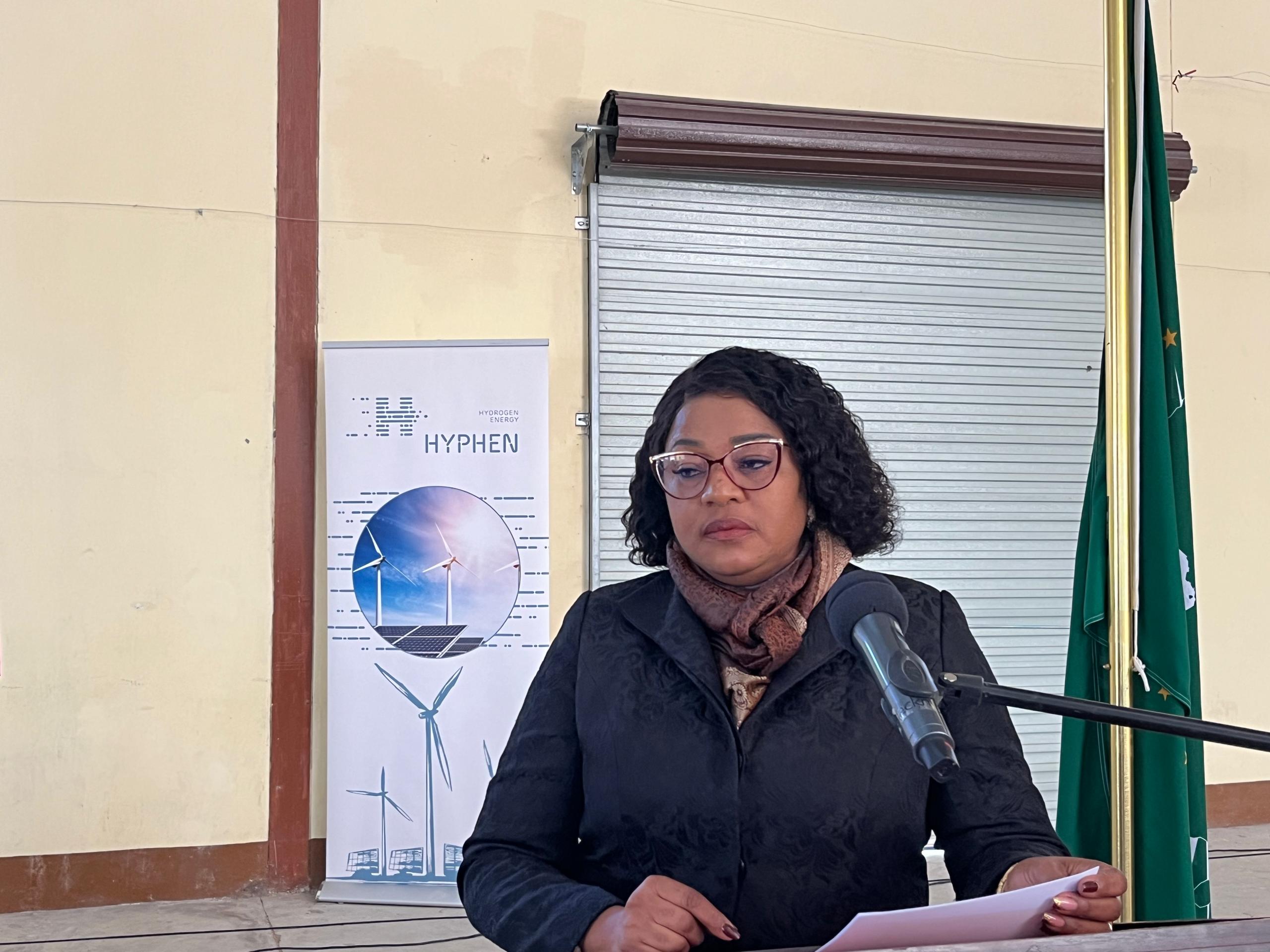
NKURENKURU – In her maiden state of the region address (Sora) last Friday, Kavango West governor Verna Sinimbo, like her predecessor, reiterated that agriculture remains the region’s bedrock.
She called for a transformation of the agricultural sector, subsequently making the region a food hub.
Sinimbo said this when addressing a packed hall on the status of agriculture and food security in the region.
She said the region is driving a bold transformation anchored in agriculture, with a clear focus on value addition, agro-processing and inclusive economic empowerment.
“Our development trajectory is centred on harnessing our natural strengths – land, water, and people – to create jobs, reduce poverty and build resilient local industries,” the governor said.
She said through the directorate of agricultural production, extension, and engineering services, a total of 2 761 hectares were ploughed across all constituencies, benefiting 1 435 farmers.
“I, however believe we can plough more hectares and benefit more farmers if we plan well in advance and avail ploughing services early on at the beginning of the ploughing season,” said Sinimbo.
Additionally, a total of N$1.7 million was spent on subsidies supporting horticulture, poultry and equipment purchases for 146 farmers.
Meanwhile, 657 farmers received training in conservation agriculture, climate-resilient farming and good agricultural practices.
“This was directly linked to our call to promote backyard gardens and fruit tree planting in homes to feed communities directly and promote self-sustenance,” the governor said.
The region boasts two operational green schemes, Musese and Sikondo, which are part of Namibia’s broader strategy to boost domestic food production, reduce reliance on imports, and promote sustainable employment.
There have been notable successes at the two green schemes during the year under review.
Sinimbo said the Sikondo Green Scheme produced 798 tonnes of maize, 517 tonnes of wheat and 300 tonnes of potatoes. This produce generated an income of N$15.9 million and provided employment to more than 800 people.
“Plans are currently underway to establish a livestock feeding centre, which will not only help mitigate the impacts of drought but also add value to local livestock,” she revealed.
“We will ensure stakeholders pursue maximum productivity at Sikondo and accelerate the introduction of agro-processing facilities for value addition to locally produced crops,” she added.
The governor reported that the Musese Green Scheme generated N$28.5 million from the 4 200 tonnes of maize harvested during the year under review.
She noted that a notable success of the green scheme is its commercial milling plant, which processes maize into maize meal, for markets within the region and beyond.
“This demonstrates the critical value of agro processing in enhancing food self-sufficiency and local economic growth,” she said.
She urged the green scheme to also grow other crops and vegetables in addition to maize.
The region also plans adding the Zone Green Scheme to its list of green schemes. The Zone Green Scheme is an emerging government project that is still to be realised.
The government has been allocated a 2 000-hectare piece of land by the Ukwangali Traditional Authority for the establishment of the Zone Green Scheme. The region is now calling on the government to prioritise and expedite the realisation of this project.
“The productivity of these green schemes will be accelerated to enhance national food production for security and to create jobs, especially for the youth, as outlined in the Swapo Party Manifesto Implementation Plan,” Sinimbo said.
Furthermore, the governor said more than N$5.5 million had been distributed to all eight constituencies in the region, through the Kavango West Regional Council, to implement various rural development projects, including poultry farming and horticulture production, among others.
The regional council further supported 40 projects with 400 goats in the Mpungu, Nkurenkuru, Ncuncuni and Ncamagoro constituencies.
Each project received 10 goats (nine ewes and one buck). These projects have directly benefited a total of 146 community members.
*Stefanus Nambara and Paulina Ndalikokule are information officers with MICT in Kavango West.