

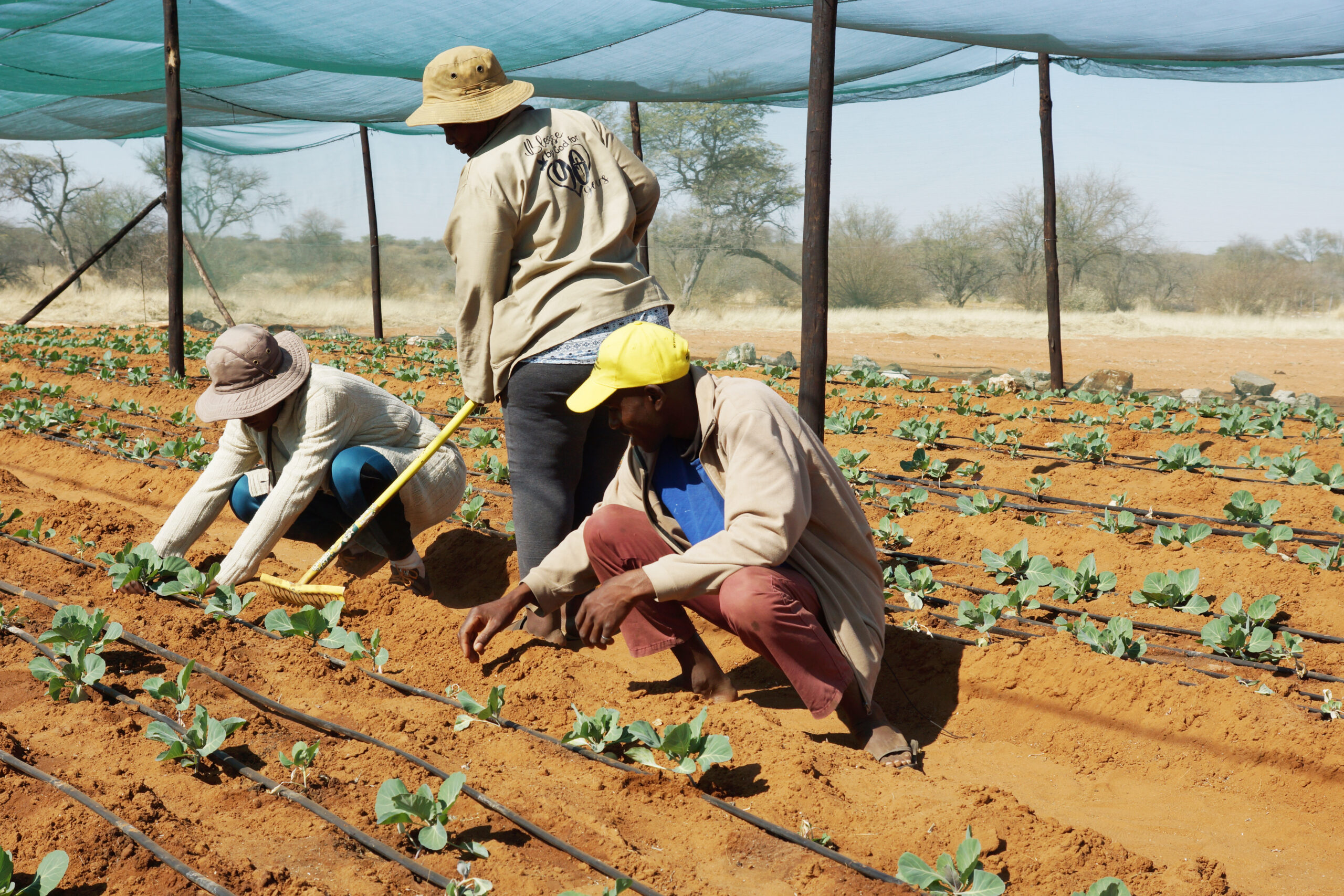

GOBABIS – For hundreds of the most destitute residents of Omaheke region, especially those grappling with the brunt of malnutrition and food inadequacy, Farm Nuwe Hoop is more than just a piece of land on the outskirts of Gobabis; it is an oasis of hope and survival.
Omaheke governor Pijoo Nganate has through his office, reinvented Farm Nuwe Hoop, which is located just some 2km from the region’s capital Gobabis, into a self-sustaining and resilient sanctuary for combating rising cases of malnutrition and empowering hundreds of downtrodden families.
Omaheke is one of the most unequal regions in Namibia and access to decent healthy meals remains a pipedream for many families, particularly those surviving on the fringes of the mainstream economic activities.
Between May and August last year alone, the region recorded a staggering 300 cases of malnutrition and close to 30 deaths due to acute cases of malnutrition.
Faced with such disturbing statistics, it was a clarion call to governor Nganate that something urgent and drastic had to be done to save the situation and uplift hundreds of malnourished children from severe poverty.
And while his office frequently intervened with food handouts and other basic nutritious food items, something self-sustaining, resilient and with a long-term outlook had to be implemented to help feed all the destitute families in Gobabis and surrounding areas.
And that’s how the booming garden project at Farm Nuwe Hoop was birthed; to supply families with highly nutritious and healthy meals through various soap kitchens at Gobabis and nearby settlements.
Today, with the support of numerous partners, Farm Nuwe Hoop’s garden projects have made remarkable progress in agricultural development and community upliftment through methods of mixed farming, as the farm now boasts three 15×30-metre greenhouses, a chicken coop, a goat kraal, and acquired essential equipment, and water tanks.
Through donations and partnerships, the farm has to date received more than 200 chickens, 25 dairy goats, 10 Boer goats, 30 rabbits, and 100 fruit trees; which are all nurtured and geared towards fighting malnutrition and food insecurity in the region.
More meals
It is now able to supply soup kitchens and various shelters with highly nutritious meals, with school-going children from impoverished backgrounds now able to access three healthy meals per day, and as a result, cases of malnutrition have significantly dropped.
“The region has experienced both encouraging progress and persistent challenges. One of our most notable achievements was the significant reduction in malnutrition, which dropped by over 20%. This was made possible through collaborative efforts, including the establishment of soup kitchens, community feeding schemes, and targeted support for vulnerable households. However, challenges remain,” Nganate recently said.
He is still eyeing the full expansion of the garden projects at Farm Nuwe Hoop, as more families still don’t access to three decent meals per day and until that is achieved, Nganate said there will be no resting.
“Poverty, food insecurity, and limited access to services are still widespread, particularly in rural constituencies. Infrastructure backlogs, youth unemployment, and land access issues continue to demand urgent attention. These realities have only strengthened our resolve to continue finding practical solutions. At Farm Nuwe Hoop, successful pilot harvests last year included carrots, beetroots, tomatoes, and spinach, with 10 000 onions, 5 000 cabbages, and more planted in June 2025 for a planned mid-September harvest. The project, supported by Suncrest Farming Solutions, currently benefits over 35 youth and has employed over 50 locals,” he added.
A training session was held for 45 participants, and the production has supported soup kitchens and the Epako old age home. With access to 250ha of municipal land secured, Nganate said they plan to hold a Farm NuweHoop open day and establish a municipal close corporation to ensure long-term sustainability.
One of the initiative’s first achievements was the supply of fresh goat milk to soup kitchens in Gobabis, which provides meals three times daily to vulnerable children. The ultimate goal, Nganate said, is to ensure that every child in Omaheke has access to a glass of milk daily.
They received a significant boost through a donation of 10 Boer goats from renowned lawyer and farmer Jefta Tjitemisa, which follows an earlier donation of 21 dairy goats from commercial farmers through the Cheetah Conservation Fund.
“Through this partnership and with the support of local farmers, we are providing immediate relief while building the foundation for long-term, self-sustaining food production systems at Farm Nuwe Hoop.”
ohembapu@nepc.com.na