


Zebaldt Ngaruka
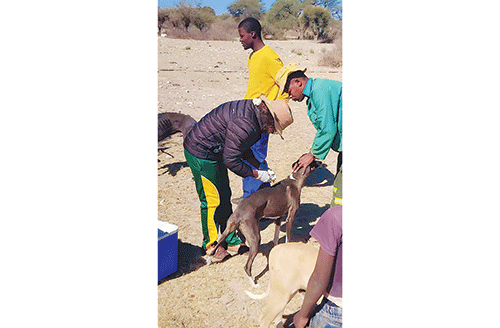
The campaign to vaccinate dogs and cats against rabies in Omaheke region’s Epukiro constituency is going smoothly as community members are cooperating with the veterinary service officials visiting the various areas.
Rabies is a vaccine-preventable, zoonotic viral disease affecting the central nervous system. In up to 99% of rabies cases in humans, dogs are responsible for transmitting the virus. Children between the ages of 5 and 14 years are the most frequent victims.
Rabies infects mammals, including dogs, cats, livestock and wildlife and is spread to people and animals via saliva, usually through bites, scratches, or direct contact with mucosa (e.g. eyes, mouth, or open wounds). Once clinical symptoms appear, rabies is virtually 100% fatal.
Dr. Seuakouje Veii, the area state veterinarian under the Directorate of Veterinary Services in the agriculture ministry, shared with AgriToday that the free vaccination campaign started in June this year and will continue until all villages in Epukiro are covered.
“This is our annual campaign as most pets’ yearly vaccination is due and so far, a total of 530 pets have been vaccinated in the area,” said Veii.
When asked whether there are cases of rabies reported in the area, she shared that only one case was reported after a jackal attacked a person at home in one of the villages in Epukiro. But there is currently no cases or reports of domesticated animals attacking humans.
Veii further advised farmers to urgently report animals showing behavioural changes to the nearest veterinary office and also warned that rabies is a fatal disease and therefore vaccination is the best way to protect pets and prevent the spread of the disease to humans.
“This is a zoonotic disease, and there is no cure. Let us work together in kicking rabies out of our area. We are aiming to have zero rabies nationwide,” she said.
The vaccination campaign has so far reached the Okomumbonde and Otjiwarongo villages and will in the coming days continue to Otjijarua and Otjombundiro on Thursday. From Friday until Wednesday next week, the villages of Okombomi, Okanguindi, Okajombo, Ezorongondo, Okatuuo, Otjimanangombe, Ozombouvapa, Otjimati, Omburo and Omutumbotjari will be covered.
Community members are urged to bring along the health certificates or cards of their pets received during previous vaccination campaigns for endorsement. “Puppies usually get their first rabies vaccine between 12 and 16 weeks of age. Following the initial vaccination, pets need booster shots to maintain immunity.”
– zngaruka@yahoo.com