

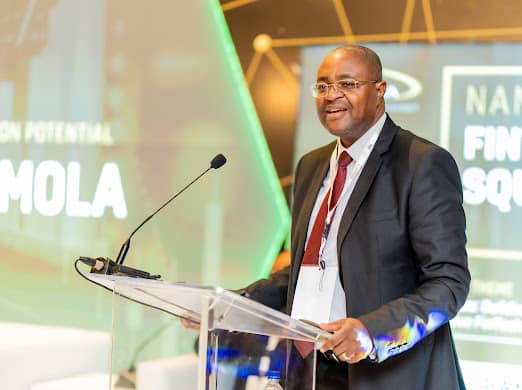

To unlock the full potential of a digital financial ecosystem in Namibia will require new models, new tools, and, crucially, new mindsets. This is according to Kenneth S. Matomola, chief executive officer of the Namibia Financial Supervisory Authority (Namfisa), who was speaking at FinTech Square 2025, a flagship initiative under the authority’s innovation agenda that took place in Windhoek on Thursday and Friday.
“But with great promise comes great responsibility. Innovation must not deepen inequality, exclude vulnerable groups, or compromise financial integrity. Our challenge is to innovate responsibly, inclusively, and deliberately, ensuring that a smallholder farmer in rural Namibia benefits as much as a Windhoek-based entrepreneur,” said Matomola at the event that has steadily evolved into a leading platform to showcase the work of Namibian innovators, promote investment into startups, and strengthen collaborative ties within the broader FinTech ecosystem.
The theme of this year’s event was “Igniting Namibian non-bank fintech innovation”. The objectives of the 2025 event were to recognise the important role of academia, incubator hubs, regulatory frameworks, and financial services providers. The 2025 event will serve as a platform to deepen the Namibian FinTech ecosystem and spotlight scalable solutions that address Namibian socio-economic challenges.
Matomola added that the event reflects a shared ambition to cultivate a digital financial ecosystem that is intelligent, inclusive, and secure.
“The non-bank financial sector, spanning insurance, pensions, microlending, medical aid, and investments, is where many Namibians first encounter formal financial services. Yet, immense untapped potential remains,” Matomola emphasised.
The FinTech Square 2025 event aimed to celebrate and accelerate local innovation as a platform that not only reflects progress but also charts the course for the future of the Namibian financial sector.
As the keynote speaker at the opening of the event, Matomola noted that since its inception in 2023, the event has grown into a cornerstone for dialogue, collaboration, and innovation in Namibia’s financial ecosystem.
“With over 1000 attendees at our inaugural gathering, FinTech Square has cemented its role as a catalyst for digital transformation in Namibia’s non-bank financial sector.
Today, we convene not merely to discuss innovation but to harness its power in improving livelihoods, driving economic growth, and fostering a more inclusive and resilient financial system. In an era where innovation is no longer optional but essential, Namfisa remains committed to fostering FinTech participation through annual themed forums that push the boundaries of financial services,” Matomola added.
Also speaking during the opening, Kristof Itana, Technology & Standards manager at the Communications Regulatory Authority of Namibia (Cran), said that in today’s rapidly evolving digital landscape, the growth of FinTech hinges on the development of a strong, coordinated regulatory ecosystem.
“Achieving this requires a shared vision and concerted efforts among regulators, industry players, technology providers, and consumers. At Cran, we recognise that our mandate, which is to regulate, supervise, and promote the provision of telecommunications services and networks, broadcasting services, postal services, and the use and allocation of radio spectrum within Namibia, is fundamental to supporting the digital economy and fostering innovative financial services,” he said.
He continued that Cran actively supports emerging technologies through various initiatives such as spectrum management, which ensures optimal allocation and utilisation of wireless frequencies essential for mobile financial services; Type Approval processes that ensure new devices and technologies meet safety and interoperability standards; and consumer protection frameworks that build trust and confidence among users of FinTech solutions.
“We believe that ongoing dialogue helps us understand the needs, challenges, and opportunities within the FinTech ecosystem. This collaborative approach allows us to shape responsive, future-ready regulations that not only safeguard consumers but also promote innovation and competitiveness,” said Itana, adding, “We understand that technological advancement must go hand-in-hand with inclusivity and security.”
Meanwhile, Namfisa’s deputy CEO, Erna Motinga, asked how to strengthen the non-banking financial sector, protect consumers, and advance national development strategies.
“Colleagues, financial inclusion matters not only because it promotes growth, but because it helps ensure that prosperity is widely spread. As the regulator responsible for the non-bank financial sector, Namfisa also recognises the need to balance innovation with stability, and to encourage solutions that are not only technologically advanced, but also ethically sound and contextually relevant. As such, the FinTech Square is a living platform for this transformation. Over the next two days, we will hear fresh ideas, see emerging technologies and most importantly, have honest conversations about how to bridge the gap between vision and reality,” said Motinga.