

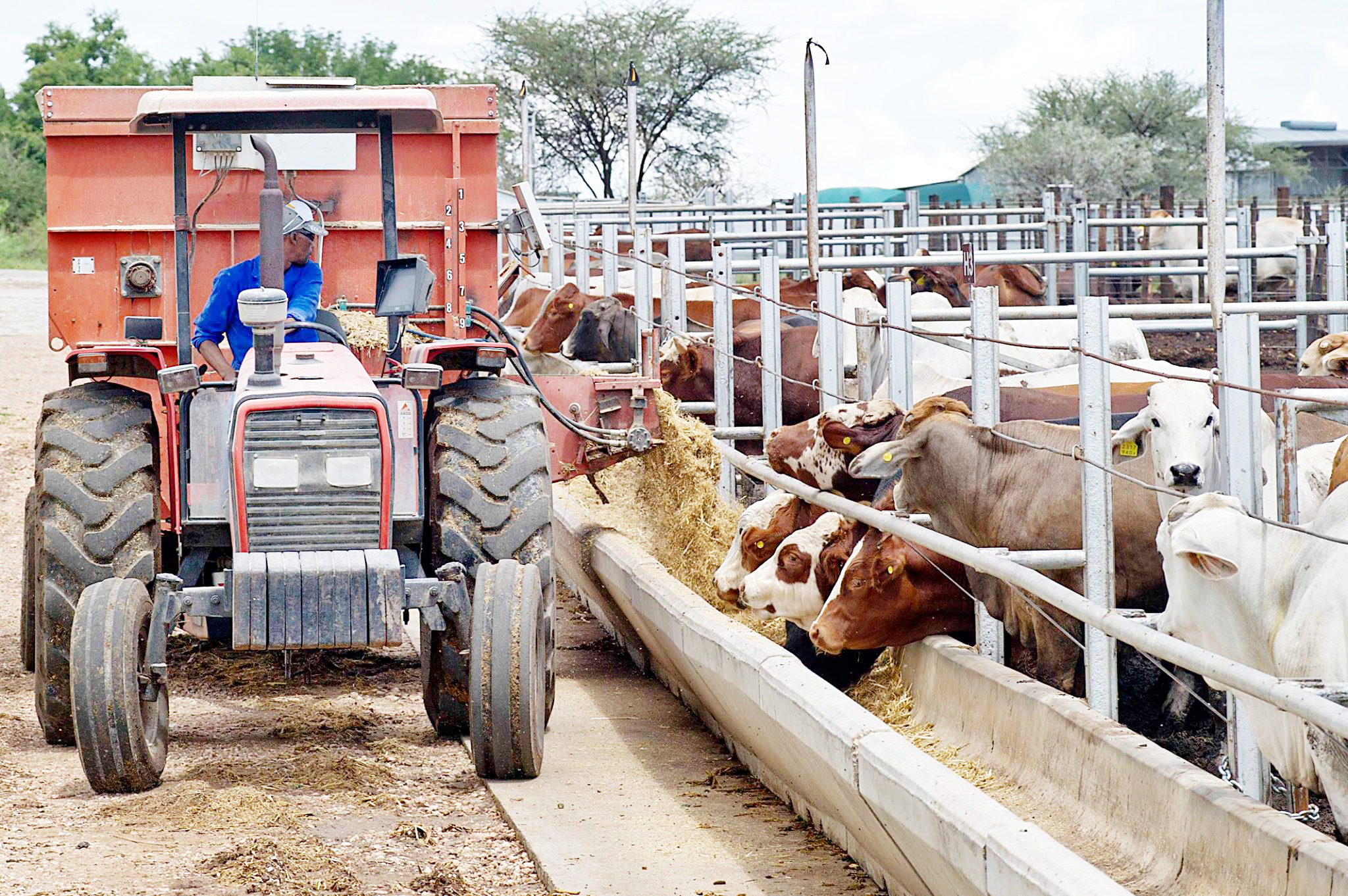

Under the recently-launched Sixth National Development Plan (NDP6), Namibia will by 2030 become a self-reliant and food secure country.
Local supply chains will cater to at least 80% the country’s national food needs.
Through NDP6, President Netumbo Nandi-Ndaitwah has pledged to strengthen domestic agricultural input supply and innovation systems, as well as improve rangeland, animal and plant health management to ensure the country meets its food requirements by 80% from the current 60%.
Nandi-Ndaitwah plans to place great emphasis on agriculture value chains development, climate-smart, as well as sustainable and competitive crop and livestock value chains.
“By 2030, the livestock and crops value chains should be thriving and collectively contribute at least 8.0% to the gross domestic product from 4.6%. We will revitalise strategic agricultural value chains and promote climate-smart, water and energy-efficient agricultural production systems. We will also expand market access and value chain competitiveness, as well as animal and crops value chain development,” said Nandi- Ndaitwah.
Agro-processing is another key focus area, where the President plans to increase value addition and locally agro-processed products for export.
By 2030, the Agro-processing contribution to GDP should have increased from 7.5% to 10%.
“Government will promote technology -driven value addition and agro-processed product diversification, promote infrastructure development, repurpose existing agro-processing infrastructure and leverage on green financing mechanisms.”
Also, as part of NDP6, Namibia has committed to expanding large-scale farming land and increasing the value of strategic crop exports to enhance food security, bolster the agro-industry and increase rural incomes by 2030.
NDP6 will guide Namibia’s economic and social policies from 2025 to 2030.
The government plans to increase the area under large-scale crop production from 11 200 hectares in 2024 to 130 000 hectares by 2030.
This is a key part of a broader effort to modernise agriculture and increase the country’s resilience to climate change.
In addition, Nandi-Ndaitwah plans to raise the value of strategic crop exports from N$1.9 billion to N$2.8 billion over the next five years.
In addition to expanding cultivated land, the government aims to enhance value chains by investing in irrigation systems, agro-processing facilities and logistics infrastructure.
The NDP6 also prioritises research and innovation in crop production, including climate-resilient seed varieties and modern farming techniques.
This is particularly the case in northern communal areas, where food insecurity remains high.
Government support will focus on strategic commodities, such as maize, wheat, mahangu (pearl millet), horticulture and oilseeds.
The emphasis will be on both domestic food production and export potential, the plan stipulates.
Agriculture remains a key part of Namibia’s economy, providing jobs for about one in five individuals.
Through the NDP6, the country is expected to make farming more productive and sustainable.
-Additional info by Xinhua