

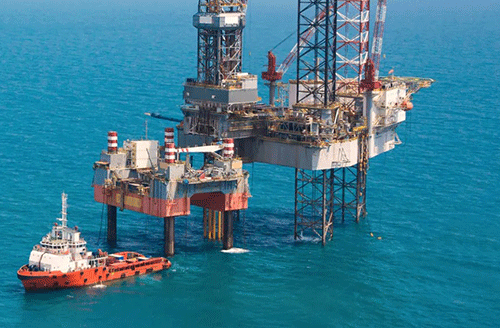
If managed well, Namibia’s hydrocarbon resources can be key enablers for industrialisation, infrastructure growth, skills development and poverty eradication both domestically and regionally.
These were the remarks of Minister of Industries, Mines and Energy Natangwe Ithete at the third edition of the Namibia Oil & Gas Conference in Windhoek this week.
The conference ends today.
Recent hydrocarbon discoveries in the Orange Basin offshore Namibia have indicated an estimated 11 billion barrels of oil and 2.2 trillion cubic feet of gas. These resources have the potential to generate up to N$7.7 billion per year in government revenue through royalties and taxes.
Addressing the conference, Ithete said these potential resources represent a generational opportunity to shape the destiny of the domestic economy, empower local communities, and establish Namibia and Southern Africa as one of the most promising energy frontiers in Africa and the world.
“I am calling on unity of purpose because we have seen it before: nations rich in oil and gas that become poorer in spirit, divided in society and become victims of their resources. The ‘resource curse’ destroys economies, collapses institutions, harms the environment and leaves the people, the rightful owners of the resources, worse off than before. Namibia will not follow that path. We refuse to become another cautionary tale,” he vowed.
The minister continued that every barrel of oil and every cubic foot of gas must translate into jobs, infrastructure and opportunities for Namibians.
“The revenues will not be squandered. They will build schools, power our homes and seed our renewable energy future. Local content will be the heartbeat of this industry, our businesses and our skills at the centre of value creation,” he added.
He went on to say the oil beneath Namibia’s ocean must fuel prosperity long after the wells run dry.
“If we fail, history will judge us harshly. Let us choose wisely. Let us move from exploration to action with discipline, unity and the unshakable belief that Namibia and African’s best days are ahead,” the minister said.
At the same event, chairman of the Economic Association of Namibia Jason Kasuto said it may seem the country is sometimes dragging its feet in concluding key policy, regulatory, incentive and infrastructure requirements for the oil and gas industry.
He stated that the country is building the roots to establish a solid foundation for the eventual accelerated, sustainable and inclusive growth of this industry.
“The Mission of the Economic Association of Namibia bears some key words and phrases: drive economic development, thought leadership, public policy engagement and inclusive economic growth,” said Kasuto.
Acting managing director of the National Petroleum Corporation of Namibia (Namcor) Victoria Sibeya said Namibians must ensure their oil and gas resources are developed responsibly, sustainably and for the long-term benefit of the nation.
“Our vision is to create a fully-integrated oil and gas value chain that delivers upstream success, midstream infrastructure, downstream growth and domestic energy security. We see opportunities in refining, LNG (liquid natural gas), petrochemicals and regional energy trade,” she said.
At the same conference, secretary general of the Gas Exporting Countries Forum (GECF), Mohamed Hamel said Namibia’s natural gas resources position it to become a clean energy hub by developing associated gas, investing in LNG infrastructure and integrating gas into local manufacturing, transport and electrification.
“Recent offshore discoveries, such as Venus, Graff and Mopane, have placed Namibia firmly on the map as one of Africa’s most promising energy frontiers. Namibia stands today not only as a new energy player but as a symbol of what is possible when vision meets leadership.
With natural gas as a pillar, Namibia can accelerate its development, strengthen its sovereignty, and inspire a continent,” said Hamel.