

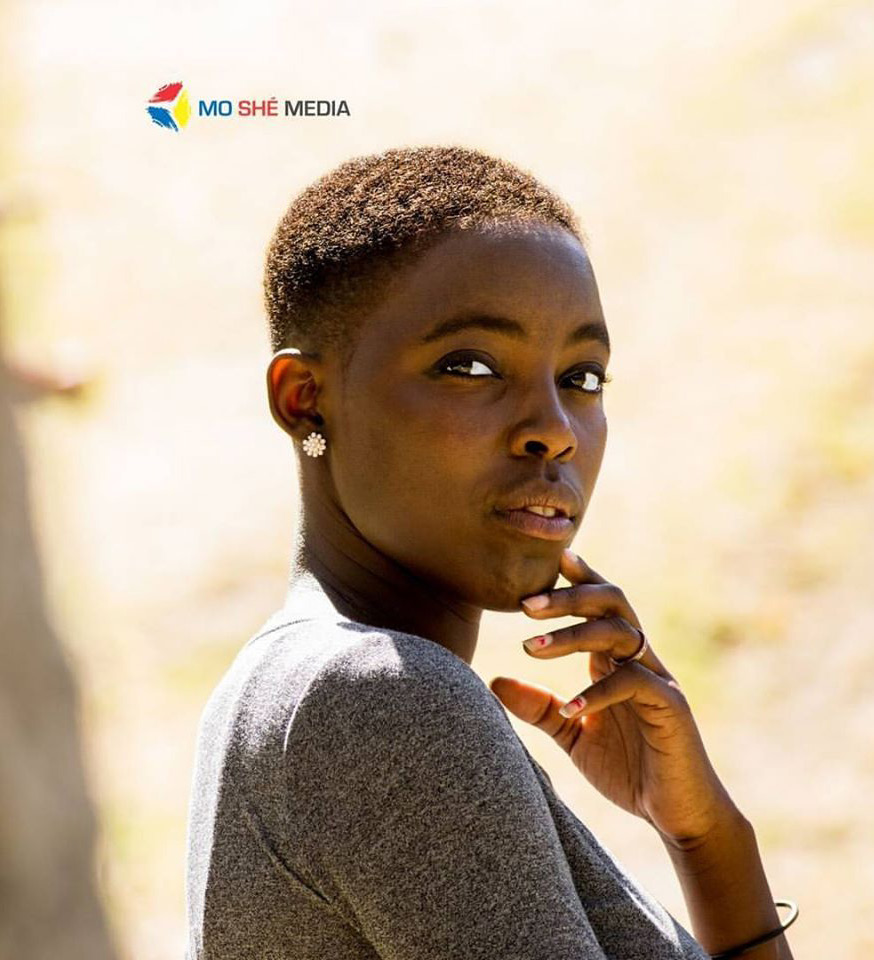

When Johanna Swartbooi was crowned Miss Namibia, the country celebrated. She stood tall, beautiful, and proud, a symbol of confidence, culture, and youth.
But alongside the praise came something familiar and disappointing: bashing and criticism from the keyboard warriors. Not for her intelligence, platform, or performance. But, for her hair. Some questioned why she didn’t wear a wig. Others commented that her hair wasn’t “polished enough” for a queen. That it wasn’t at an “international” level because of how it was presented.
These comments, while subtle, cut deep because they weren’t just directed at a public figure; they reflect what so many Namibian women hear daily. Whether it’s at work, in classrooms, at job interviews, or even in church, Black women with natural hair are often told that their appearance is not “neat” or “professional.” These comments have also found their way into the daily conversations, even between other women. As a girl, how often have you heard, gaan jy met ‘n kop wat so lyk? Don’t you want to rather put a wig, chommie? Often, these are because natural hair is seen as not appropriate or professional. But what does “appropriate” mean, and who decided what’s acceptable?
The standard of “professional” hair, in many cases, is still shaped by Eurocentric ideals. Straight, tamed, and flat, most times, relaxed. It should sit quietly. Never stand up, never speak too loudly. Never reflect too much on its African roots. And so, natural African hair becomes politicised and treated as a problem to fix rather than a heritage to honour. Hair is not just a fashion statement. It is not a trend, it is culture, it is memory, it is resistance.
I recently read a book titled ‘Things my Mother Left Me’, and there was a section on how much hair contributes to your identity and who you are as an individual in society. Although much of the focus was placed on it being connected to the memory and connection of your lineage, it reminded me of how much policing is done to women, even though their hair, which we often forget that our hair tells stories of where we come from, what we’ve survived, and how we see ourselves. For centuries, African hair has carried meaning. The way it’s braided, tied, or worn says something about age, tribe, status and sometimes, expression.
As such, to suggest that natural black hair is not fit for a boardroom, a podium, or a runway is to say that African identity must be edited before it can be accepted. Bringing it back to Johanna and how she chose to wear her hair for the competition, she had a lot of meaning behind it. She wasn’t just proud to be who she is, but she was also proud to show a part of where she comes from, her people and what it means to be authentically her. Make no mistake, this is not to say the other contestants weren’t proud of themselves.
In the end, it was not just an aesthetic issue, but a deeper problem of inclusion, bias and internalised shame from the people who were bashing her. We must begin to ask serious questions: Why are we still raising young girls to believe that their natural hair must be fixed to be beautiful? Why are we still uncomfortable with women showing up fully with their curls, coils, locs and confidence? Why is African hair only celebrated when it’s packaged, polished and softened to meet a global gaze?
Professionalism has nothing to do with hair texture. It is defined by how you work, how you lead and most importantly, how you treat others. To every woman who’s ever been told to “fix” her hair: don’t shrink yourself. To every girl questioning if her crown is too much: it’s not. Your hair is not a distraction; it’s a declaration.
Let’s create a culture where girls grow up loving their hair and not learning to hide it. Because hair is not just what’s on your head, it’s who you are, and that should never be up for debate.
*Frieda Mukufa’s lifestyle section in the New Era concentrates on women-related issues and parenting. She also specialises in editing research proposals, proofreading and content creation.
– etuholefrieda@ gmail.com