

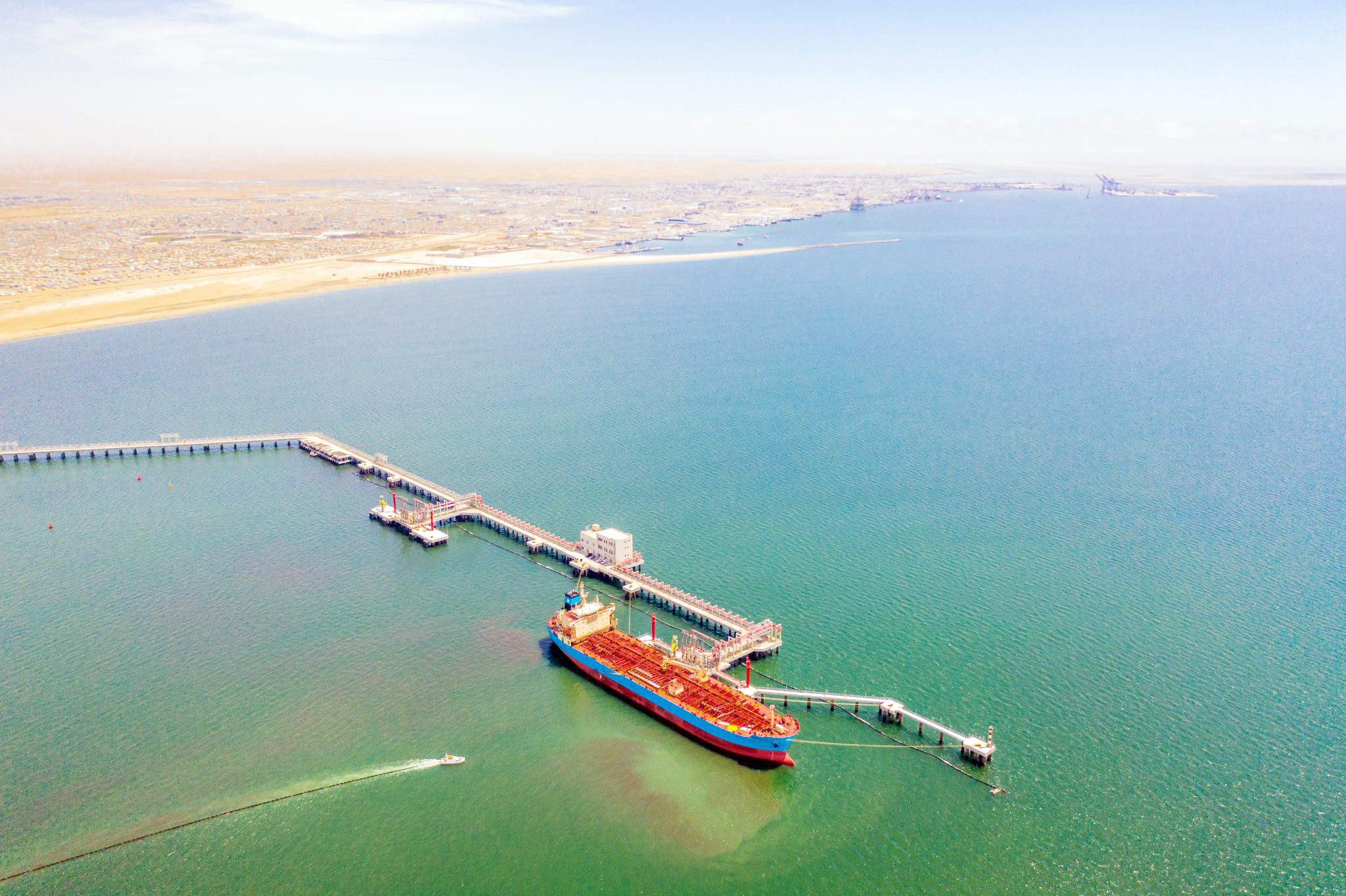

The decommissioning of the old fuel jetty at Namport and the full transition of fuel imports through the National Oil Storage Facility (NOSF) as of 1 August 2025 carries several implications for fuel security and price stability in Namibia. These implications entail enhanced storage capacity, centralised oversight, reduced risks as well as reduced delays, including reduced vessel turnaround times.
Initially estimated to require a capital investment of less than N$3.7 billion, the NOSF was finally constructed at a total cost of N$6.5 billion to replace the old oil tanker berth in Walvis Bay, which was over 50 years old and had outlived its design life. Construction of the NOSF commenced in January 2015 and was officially handed over to the National Petroleum Corporation of Namibia (Namcor) in March 2021 by the ministry of mines and energy.
Responding to New Era queries, Namcor noted the full transition of domestic fuel imports through the national asset will enhance both storage capacity and reliability.
“With all imports now routed through the North Tanker Jetty and stored at the NOSF Terminal, a modern, strategically located facility, Namibia benefits from more reliable infrastructure for fuel handling and storage. This significantly reduces the risk of disruptions caused by equipment failure or environmental hazards. Furthermore, the government can begin to realise a return on investment (ROI) from NOSF operations. The shift to the North Tanker Jetty enables NOSF to generate revenue from vessel discharges, pipeline transfers, and storage services, activities that were previously carried out at the old tanker jetty,” explained Namcor spokesperson Utaara Hoveka.
Hoveka added that the NOSF allows for improved monitoring and control of national fuel reserves, even those belonging to private oil companies, and supports better emergency planning and inventory management to cushion against supply shocks. This aspect, he stated, will also assist in collecting statistics for better planning in terms of entering into hosting agreements.
Moreover, the old now decommissioned jetty posed operational and safety risks and its decommissioning reduces the likelihood of oil spills or accidents, improving environmental safety and compliance with international standards.
“NOSF, being a government-owned facility, represents government’s commitment to long-term fuel security goals, while at the same time reducing reliance on aging private infrastructure which are no longer cost effective,” Hoveka stated.
He further elaborated that in terms of economies of scale, centralising imports through the North Tanker Jetty and NOSF Terminal may reduce overall handling costs and improve efficiency in logistics. The importation transition also results in reduced demurrage and port delays. “As a modern facility, NOSF is designed to handle high volumes more efficiently, which reduces vessel turnaround time and avoids demurrage costs, ultimately supporting price stability”, Hoveka added.
Namcor, as the national oil company, runs and oversees the NOSF on behalf of the Ministry of Industries, Mines and Energy via an operator agreement.
The NOSF remains one of government’s biggest investment projects and was constructed to increase Namibia’s fuel security and supply of petroleum products from a concerning seven to 10 days to a more manageable 30 days or more.
The NOSF was financed mainly by two loans from the Development Bank of Namibia and from the African Development Bank. The loan repayments to the development banks total N$55 million a month that is being financed mainly through a fuel levy.
– ebrandt@nepc.com.na