


Matheus David
Heather Erdmann
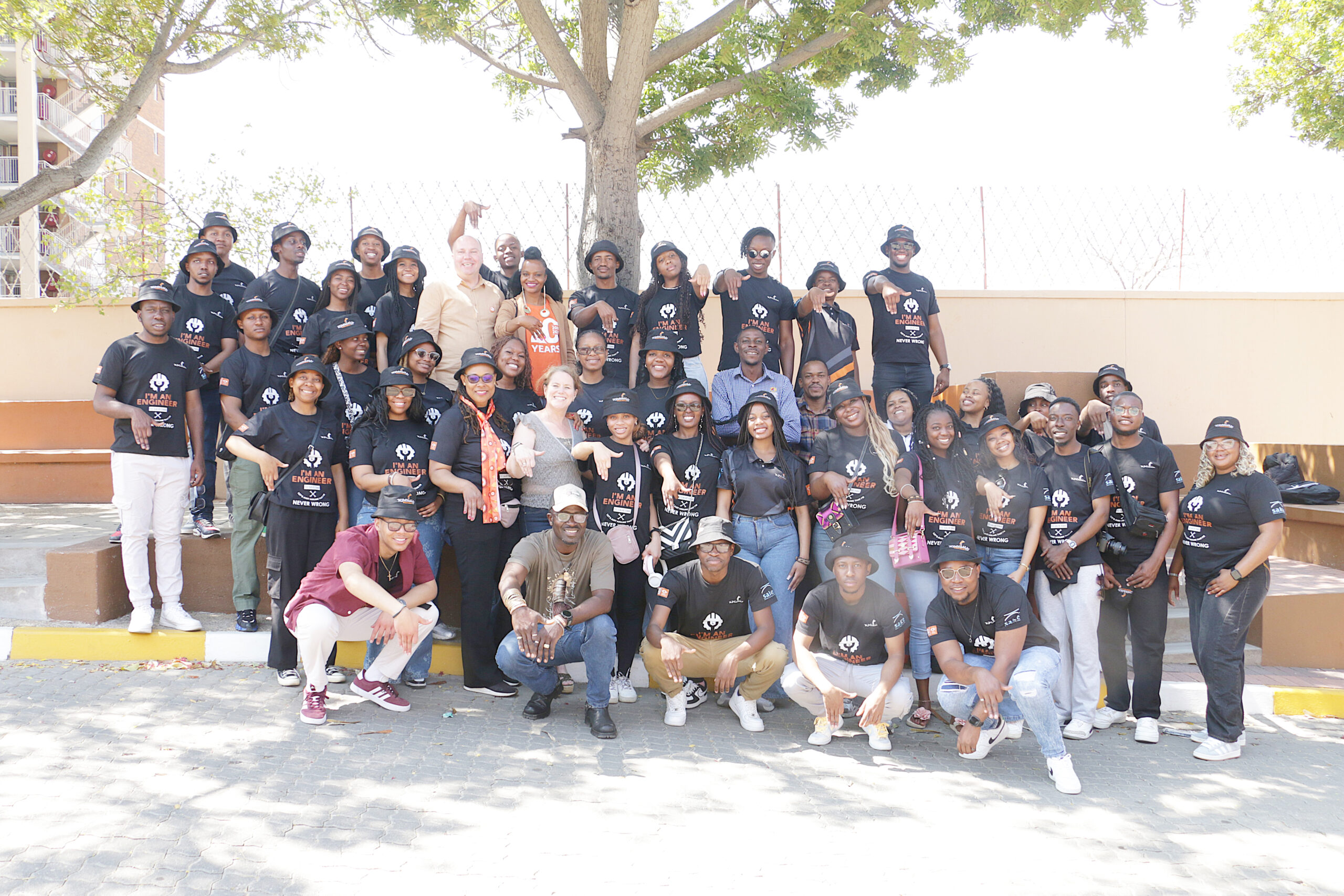
NAMIBIA – Forty students and five staff members from the University of Johannesburg’s (UJ) Faculty of Engineering and the Built Environment are in Namibia as part of a programme to broaden and diversify their knowledge.
The visit that ended last week also aimed at enhancing cultural intelligence and promoting cross-border collaboration within the SADC region.
Precious Maputle, the marketing coordinator at the UJ Faculty of Engineering, said the programme was developed in response to xenophobic tensions in South Africa. “The idea was to sensitise students and make them more culturally intelligent and open to understanding how life, traditions, and education systems work in other African countries. At the same time, it addresses the reality that many South Africans do not travel enough within the region,” she said
The week-long programme combined academic activities with cultural exchanges within the engineering field. The group visited the Namibia University of Science and Technology (Nust) where they toured engineering laboratories, research facilities, and engaging in discussions with Namibian peers.
“Our qualifications are internationally recognised and if our graduates are to work anywhere in the world, they need exposure to other countries’ cultures and infrastructural challenges,” Maputle added.
Sophia Rwanga, head of UJ’s Department of Civil Engineering Science, emphasised that sustainability and the global development agenda were key themes throughout the visit.
“We engaged companies and projects focusing on sustainable practices and the 17 Sustainable Development Goals,” she noted. Stops included the Goreagab Wastewater Treatment Works, scaffolding firms in Windhoek, and the coastal town of Swakopmund, where the group studied sustainable urban engineering approaches. Next, they visited irrigation schemes in Mariental.
For many students, the trip offered a rare chance to see classroom theory applied in real-world settings. “When they study water recycling in class, they don’t always see it in practice,” said Rian Uusizi, a lecturer at Nust’s Civil Engineering Department.
“Windhoek is one of the few cities globally recycling wastewater for human consumption. Experiences like this show the students how engineering solutions adapt to local conditions.”
The visit coincided with the holding of Nust’s cultural festival, giving UJ students an unexpected opportunity to interact with Namibian traditions and student life. Gabriel, a Namibian tour guide who has worked with UJ delegations for four years, called it “a bonus for the group,” noting it deepened their cultural exchange.
Beyond academic exposure, both institutions are laying the foundations for long-term collaboration. Nust and UJ signed a Memorandum of Understanding earlier this year covering student exchanges, joint research, and curriculum development for specialised fields such as low-cost housing and transport inspection. Uusizi confirmed that discussions are underway with Namibia Housing Enterprise to design tailor-made courses addressing pressing national needs.
Photo: Heather Erdmann