


Rudolf Gaiseb
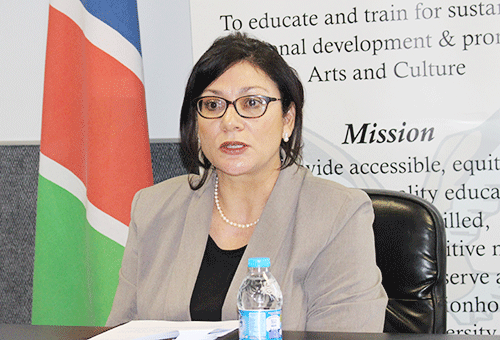
The Minister of Education, Arts and Culture, Sanet Steenkamp, has given an assurance to members of the parliament that cases of food poisoning will not be repeated in government schools.
She was speaking in the National Assembly last week following the poisoning incident at Maria Mwengere Senior Secondary School hostel in Kavango East, where 33 pupils were hospitalised between 31 August and 3 September 2025.
In total, 141 children presented symptoms of diarrhoea, dizziness, chest pains, severe headaches and abdominal cramps after consuming a meal at the hostel.
A preliminary investigation by health inspectors indicated that food contamination was the likely cause.
According to Steenkamp, the affected pupils – aged between 13 and 26 – fell ill after eating a combination of macaroni, wors, beetroot, carrots, cabbage, white soup and oats porridge. Seven of those affected were children with special needs.
Steenkamp said a rapid response team comprising an epidemiologist, environmental health practitioners, surveillance officers, health information officers and nurses was immediately dispatched to the school.
“At this stage, however, the exact cause of the contamination has not yet been conclusively established. It remains under investigation whether the food was delivered in an unfit condition by the contracted provider company or whether the problem was due to improper storage and refrigeration at the hostel. Both possibilities are being thoroughly investigated, and conclusive findings will be reported once available,” she added.
The minister stressed that the ministry was taking the matter seriously and is determined to strengthen food safety measures across all hostels. “We are committed to ensuring such an event does not recur in any of our schools,” Steenkamp said.
By Thursday, all the 33 pupils had been discharged from hospital.
Meanwhile, Independent Patriots for Change (IPC) spokesperson Imms Nashinge called for an end to food tendering for the national school feeding programme. He argued that profit-driven bidding often results in the supply of low-quality, sometimes expired food products that put the children’s health at risk.
“With weaknesses in quality assurance, it is crucial that the ministry ensures food is safe for consumption, and that procurement is people-centred, not profit-driven,” Nashinge said. He also suggested the ministry establishes a dedicated quality assurance unit.
Affirmative Repositioning leader Job Amupanda added that government should create a special independent investigation unit to conduct pre-emptive food safety inspections “so that real-time information and data can be used to prevent these occurrences”. He pointed out that while food supply is outsourced, the actual preparation, hygiene, and storage remain key areas of concern.
Between 2015 and 2025, Kavango East recorded more than 100 cases and nearly 30 deaths linked to food-induced illnesses, often due to poor hygiene practices, inadequate storage and cross-contamination.