


Matheus David
The Namibian Correctional Service (NCS) has launched a Criminal Justice Research Forum, bringing together academics, policymakers and justice professionals to address the country’s most pressing security challenges.
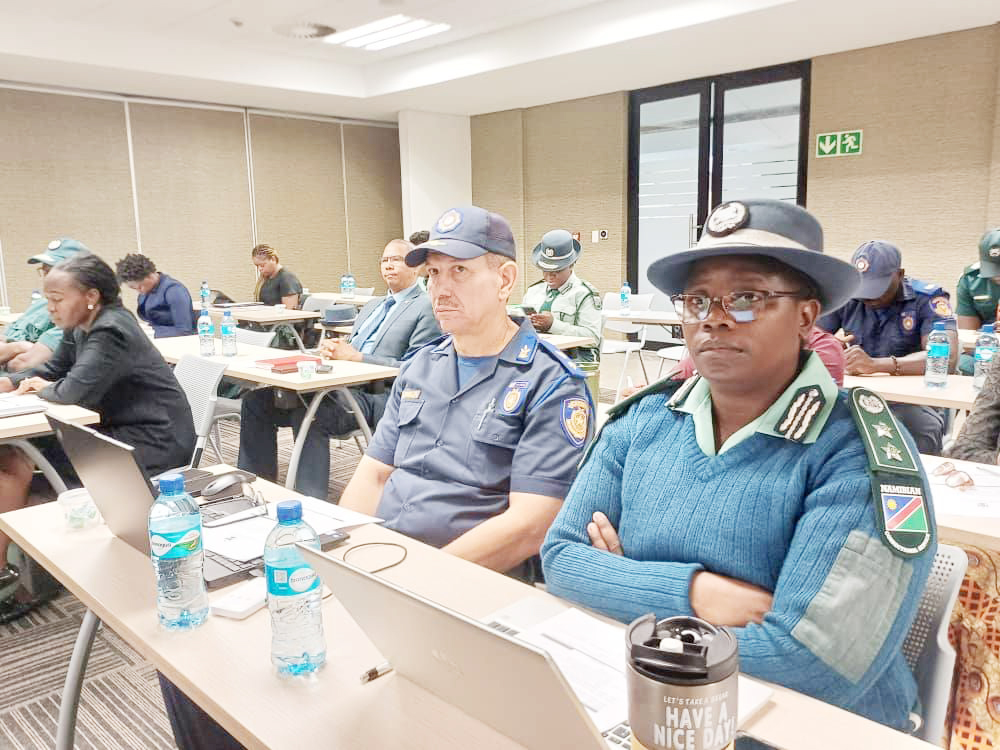
The session held last week in Windhoek under the theme ‘Synergising Research and Data in the Namibian Criminal Fraternity’ drew representatives from across Namibia and the Southern African region.
For many attendees, the forum offered hope that data and research could be tools to finally address issues like crime prevention, overcrowded prisons and offender rehabilitation.
Speaking at the launch, Nghidinua Daniel, executive director of the Ministry of Home Affairs, Immigration, Safety and Security, said the initiative was a game-changer.
“The forum creates a platform for collaboration, knowledge sharing and strategic data analysis that will empower all stakeholders within the criminal justice system,” Daniel said.
He added: “This will not only enhance our understanding of the issues at hand but also enable us to develop more effective, fair and responsive policies and interventions”.
The 2023 Namibian Police crime statistics states that more than 91 000 cases were reported nationwide, with theft, housebreaking and gender-based violence leading the numbers.
At the same time, the country’s correctional facilities are operating under pressure, holding over 4 200 inmates in a system designed for about 3 700 – a situation that makes rehabilitation even more difficult.
Daniel said the forum will serve as a hub for innovation and reform, helping Namibia move away from reactive crime control toward evidence-based solutions.
“Together, we can build a justice system that is transparent, accountable and adaptive to the needs of our society,” he said, urging participants to work across institutional boundaries.
Stakeholders at the session noted that better use of data could directly benefit communities.
For instance, more accurate crime mapping could help police target resources where they are needed most, while rehabilitation research could reduce reoffending rates currently estimated at around 40% in Namibia.
He said the inclusion of universities from Southern Africa means Namibia can also draw on regional expertise and lessons from countries facing similar challenges. Daniel went on to say that, for the NCS, the research forum is more than an academic exercise. It is a promise of a safer society, where policies are shaped by facts rather than guesswork.
He said, if implemented well, the forum could mark the beginning of a new era of accountability and smarter justice in Namibia.
-matheusshitongenidavid@gmail.com