

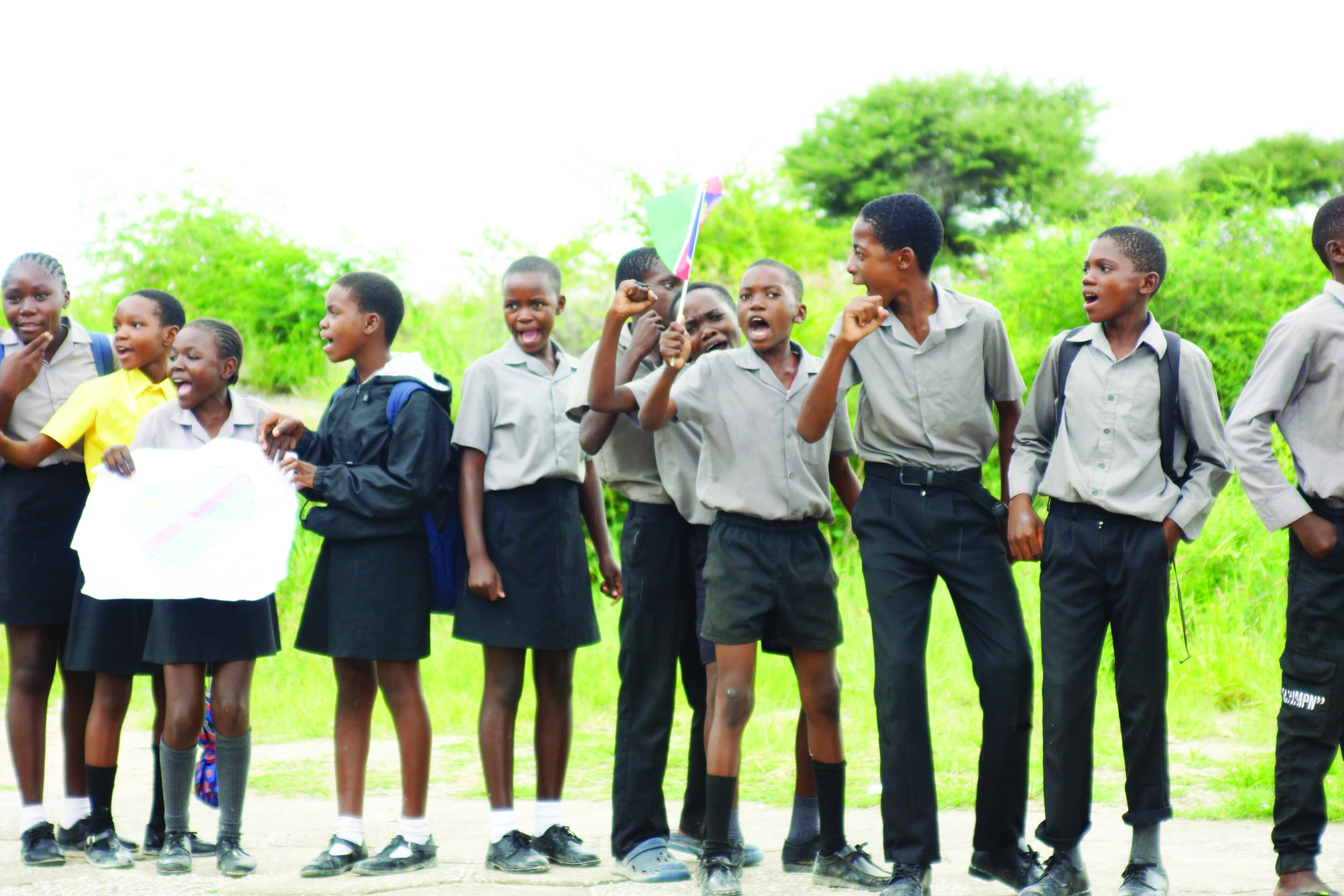

Namibia, through its continuous investment in both infrastructure and human resources, count amongst a few African countries that has achieve a success rate of over 90% in the number of children accessing primary education and in terms of net enrolment.
As it currently stands, Namibia has an accessibility and net enrolment success rate of 97,8%, which places the country in a favourable position of very soon achieving the universally accepted 100% accessibility and net enrolment rate for primary education.
Namibia has achieved this through the introduction of the Universal Primary Education Grant in 2013, which made primary education free and ensured that financial backgrounds are not an impediment to children seeking to access basic primary education.
In terms of infrastructure, government has over the years invested heavily in the construction of new and expansion of existing schools, which saw the number of primary schools increased from 1703 recorded in 2011 to well over 2036 schools as of 2023.
Not only has government constructed more schools, but it has made it a priority to bring schools closer to communities countrywide.
Despite the good progress, Namibia is still faced with challenges of classrooms shortage and a growing number of children eligible to access primary education. As of 2023, Namibia had a total of 615 634 learners enrolled in the primary phase of education.
Overall enrolment in primary schools indicates that there are slightly more boys than girls in the primary phase, except for pre-primary and grades 6 and 7. Grade 1 recorded the highest enrolment of 104, 594, translating into 12% of the national total in 2023.
Under the sixth National Development Plan (NDP6), which will serve as government’s action plan and policy guiding document for the next five years, President Netumbo Nandi-Ndaitwah promised to focus on ensuring that every primary school learner is being taught in an inclusive, safe and nurturing environment and by qualified teachers.
“The aim of this strategy is to strengthen implementation of foundational literacy and numeracy in
primary inclusive of resource schools, units and learning support classes. Under this strategy, the aim is to revise post provisioning norms to reduce class sizes and
accommodate the needs of multi-grade and inclusive schools; expand continuous professional development, particularly in teaching literacy, numeracy, and pre-vocational subjects, and ensure availability of quality teaching and learning materials, including digital and assistive resources,” said Nandi-Ndaitwah during the launch of the NDP6.
The President also plans to establish a coordinated teacher supply and demand system, aligning subject combinations with national education needs and priorities.
“This is a transformative teacher development programme that ensures qualified, motivated, and appropriately deployed teachers at all levels of primary education. It improves pre-service training, expands professional development and introduces digital teaching tools and AI awareness to modernise the classroom.”
The country has also made good progress in terms of making primary level education free and accessible to children with special educational needs. Children with special educational needs are catered through three schools for the intellectually impaired, two schools for the visually impaired and three schools for the hearing impaired.
The leading categories of learners with special education needs and disabilities are also catered for through four additional resource schools and 10 resource units situated in five regions, which are attached to mainstream schools.
– ohembapu@nepc.com.na