


Zebaldt Ngaruka
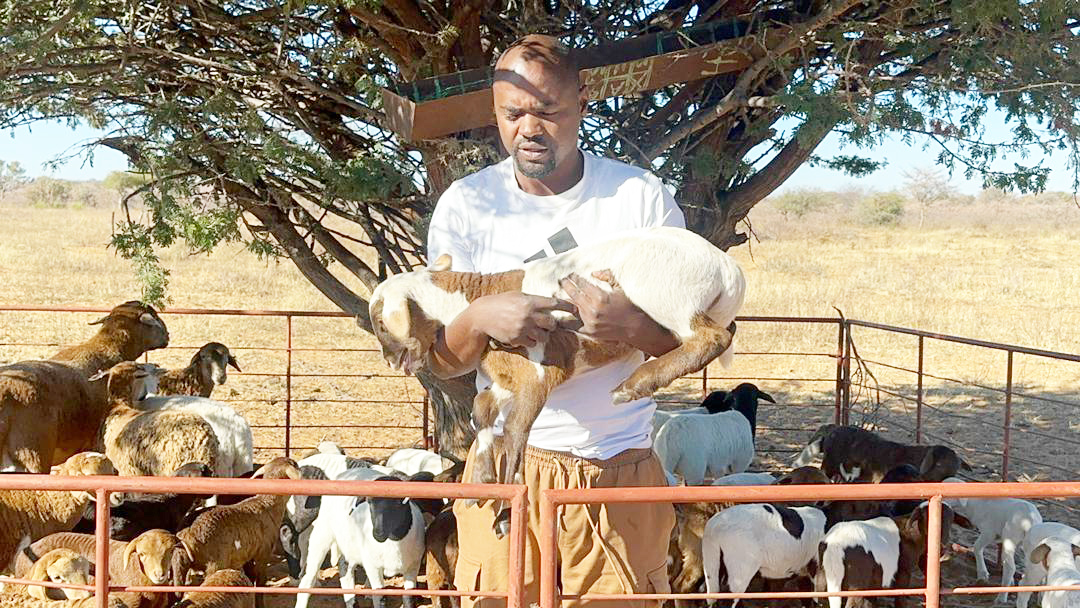
One of Namibia’s budding sheep producers, Tjiuu Kaunatjike, from Okaundua Farming, says sheep farming is the best alternative for upcoming farmers, especially considering grazing challenges and limited land in communal areas.
Kaunatjike (35) has been a leading figure at many local agricultural exhibitions, with his Meatmaster stud breed earning top awards like breed champion and champ of champs.
He recently competed at the Farmers Demo in Otjombinde, Otjinene Expo, Epukiro and Gobabis Agricultural Shows, where his animals did well.
AgriToday caught up with the young farmer who hails from Otumbonde village in the Epukiro constituency to share his journey with the Meatmaster.
Kaunatjike’s love for farming started at the age of 16, under the stewardship of his late grandfather Festus Karukukutu Kaunatjike and his uncle Felix Tjiumbu Kaunatjike.
“My grandfather played a vital role, and his advice is a testament to the fruits we are reaping today. He prepared us well and taught us to take our farming one step at a time if we want to succeed,” he said.
He added that special credit should be given to his uncle Felix, who is currently based in Canada, for his tireless efforts in fuelling the Okaundua Farming.
“My uncle is my mentor; he is doing a tremendous job, and our stud farming is on its feet due to his tireless efforts, as we strive to keep our grandfather’s legacy alive. We are working in line with our objectives and will continue working hard and produce the best products,” he said with great determination.
Okaundua Farming also breeds cattle and goats, but more emphasis is placed on sheep, which are registered as stud.
Kaunatjike told AgriToday that they chose to breed with the Meatmaster because it is a strong, hardy animal that adapts well to local conditions at Otumbonde village.
“Meatmasters do not need a lot of pampering. They handle the heat well and produce quality meat. They also have good mothering instincts and breed easily, compared to others, which helps the flock grow faster,” he stated.
Another advantage of the Meatmaster is that it performs well even when grazing options are limited, making it suitable for communal farming.
Big vision
Despite challenges in the communal areas, Kaunatjike said Okaundua Farming managed to perform well at exhibition events and received recognition in the Omaheke region, if not nationwide.
Kaunatjike’s interest in showcasing his sheep was sparked by the desire to produce high-quality animals that can compete beyond the communal setting.
“Farming gives me peace. I enjoy being around my animals and watching how they improve every year. It gives me purpose and reminds me that I am building something lasting – not just for myself and my family, but for the community,” he said.
The part-time farmer’s outstanding performance at various agricultural exhibitions is driven by consistency, passion and willingness to learn.
“I spend time studying my animals, improving my breeding and adopting new methods. I also learn from other successful breeders, and when you love what you do, the results show,” he said.
He said the challenges he faces are limited grazing, as he is farming in a communal setup where grazing land is insufficient.
“Overgrazing and uncontrolled breeding are problems that we face in communal areas. There is also a lack of proper support infrastructure like water points and kraals,” he stated.
Another disturbing issue Kaunatjike mentioned is the spread of diseases when his sheep get in contact with other farmers’ flocks in grazing areas, saying that the support from the relevant authorities is sometimes limited.
“Another disappointing thing is losing animals through theft, which is very painful and one of the biggest challenges in communal areas. We also face hardships when selling our products as buyers on many occasions expect us to lower our prices, without considering the amount of work that goes into producing quality animals,” he pointed out.
Love for farming
Advising fellow upcoming farmers, particularly sheep farmers, he said they must be ready and willing to start small, be patient and learn from experienced farmers.
“I am still doing that myself, and I am learning every day from renowned farmers. Do not rush to make profit, but rather focus on quality breeding and proper management,” he said.
Most importantly, Kaunatjike said farmers must love what they do and have passion.
“These are what will keep you standing when things get tough,” he said.
He further called on fellow stud breeders and farmers in general to work together for the growth of the agriculture sector in the country.
“Farming should not be about competition but rather about passion, learning and growth. Let’s work together, share knowledge and support each other. Whether you are farming with sheep, goats, or cattle, do it because you love it, and success will come,” he said.
-zngaruka@yahoo.com