


Namibia’s manufacturing leaders have called for urgent government action to reduce production costs, improve incentives and speed up industrial reforms to make the country more competitive under the African Continental Free Trade Area (AfCFTA).
These calls were made during the Namibia Public-Private Forum on Manufacturing and Value Addition last week.
During the presentation, Stephanus Ackermann of Namib Mills and Philip Hikumwah of MarmoWerke Marble Works, focused on developing local industries, such as food and beverages, agro-processing, light engineering, textiles and pharmaceuticals.
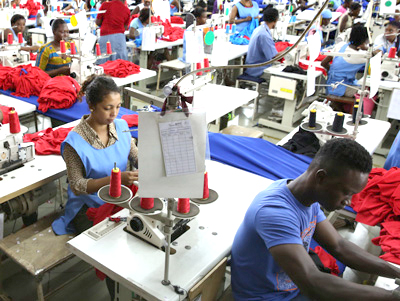
Namibia’s manufacturing sector is a key driver of economic growth, focusing on value addition and export competitiveness, with significant potential for job creation and industrial development.
According to the Namibia Statistics Agency, food products make up the largest share of Namibia’s manufacturing output.
However, the sector’s overall contribution to gross domestic product remains below the international average of 17%.
The Namibia Statistics Agency reported that manufacturing performance has continued to decline, particularly in diamond cutting and polishing, which dropped by 59.1% in the review period.
Other subsectors such as meat processing, basic non-ferrous metals and beverages also saw significant decreases in real value addition following previous gains in 2024.
“The manufacturing sector faces several serious challenges. These include high production and utility costs, an uncompetitive tax and incentive regime as well as policy and regulatory inconsistencies. They also pointed to limited skills development, slow technological upgrades, weak quality assurance systems and high energy costs. Poor institutional coordination and limited local procurement were also highlighted as barriers to growth,” they said.
A case study presented during the forum showed how a Namibian factory expansion was delayed by more than eight months due to lengthy work permit procedures.
This caused the company to lose revenue, damage client trust and miss business opportunities.
“The issue of taxes and incentives was also widely discussed. Compared with other African countries, Namibia’s tax rates for manufacturers remain high. While South Africa and Mauritius offer lower rates between 5% and 15%, Namibia’s proposed 20% rate for Special Economic Zones (SEZ) is still considered uncompetitive,” they stated.
The working group recommended several actions to boost the sector.
These include reducing input costs such as electricity and logistics, implementing the SEZ and incentive framework as well as lowering the effective tax rate for manufacturers.
Participants called for faster skills development, improved technology transfer and stronger support for local enterprise development and procurement.
The forum concluded that Namibia’s industrialisation goals will only be achieved if the country becomes cheaper to produce, faster to invest and smarter to scale.
Speakers urged the Cabinet to reform the tax and energy environment, finalise the SEZ framework and create policies that support local manufacturers.
“Namibia has the potential to become an AfCFTA-ready industrial hub. But this will only happen if the cost of doing business is reduced and the right incentives are in place,” they said.
Hikumwah stated that Namibia has the skills and creativity needed to grow its industries through research and development.
He called on local experts to use their knowledge to build more Namibian-owned intellectual property.
“Created in Namibia, manufactured in Namibia, and 98% Namibian product. There are only 12 companies in the world that make this type of radio. Namibia ranks between number four and five. Namibia produces less, but we produce quality,” he added.