

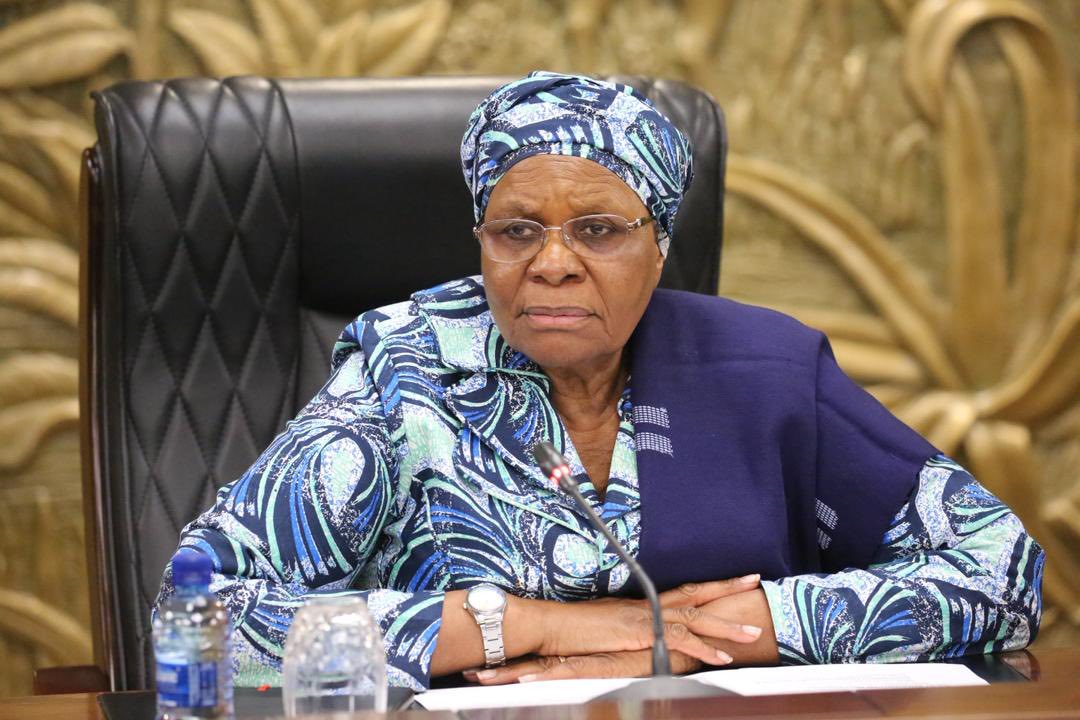

President Netumbo Nandi-Ndaitwah’s journey began in the red soils of northern Namibia long before independence or the promise of equality.
Today, she stands as Namibia’s first female Head of State, a symbol of endurance and possibility, a story beautifully told recently in the new documentary, ‘Netumbo: A Leader Beyond Politics’.
The film, which premiered on 9 October and was watched by regional leaders, including Botswana’s President Duma Boko, and journalists, traces the President’s remarkable life from her humble childhood to her swearing-in as the country’s fifth and first female President.
It is a story woven with family warmth, hardship, faith and purpose.
“We should not ask to be elected to positions of responsibility because we are women, but because we are faithful members of our society,” Nandi-Ndaitwah said in the opening scene, her voice steady.
Born in 1952 in Onamutai village, which now forms part of Ongwediva Constituency, in northern Namibia, young Netumbo was the tenth of fourteen children.
Her elder sister recalls their early years vividly.
“Her Excellency is the tenth on the line,” her sister shares in the film. “She was my baby sister, and it was my responsibility to take care of her. Even as a child, she liked to lead and share,” she added.
The film paints a picture of a close-knit, disciplined family led by a father who was both a reverend and a headman.
He taught his children that Christian faith and African tradition could coexist in harmony.
“My father resisted missionaries who told us not to hold our traditional feasts,” the President says in one scene.
“Every year, we had a cattle feast to thank those who worked with us,” she said.
Nandi-Ndaitwah’s home was one where faith and resistance blended into daily life.
Each night, the family prayed not just for themselves but for those in the liberation struggle..
It was under this moral guidance that Nandi-Ndaitwah developed a sense of justice.
The apartheid system’s contract labour regime, which turned black Namibians into cheap labourers, stirred her to act.
“People were treated like wild animals. That is how I realised I had to be part of the process to demand self-determination,” she recalled.
By the late 1960s, Nandi-Ndaitwah joined Swapo.
In 1974, after being detained and released under a suspended sentence, she fled Namibia through Angola into exile.
Her exile journey, spanning Zambia, Tanzania and beyond, reveals the making of a stateswoman.
She worked as a Swapo administrator and later as chief representative in East Africa and to the Organisation of African Unity, where she helped mobilise international support for Namibia’s liberation.
“We fought to liberate Namibia,” she recounted, quoting the late Sam Nujoma, “but we also had to prepare to govern it. That’s why I was sent to study – not to the battlefield, but to the negotiation table”.
“She was young, serious and never pretentious. Even president Julius Nyerere admired her discipline and intellect. That’s how she earned the nickname Mama wa Swapo,” one of
Nandi-Ndaitwah’s sisters recalled.
Her studies in Scotland and England earned her degrees in public administration and diplomatic studies, though the identity on her student card read “stateless”.
“That word disturbed me. It reminded me that Namibia was not yet free,” she said in the film.
In 1989, after 15 years in exile, Nandi-Ndaitwah returned home with her young son, Nandi, ready to serve.
The documentary captures the emotion of that homecoming, a mixture of relief, joy and uncertainty.
“We came back eager but unsure. We had to build the country we had dreamed of,” she said.
Her first appointment came from Founding President Sam Nujoma, who made her director general of human affairs.
She later served as minister of environment and tourism, minister of foreign affairs and deputy prime minister before becoming the nation’s first female Vice President and now President.
Throughout her rise, she remained grounded in humility and service.
“Leadership is not a prize. It is a duty to serve,” she says in the film’s closing scene.
At the documentary’s premiere, President Duma Boko called her story “a continental inspiration”.
“Her journey is not only Namibian. It is African proof that grace, intelligence and courage can carry a woman from a rural village to the State House,” he remarked.
The President also touched on tackling corruption, expanding access to land, creating jobs in emerging sectors and advancing women’s empowerment.
“Corruption cannot be solved by Nandi-Ndaitwah alone. It must be fought by all Namibians in government, business and everywhere,” she insisted.
From the dusty fields of her childhood village to the corridors of power, Nandi-Ndaitwah’s story is a testament that true leadership is born from service and patriotism.