


Access to knowledge is critical for informing evidence-based policy and for catalysing the transformation of Namibia and, by extension, Africa into a sustainable knowledge-based economic society.
However, access to knowledge produced in most African countries remains limited for the general public and policymakers due to the dominance of the commercial publishing ecosystem.
It is shocking that over 75% of African scholarly documents are behind paywalls or use a pay-to-view model.
Subscriptions to access knowledge published by commercial publishers are unaffordable for research institutions, libraries and general readers in the Global South. Imagine publishing a paper about advancing a teaching model in a rural school in Africa. However, the researchers’ decision-making cannot access that research because one needs to pay US$5 000 to access a single paper.
How can suggested solutions be tested and implemented? And, if knowledge is essential for the development of nations, how can Africa develop when science is locked up?
Open-access publishing
The evolution of open-access publishing offers a potential solution to the knowledge access divide. International declarations and frameworks, such as UNESCO’s 2015 frameworks, advocate for open access and open science, challenging countries to develop open-access policies.
But what exactly is open access? It refers to the free access and unrestricted use of scientific information, with various models available.
Gold open access: Readers have free access to knowledge published in Gold open access journals/books.
However, researchers or their institutions pay an article processing charge (APC).
The challenge remains: most researchers from developing countries cannot afford the high APCs.
Green open access: The researcher publishes their paper on a traditional commercial platform without a fee, but some journals allow them to archive their initial draft of the manuscript or the post-review version (after incorporating reviewers’ comments) in the institutional repository or on a personal website.
The researcher does not pay the APC, but there is usually a 12 or 24 month waiting period.
Hybrid open access: These journals maintain the traditional commercial publishing model while offering researchers the option to publish open access and pay an APC. There are serious concerns about transparency in pricing, as the price for a single open-access paper is equivalent to the cost of a whole journal.
Diamond open access: This publishing model promotes equity in publishing and access to knowledge by using a free-to-publish and free-to-access model.
This is a community-of-practice publishing model in which governments, research institutions and funding institutions collectively fund publishing, advancing knowledge as a public good.
Traditionally, Africans pass knowledge through oral tradition by gathering around open fires on platforms and in forums.
To support this culture, Namibia adopted open-access publishing, with leading institutions establishing open-access journals to improve access, visibility, discoverability and citations of research, thereby fostering equity, inclusivity and social justice.
Scholarship owners
This year, the International Open Access Week is celebrated under the theme ‘Who Owns Our Scholarship?’.
The ownership in question concerns who controls, accesses, values and benefits from the science we produce as Namibians and Africans. This practical question challenges us to rethink how we define science, who determines its value and who should benefit from it. It urges the democratisation of science for Namibia and Africa. Science does not need to be expressed in English to be scientific, nor does it need to be published in a specific index to be of high quality and impact.
Science needs to be relevant to the local context and impactful when translated into practical solutions to address local social and developmental challenges. Access to knowledge is a basic need for all, essential to addressing social and economic development challenges.
Open access provides a platform for local researcher to reclaim their silenced voices that are lost through ranking and commercial publishing requirements, by removing financial, technological and language barriers to knowledge production and use.
Namibia Diamond open access journals are Welwitschia International Journal of Agricultural Sciences, the Namibia CPD Journal for Educators, JULACE: Journal of the University of Namibia Language Centre, International Science and Technology Journal of Namibia, Journal for Studies in Humanities and Social Sciences, the Namibian Journal of Linguistics, Literature and Communication Studies as well as Namibian Journal of Logistics and Operations Management.
It also includes the Namibia Journal of Technical and Vocational Education and Training, Namibia Journal for Research, Science and Technology, Namibian Journal of Environment, the Namibia Educational Reform Forum Journal, Namibia Educational Research Association, the Namibia Journal of Managerial Sciences, Namibia Scientific Society Journal as well as the Namibian Journal of Social Justice.
Africa’s progress depends on our ability to share knowledge rather than sell it.
Each open-access publication strengthens Africa’s voice in the global research and affirms that the solutions to Africa’s challenges must be led, written and owned by Africans.
The power is in us to choose how we define, communicate, share, value and drive impact from the knowledge we create for benefit.
This is not just a call to action, but a commitment to a future where knowledge is freely shared and accessible to benefit all.
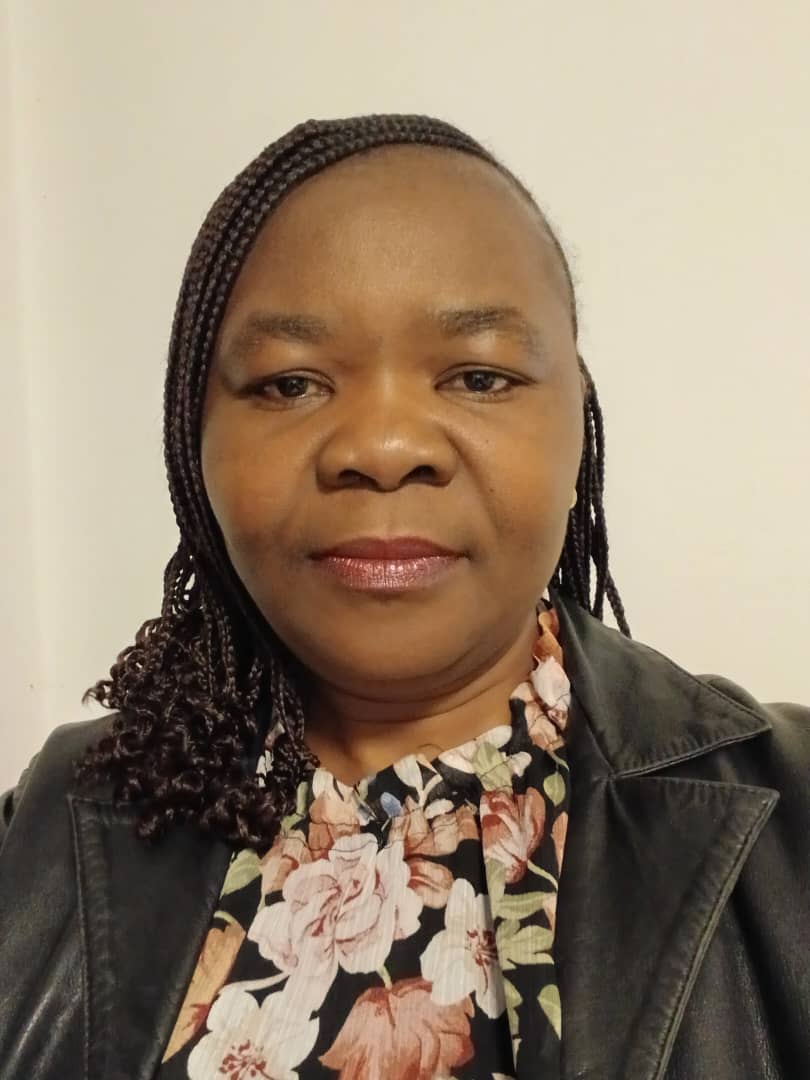
*Anna Leonard is an author and an open-access advocate. This article is written in her personal capacity.