


Kaviveterue Virere
Namibia’s road infrastructure management achieved a major milestone on Tuesday when the Roads Authority (RA) launched its advanced Road Management System (RMS) Hub in Windhoek. This reinforced the country’s position as a leader in road quality and innovation on the continent.
The RA’s executive for engineering, Mex Muatjetjeja, speaking on behalf of the organisation’s Chief Executive Officer, Conrad Lutombi, stated that the RMS Hub represents more than just a technological upgrade; it is a continuation of a journey that has shaped Namibia’s transportation industry for decades.
“In addition to the showcase’s opening today, we also commemorate the continuance of a journey that characterises Namibia’s road industry.
This hub is a promise that Namibia will continue to lead in road asset management, innovation, and connectivity,” said Muatjetjeja.
Namibia’s vast road network, currently valued at roughly N$220 billion, is managed and integrated through the RMS Hub. It supports evidence-based decision-making by integrating geospatial information, engineering analytics, and contemporary ICT tools.
With the new system, Muatjetjeja said RA can prioritise interventions, distribute funds effectively, and ensure the long-term sustainability of the road network due to the system’s comprehensive data on road conditions, maintenance requirements, and project performance.
“Some say roads are the veins of a nation. If that is true, then today we are showcasing the heart that keeps them alive and healthy,” he noted.
He emphasised that Namibia has proudly maintained its status among the top African nations in the World Economic Forum’s road quality index since 2015. RA board chairperson Martins Kambulu characterised the launch as an expression of the organisation’s commitment to sustainable infrastructure development and science-driven road management.
“The RMS is an integrated framework of people, processes, and technology that transforms information into actionable decisions; it is not just software or data,” he said.
He emphasised that, at a time when public funds are limited, the system enables life-cycle cost review, project prioritisation, and effective resource utilisation. He issued a warning, saying, “We will spend up to four times more in the future to repair it for every dollar not spent on essential road maintenance today.”
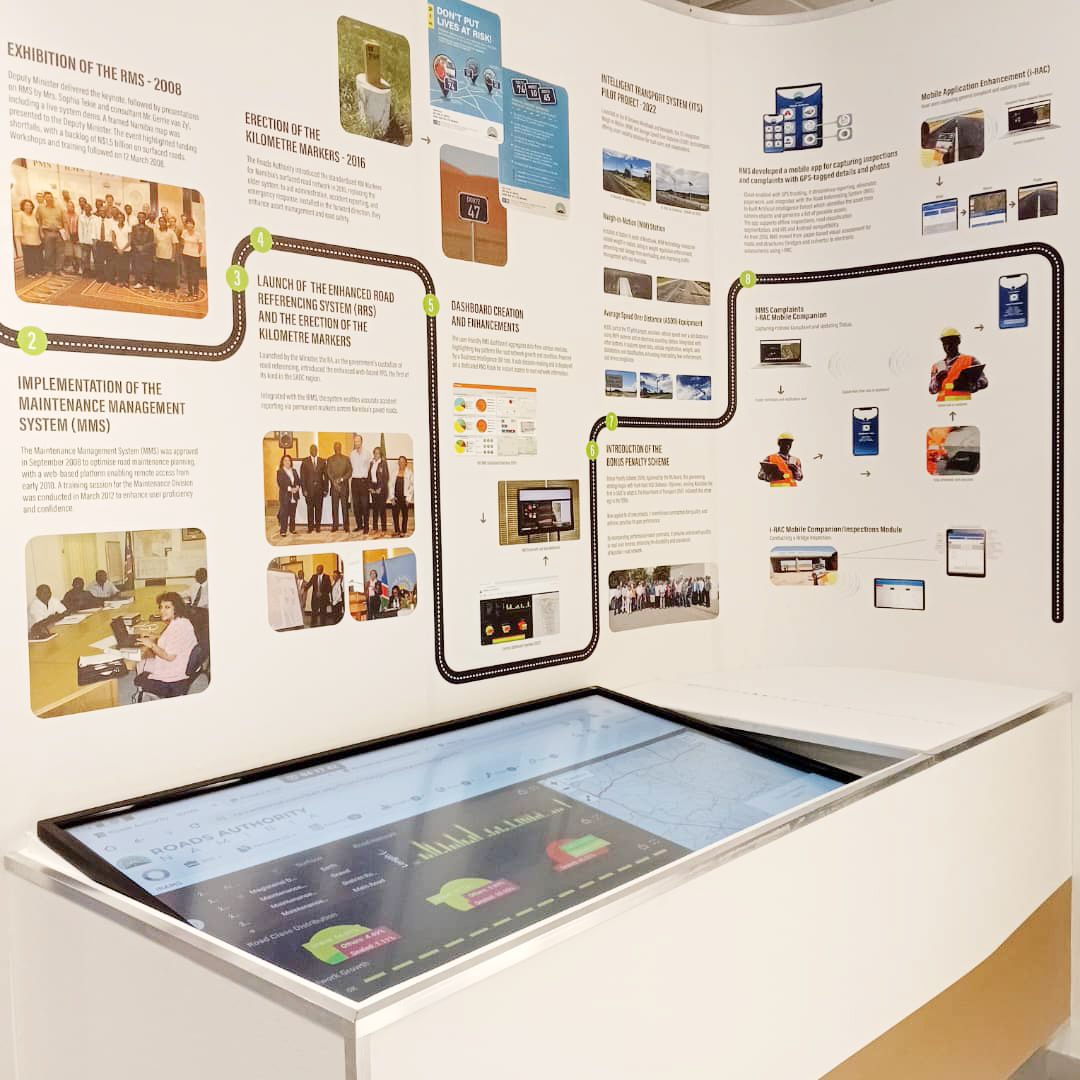
The RMS also supports coordination with key stakeholders such as the RFA and government ministries, ensuring transparency and accountability in infrastructure investments. Interactive exhibits illustrating the development of Namibia’s road management system from early paper-based systems to sophisticated digital dashboards will be housed at the RMS Hub. Drone-assisted inspections, intelligent traffic systems, and the Project Control System (PCS), which improves capital project delivery and monitoring, are all available to visitors.
Risk management modules, connection with the Integrated Road Asset Management System (iRAMS), and upcoming AI applications targeted at enhancing predictive maintenance and decision-making are examples of ongoing improvements, he said.
Kambulu said to increase accessibility for the public, researchers and policymakers, the RA intends to make the RMS web-based in the future.
Additionally, the system will be modified to address new issues, such as electric vehicles, climate change, and the need for sustainable transportation.Both speakers commended the RMS team and consultants for their persistent efforts in realising the mission.
“Behind every dashboard are skilled professionals whose expertise and dedication keep the system running,” Kambulu stated, noting that Namibia is now among the world leaders in road asset management, thanks to the team’s inventiveness and tenacity.
-Fazzyvirere2@gmail.com