

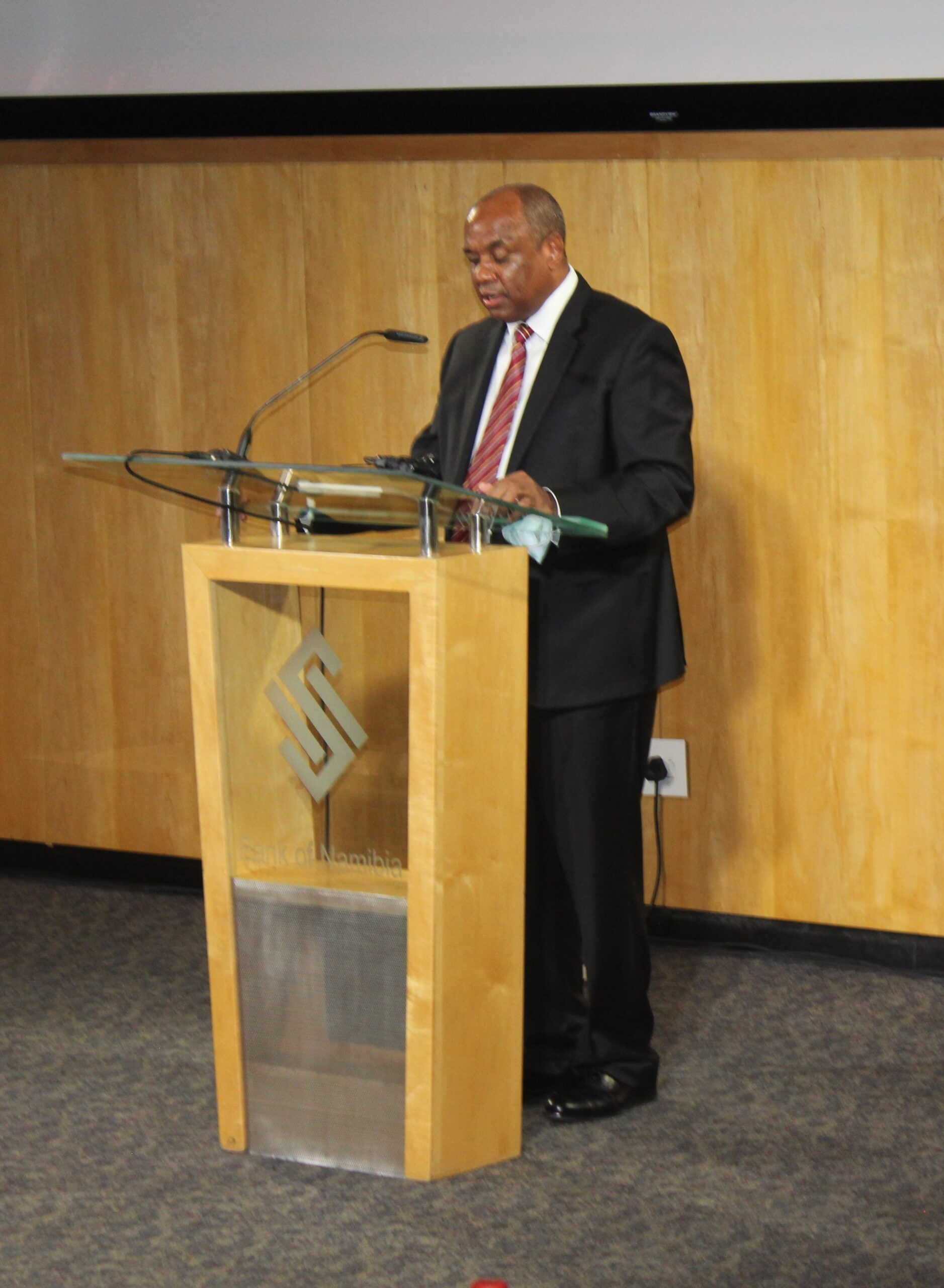

Governor of Bank of Namibia, Johannes !Gawaxab, said the country needs to dedicate time to dissect growth constraints to the domestic economy and then devise and implement the necessary strategies to overcome them. While delivering his maiden governors address last week at the 30th anniversary of the bank, he said the Namibian economy needs structural interventions to achieve a sustained increase in growth potential.
According to !Gawaxab, the central bank is ready to work with ggovernment, not in a subservient role, but rather in a complementary fashion to establish a framework for accelerated economic development.
“The bank has continuously ensured a favourable macroeconomic environment for growth over the past 30 years. Going forward, however, monetary policy cannot be expected to be the driver of long-term growth in the economy. The policy challenges we face now are complex, and they will require equally complex strategies,” he stated.
He alluded that the bank needs to direct efforts towards supporting key players in the economy, as well as government, to contribute effectively to economic development, growth, accelerated investment and employment creation.
“Using our flagship annual symposium and other events, we will continue to address pertinent issues in the hope of addressing structural reforms and improving the long-term growth trajectory of our country,” said !Gawaxab.
The central bank governor stressed that the Namibian economy needs to transform to become competitive by vigorously persuing economic diversification, improving productivity, and enhancing resource allocation to productive sectors. As fiscal advisor to government, he said the bank is committed to play its part in this exercise and he outlined that Namibia desperately needs faster, sustained economic growth to make a dent in the critical socio-economic challenges of poverty and high unemployment, particularly among the youth and less skilled individuals. !Gawaxab emphasised that these growth areas will be the preoccupation of the bank in the coming years.
As the country at large is relying on the central bank to deliver monetary stability, price stability and financial stability, during the unfolding pandemic and beyond, !Gawaxab noted that the key challenge will be to navigate emerging risks surfacing in the global economic environment as well as moving forward with efforts to grow the economy more rapidly and create new jobs.
“Periods of economic and financial turmoil such as the one we are navigating today underline the need for strong central banks, to serve as beacons of stability,” he reflected.
In recent months and in response to the adverse impact of Covid-19, the bank deployed a combination of monetary, micro and macroprudential policy actions that allowed commercial banks to institute a loan repayment moratorium in the form of repayment holidays while ensuring uninterrupted lending to critical sectors in the economy.
These measures, said !Gawaxab epitomise the responsiveness of the central bank to prevailing macroeconomic conditions and economic cycles. He said these measures should remain broadly in force for as long as necessary and will be adjusted in line with the economic cycle. “We will also continue to work together with the fiscal authorities to ensure that such policy effects are broadly optimised,” !Gawaxab stated. -mndjavera@nepc.com.na