

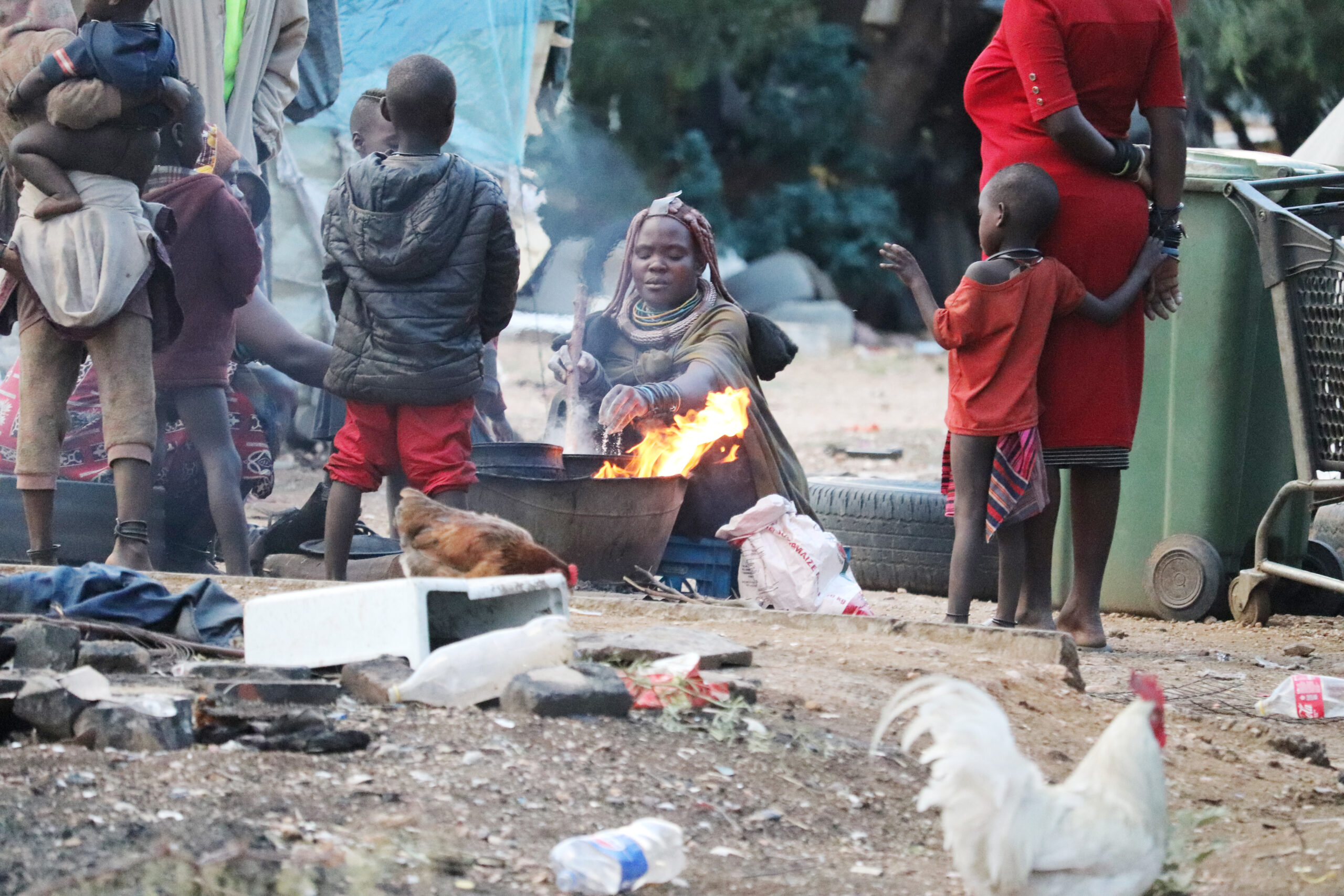

The air around Katutura Multi-Purpose Youth Centre is heavy with the stench of urine, which is worsened by recent rain showers.
If you look around, your eyes meet a collage of human survival, makeshift shacks pieced together with all kinds of material, and smoke coming from small fires where people sit, cook, and chat, while young people run around the track, and others play football on the field.
This was the situation when this reporter visited the area. But since then, nothing has changed. Notably, the number of homeless people has increased, now standing at approximately 600.
Just behind the pavilion, are puddles of dirty muddy water, and opposite it, is the MTC Nestor Tobias Boxing Academy, which has produced champion boxers in the past.
Across the makeshift shacks is the newly built ‘Be Free Centre’, which glimmers with promise, but is a contrast to the neglected ground opposite it.
Among the makeshift dwellings are former South West Africa Territorial Force and Koevoet soldiers. These men were once swept up in the tides of history and now struggle to find dignity.
Many were moved there during the Covid-19 pandemic lockdown when the government relocated homeless people from the streets to these public spaces for safety reasons. The relocation, initially intended as a temporary measure, has now become a permanent state of neglect.
Maria Shangala, a resident of Katutura, looked across the field and sighed. “My dear, can the government move these poor people and find a solution before the rains worsen? Some of our children train here, but really, it’s just a bad place now,” she said.
For daily commuters like Paulus Fillemon, the decline of the field has become part of the landscape.
“I walk past every day after work. I’m not even shocked anymore; it’s normal now. But the smell, it’s terrible. You can’t even pass there without covering your nose,” he said.Moses Willem said that what was once a space for youth development and community recreation has now become a reflection of our neglect. “The field is supposed to symbolise opportunity and growth, not despair. It is heart-breaking to see a facility meant to empower young people reduced to a shelter for the forgotten,” he said.
Director of Sport Jo-Ann Manual explained that plans regarding the stadium are currently under review following a relocation request from the Khomas Governor to the Ministry. She further noted that the City of Windhoek has expressed willingness to provide land for the project.
“Our Minister prefers a more permanent solution and will soon table the matter before Cabinet,” she said.Manual emphasised the importance of restoring access to the facility, stating: “We want our facility back. We’ve already submitted our concerns to top management, stressing that the sports sector has been patient long enough and deserves to have the facility returned.”
Local sport pundit Kavii Vezemburuka said a walk through many of Namibia’s sports grounds tells a story of neglect, inequality, and shifting priorities.
“While urban centres boast a few major facilities, many are deteriorating or being used for purposes far removed from sport. In rural areas, the situation is even bleaker, with most communities lacking proper pitches, courts, or equipment altogether. For years, Windhoek has been regarded as the hub of sporting activity. But a closer look paints a worrying picture,” he said.
The iconic Independence Stadium remains unfit for international use, having failed to meet the safety and quality standards required by both FIFA and CAF. Renovation plans have stalled due to bureaucratic delays, while work has only recently begun to give the Sam Nujoma Stadium a facelift. Vezemburuka said the lack of proper facilities has prevented Namibia from hosting international football matches at home, depriving fans of the opportunity to watch their national teams and heroes in action for the past three years. As a result, millions of dollars have been spent in the economies of other countries.
“It is a glaring picture that demands a speedy solution if Namibian sport is to return to its former glory,” concluded.
-lmupetami@nepc.com.na