


Lahja Nashuuta
The Parliamentary Standing Committee on Home Affairs, Security, Constitutional and Legal Affairs has painted a disturbing picture of life behind bars and inside police holding cells across Namibia.
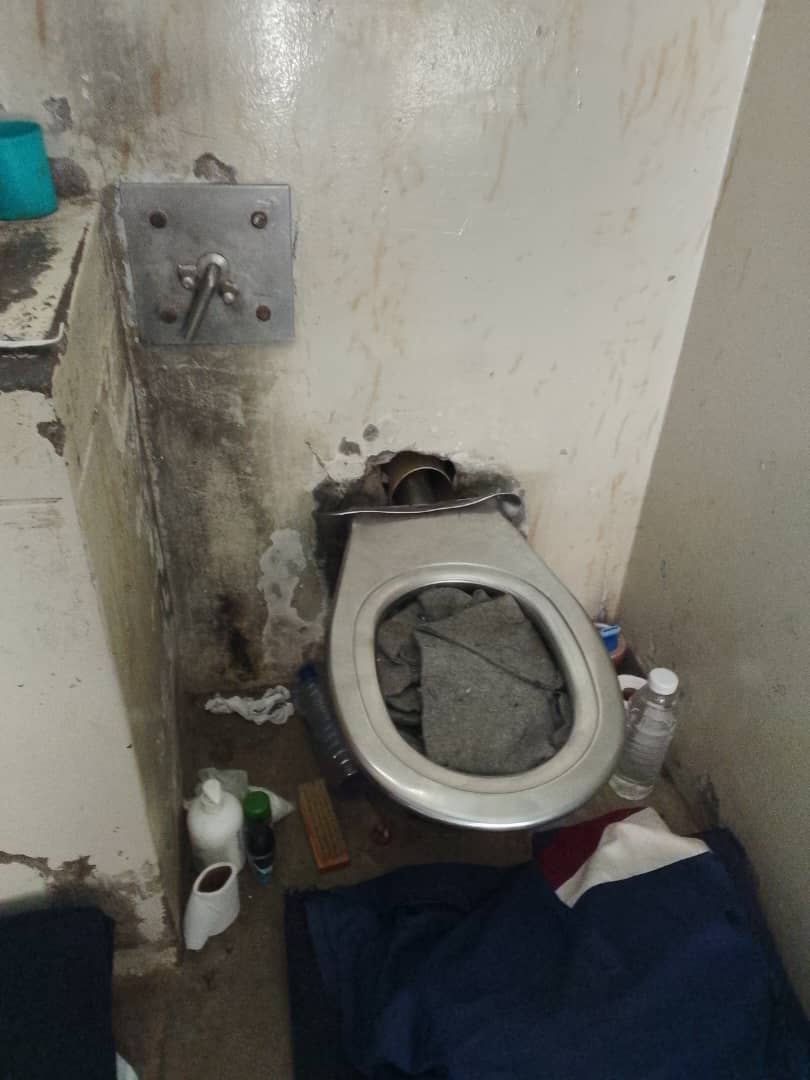
The committee’s report, recently tabled in Parliament, reveals that many prisons and police cells are in a dilapidated state. Some facilities date back to as early as 1922 and were never meant to accommodate people in the twenty-first century.
The committee’s oversight mission spanning from Windhoek to Katima Mulilo, and from Divundu to Walvis Bay exposed crumbling colonial-era buildings, overcrowded cells, and deteriorating conditions that threaten the dignity and safety of both inmates and staff.
The committee visited 13 major correctional facilities, including those in Windhoek, Hardap, Keetmanshoop, Gobabis, Omaruru, and Swakopmund. The report found that many of these structures, were inherited from the colonial government and have since fallen into severe disrepair. “Some facilities are literally falling apart. They need urgent rehabilitation or complete reconstruction to meet modern human rights standards,” the document reads.
While most prisons were originally built within town centres, the committee recommended relocating several such as those in Windhoek, Keetmanshoop, and Swakopmund to the outskirts for improved management and security.
However, there were a few bright spots. The Evaristus Shikongo Correctional Facility near Tsumeb, built after independence, was praised for being “well-structured and strategically located.” The Divundu Correctional Facility in the Kavango East Region was also commended for its modern layout and well-maintained infrastructure.
Inside the police cells
Conditions inside police holding cells were described as even worse. The committee reported cells filled with stagnant water, broken toilets, and unbearable odours. Many lack proper ventilation and lighting, inmates sleep beside unflushed toilets without any partitions for privacy.
In one police station, the kitchen was located right next to the cells. Officers were cooking with gas cylinders in the same building where inmates slept, a situation the report referred to as “a ticking time bomb.”
Overcrowded cells
In almost every region, police cells are packed far beyond capacity, forcing inmates to sleep on floors with limited access to water and sanitation.
Regional police commanders told the committee that overcrowding stems from multiple factors such as a shortage of holding facilities, financial hardship preventing suspects from paying bail, and delays in court proceedings. “In many cases, people have been granted bail but remain in custody because they simply cannot afford to pay. Some families also refuse to take responsibility for their relatives,” the report reads. As a result, detainees remain in custody for months, worsening overcrowding and stretching limited resources. “We struggle to feed, clean, and manage everyone,” one officer said. “It’s a daily crisis, ” the officer added.
Healthcare
The committee further found that when it comes to medical care, only the Windhoek and Walvis Bay Correctional Facilities have resident doctors. Other prisons rely on nurses and health assistants to attend to inmates and refer serious cases to nearby hospitals.
“Most prison clinics exist only in name,” the committee noted. “They are not properly registered with the Ministry of Health, which means they cannot receive government-supplied
medication.” However, the committee was informed that efforts are underway to formally register all correctional clinics so that they can access medicine and medical support.
Despite the challenges, the committee acknowledged that nurses and officers are doing their best to maintain healthcare programmes for tuberculosis (TB), HIV/AIDS, and voluntary medical circumcision. At police stations, mobile clinics occasionally visit to provide medical check-ups to detainees, but such visits remain irregular.
Children behind bars
Another troubling finding was the continued detention of juveniles alongside adults in some police stations and correctional facilities.
“Juveniles should never be kept with adult inmates,” said a committee representative, citing the Nelson Mandela Rules. “Unfortunately, due to lack of infrastructure, this still happens in some places.” While facilities such as Windhoek, Evaristus Shikongo, Oluno, and Swakopmund have separate sections for juveniles, others lack dedicated spaces. The committee also noted long delays in juvenile trials and insufficient legal representation for young offenders.
Gangs and safety
The committee also uncovered the presence of organised prison gangs operating within both correctional and police detention centres. These groups are commonly known as Gang 26, Gang 27, and others, are reportedly involved in smuggling contraband, violence, and intimidation of other inmates. “Although we did not receive reports of direct abuse between inmates and officers, gang activity remains a serious concern,” the committee warned. The committee urged the Namibia Correctional Service (NCS) and the Namibian Police Force (NAMPOL) to make provisions for women incarcerated with small children, ensuring they can stay with their mothers for a limited time in line with the Bangkok Rules.
It further recommended that budgetary provisions be made for the installation of CCTV systems at all correctional facilities and police cells to improve monitoring and security.
Other recommendations include calls for the Ministry of Home Affairs, Immigration, Safety and Security, together with the Ministry of Finance, to construct new correctional facilities and renovate old ones. The government was also advised to relocate prisons built within towns to the outskirts for better control and management and to develop clear strategies to combat rising gang activity within prisons and police cells. – lnashuuta@nepc.com.na