


RIETFONTEIN – Through hard work, dedication and strategic long-term positioning, the National Youth Service (NYS) is well on its way to becoming a self-sustaining entity that will soon start contributing to about 40% to 50% of the country’s food needs.
At its Riefontein multifaced production site, the NYS has now expanded operations to include both fodder and poultry production, where bales of blue buffalo hay and lucerne are produced and sold in large quantities to farmers and enterprises countrywide.
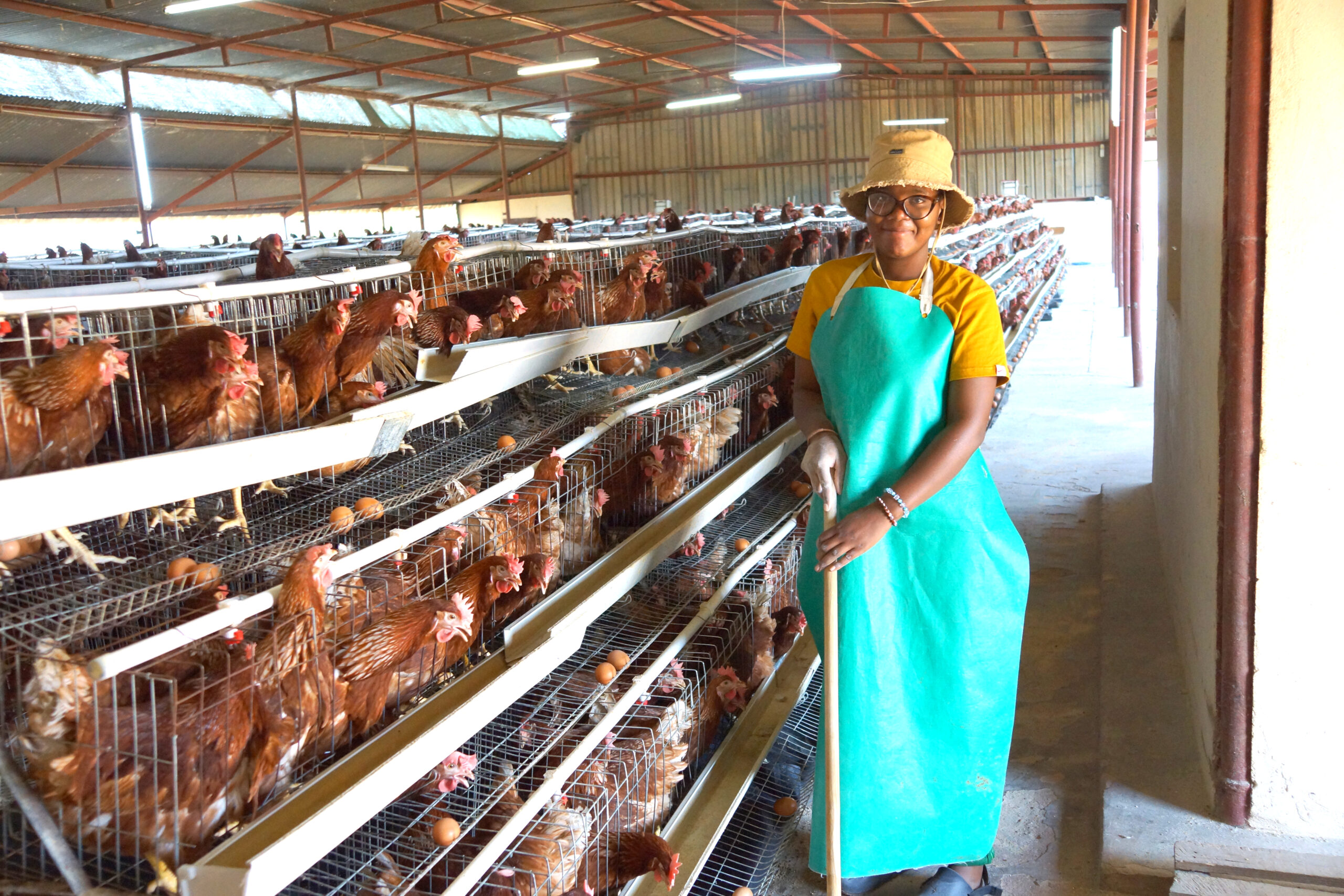
Away from its traditional crop undertakings such as cabbages, onions, spinach, carrots, beetroots, tomatoes, watermelons and butternuts, the NYS has also broadened its operations at its Rietfontein centre to poultry production, which has over 4 000 layers and produces about 3 700 eggs per day.
The poultry enterprise as part of its agricultural production initiatives aimed at generating revenue for self-sustainability and contribution to national food security.
Proceeds from the fodder and poultry enterprises help fund NYS general operations and youth programmes, which offers practical training in agriculture to young Namibians, enhancing their employability and providing opportunities for self-employment.
The products are sold to major supermarkets such as Fresh Produce, Choppies, OK Foods, and AMTA, as well as to hundreds of locals. The centre received a grant from the Social Security Commission (SSC) to support its operations.
As part of its value addition drive, the centre is also involved in milling and remains one of the biggest suppliers of white and yellow maize as well as mahangu products within the maize triangle area of Namibia and other others.
The centre has adopted modern agricultural technologies, including the procurement and installation of Centre Pivot Irrigation Systems across hundreds of hectares. This strategic move has substantially increased the centre’s production capacity, tripling it over the past years.
Situated approximately 40km south of Grootfontein in the vast Otjozondjupa region, the NYS production centre is rewriting the playbook and redefining all things agriculture through embracing technology, teamwork, collaboration, smart work and aligning with the country’s grand vision of food self-sufficiency.
National outlook
There are currently only three agronomic crops that are gazetted as controlled, namely white maize, pearl millet and wheat. These crops are also considered to be staple food of Namibia.
The agronomic industry in Namibia is faced with many challenges, such as drought, high input cost, pests and diseases, although the number one challenge is recurrent drought.
At the same time, Namibia remains a net importer of the three agronomic crops. Farmers have a secured market through the grain marketing mechanisms, whereby import restriction or close border periods are implemented during times of sufficient local production.
Production of agronomic crops, mainly white maize and pearl millet, takes place in both the commercial and communal areas under irrigation.
They are rain-fed and marketed to millers. However, pearl millet is predominately produced in communal areas under rainfed production. Wheat production takes place under irrigation in the commercial areas and government projects situated in the communal areas.
Agricultural potential is therefore confined mainly to livestock farming and high-value crops such as dates and grapes, which are focused on the export market.
However, climate-smart farming is gaining more attention as a needed area for development to allow Namibia to reap more from its agriculture sector.