

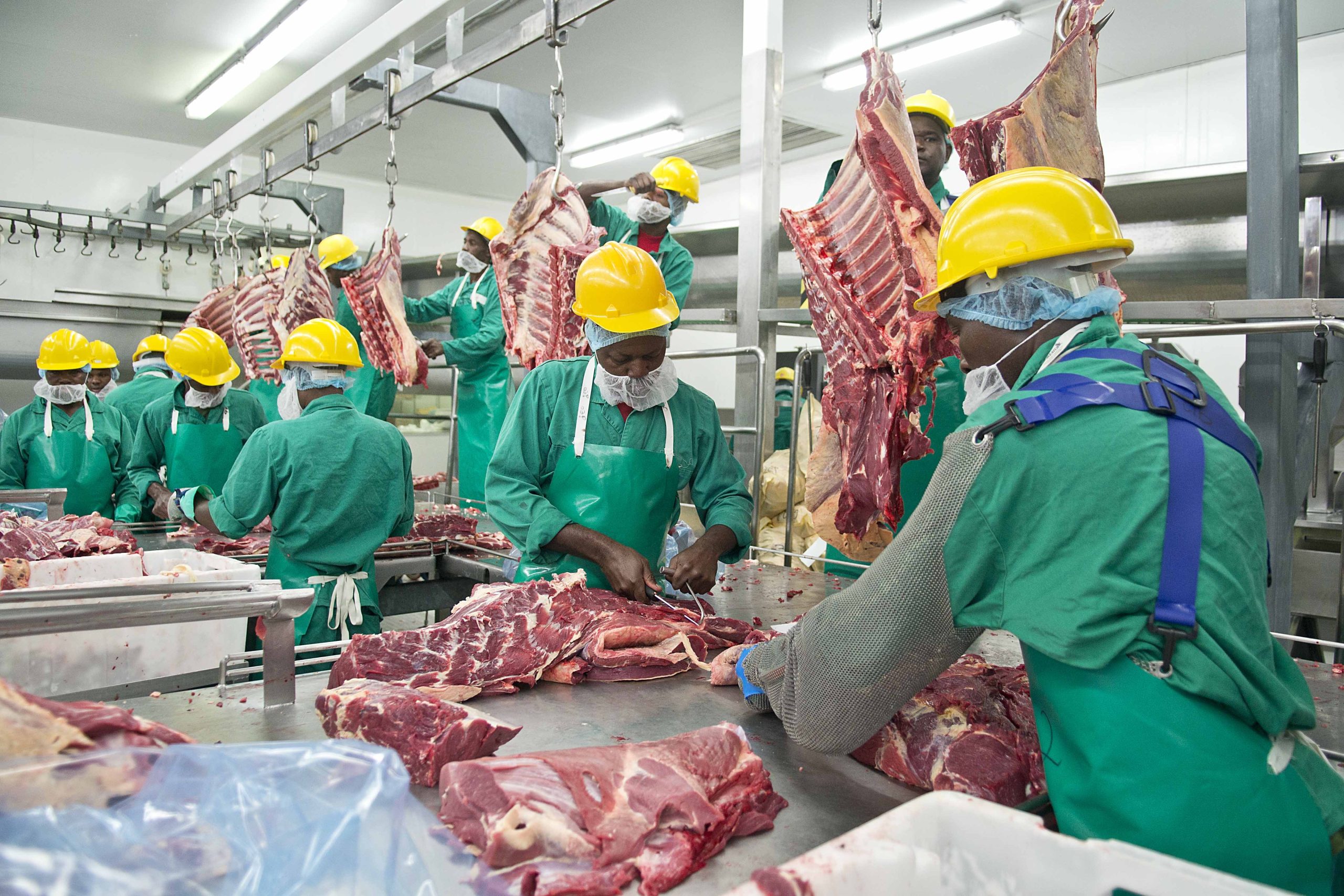

Namibia’s beef market continues to demonstrate a strong domestic orientation, with local consumption absorbing nearly two-thirds (69.3%) of total beef production between January and September 2025.
Exports accounted for 30.7%, while imports represented a minimal 3.4% of total supply (4.8% of consumption), equivalent to about 6% of total consumption.
This highlights the country’s continued self-sufficiency in beef supply, despite subdued output levels.
Although export volumes remain lower compared to 2024, local consumption has absorbed most of the supply due to reduced slaughter throughput and limited export availability, according to the latest statistics from the Livestock and Livestock Products Board (LLPBN).
Imports, mainly from South Africa, increased modestly by 25.2% on a year-to-date (January to September) from 860 193 kgs in 2024 to 1 077 248 kilogrammes (kgs) in 2025.
This was to supplement low domestic supply and stabilise local prices. This trend highlights a tight supply balance, where fewer slaughtered animals and softer export performance have led to a shift of more beef into local markets, reflecting both constrained export demand and efforts to maintain domestic availability.
This shift underscores the industry’s adaptive response to lower throughput while maintaining domestic availability and protecting price stability.
Mutton sector
The country’s mutton market remains locally driven, with about 98.1% of local sheep meat production having gone into the local market between January and September this year, while only roughly 1.9% was exported.
In terms of total local supply, imports accounted for only about 2.1% of consumption, reflecting the continued dominance of the local market.
Despite reduced slaughter activity, local consumption has shown steady growth year-on-year, supported by stronger availability in the domestic market.
Exports, mainly destined for South Africa and neighbouring Southern African Development Community markets, have declined compared to 2024, in line with tighter supply and reduced processing volumes.
Conversely, imports have more than doubled, rising by 70.1% on a year-to-date period, moving from 176 781 kg in 2024 to 300 735 kg in 2025) as traders sought to meet rising local demand amid higher prices and lower domestic output.
This shift points to a consumption-driven mutton market, where supply shortages continue to reshape trade flows and pricing behaviour.
Namibia’s mutton sector, like the beef sector, is currently navigating a delicate equilibrium, balancing the need to sustain domestic supply while preserving export competitiveness.
Market outlook
Both the beef and mutton industries reflect a tight-supply, high-price environment.
Domestic demand continues to absorb an increasing share of production, while the export share is gradually decreasing.
Although this indicates short-term supply pressure, it underscores a more resilient and self-sustaining domestic market base, positioning Namibia’s red meat sector for recovery as herds rebuild in the next production cycle.
-ohembapu@nepc.com.na