

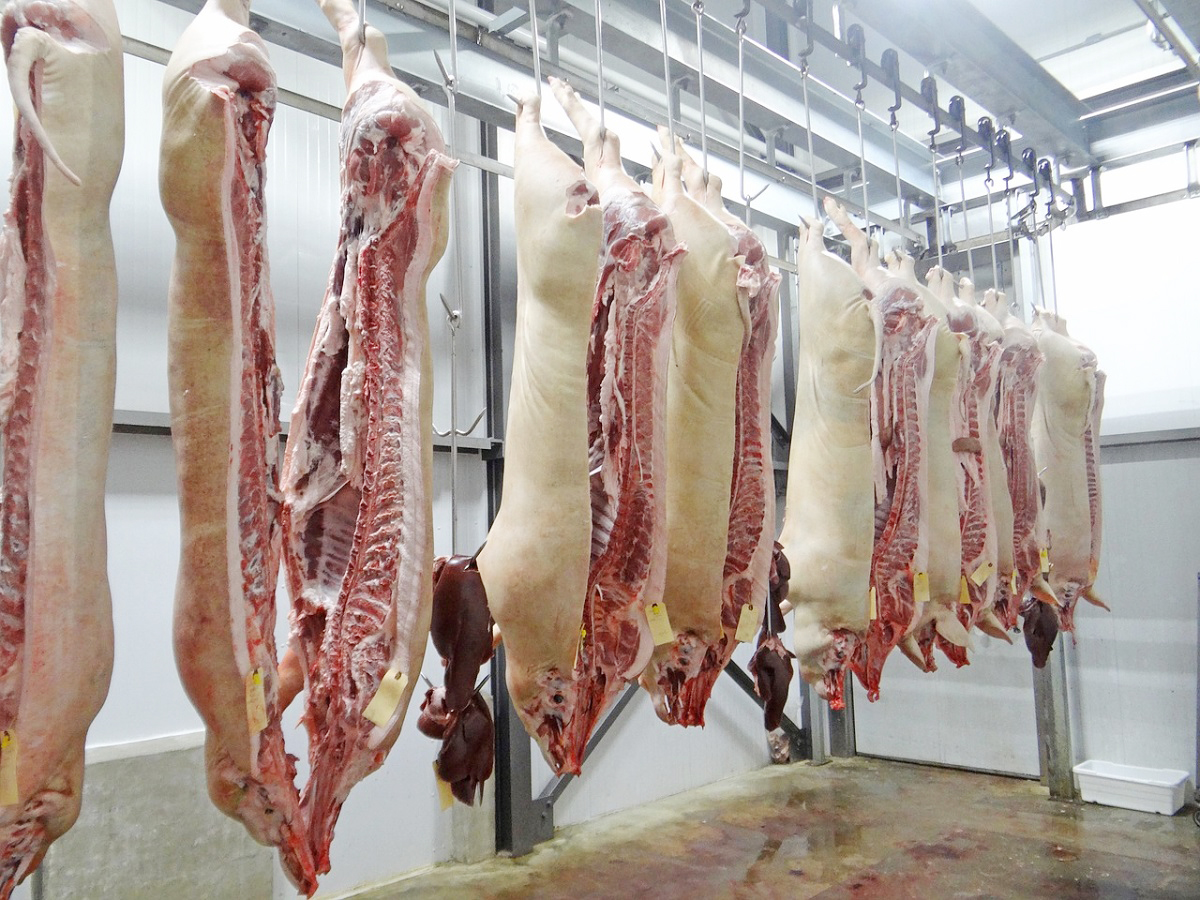

In the final quarter of this year, particularly during the month of October, output at various local abattoirs remained steady as they managed to slaughter a total of 4 655 pigs during the month under review to record a 6.08% increase on a year-on-year basis.
On a month-on-month basis, the total number of pigs slaughtered at local abattoirs decreased by 4.53% from the 4 876 heads slaughtered recorded in September 2025.
According to the Livestock and Livestock Products Board of Namibia (LLPBN) latest market report, during the month of October, the Mariental and Halooli abattoirs slaughtered 3 174 and 1 329 pigs, respectively. No pigs were exported live during the review period.
Beef market
Meanwhile, the country experienced a steep decline in overall marketing of cattle during the month of October, which saw a decrease of about 25% on a year-on-year basis, from 21 712 cattle marketed in October last year to 16 338 during October 2025.
Year-on-year analyses indicate that live exports were 44.62% lower than observed during October 2024. Meanwhile, South Africa accounted for 96.16% of Namibia’s total live exports, with lower quantities exported to the DRC (2.31%) and Botswana (1.53%).
On the marketing of sheep, the latest report also shows that sheep marketing dropped by 26.51%, from the 42 288 sheep marketed in October 2024 to 31 076 sheep marketed during October 2025.
Live exports decreased by 21.16% year-on-year basis. Conversely, export-abattoir performance increased by 16.20% on a year-on-year basis, while B&C class abattoir slaughtering decreased by 60.22%, from 10 207 sheep slaughtered during October 2024 to 4 060 sheep slaughtered in October 2025.
Again, South Africa absorbed the majority of Namibia’s live sheep exports, making up 96.64% of total exports, followed by Zambia (1.41%), Zimbabwe (1.15%), Botswana (0.70%), and Angola (0.10%).
Sheep in Namibia are nowadays dominated by breeds suited to mutton production, most of which is exported to South Africa.
However, for many years, the karakul sheep, bred for their lamb pelts, was the majority.
Goats’ industry
During October, total goat marketing increased by 2.40%, from 11 438 goats marketed in October 2024 to 11 713 goats marketed in October this year.
During the same period, 11 699 goats were exported live compared to 11 396 exported during October 2024. This translates to an increase of 2.66% year-on-year basis and a decrease of 13.83% monthly basis.
Exports to South Africa accounted for 94.98% of total live goat exports, followed by Angola with 1.98%, Zambia with 1.41%, Zimbabwe with 1.01%, and Botswana with 0.62%.
Overview
In Namibia, about 70% of the population depends on agriculture for their livelihoods, mostly in the subsistence sector. Agriculture in Namibia contributes around 5.1% of the GDP of which 70% represents the output of the livestock sub-sector.
Animal products, live animals, and crop exports accounted for roughly 10.7% of Namibia’s total exports.
Cattle raising is predominant in the central and northern regions, while sheep and goat farming are concentrated in the more arid southern regions. Subsistence farming is mainly confined to the communal lands of the country’s populous north, where roaming cattle herds are prevalent, and the main crops are millet, sorghum, corn, and peanuts.
-ohembapu@nepc.com.na