

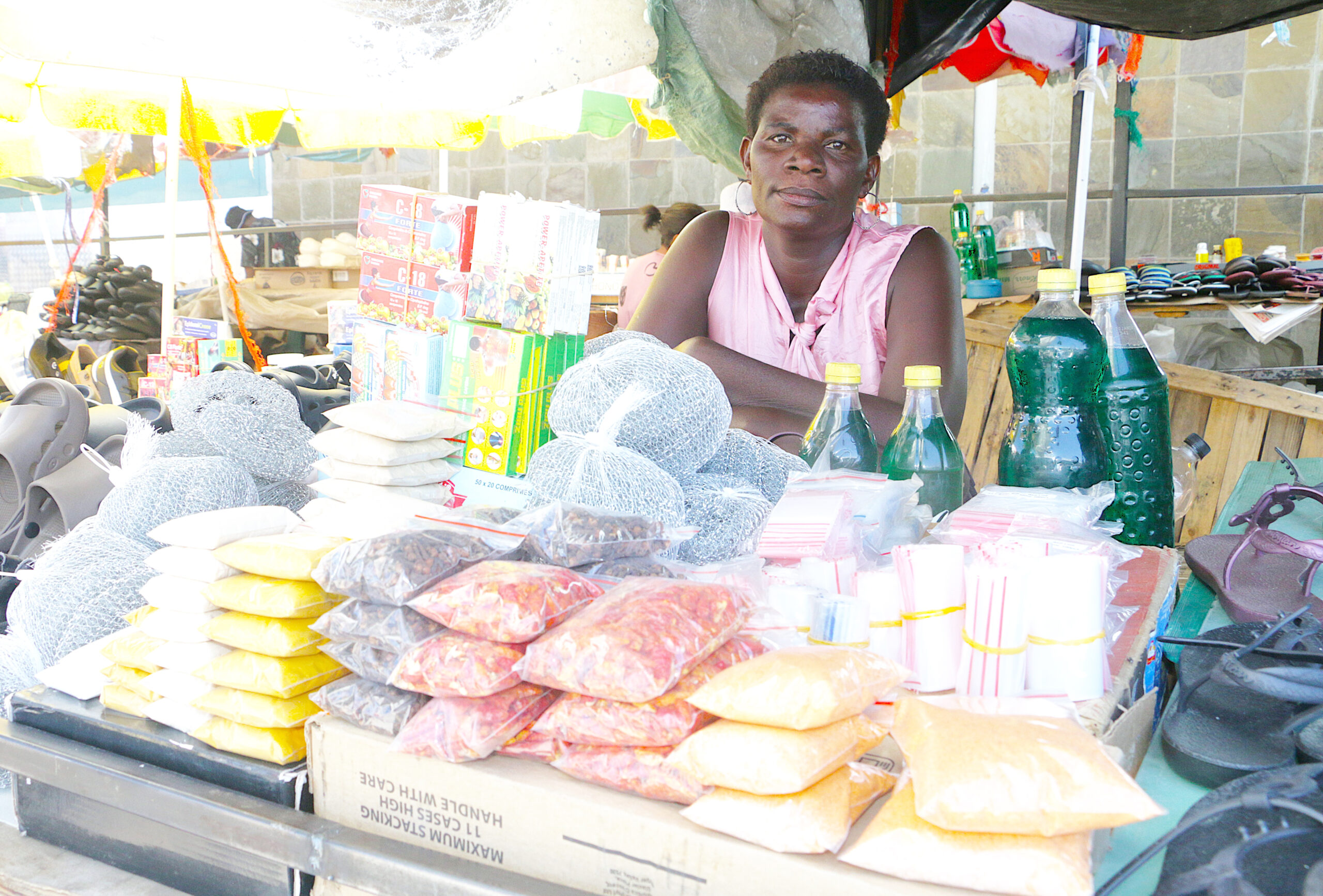

Stop n Shop, located in Okuryangava, is one of the busiest and most vibrant informal markets in Windhoek. It is a place full of life, noise, movement and survival. From early morning until late at night, the area is crowded with vendors, customers, taxis, and passersby.
Small stalls, tables, and makeshift shelters line the dusty pathways. Vendors sell a wide range of goods, including thrift clothes, fresh vegetables, fruit, meat, cooked food, cosmetics, household items, shoes, cleaning products, and more. Music plays from nearby shops, people call out to customers, and the smell of food fills the air.
The market is known for its competitive spirit. Everyone wants to attract buyers, so sellers shout out specials, wave products in the air, or display their items in bright, eye-catching ways. Because space is limited, business owners stand shoulder-to-shoulder, sharing the same challenges.
Despite its energy, Stop n Shop is also a tough place to work. Vendors face the hot sun, wind, cold weather, and sudden rain without much protection. Many fear that City of Windhoek officials may confiscate their goods if they are found selling in the wrong spot. Still, they return every day, because their families depend on the income they earn here.
Among the many hard-working vendors is Anneli Nahole, a woman who has been pushing through life’s hardships for more than two decades at Stop n Shop.
“I failed in Grade 10 in the year 2000, then I decided to drop out of school and join my brother in the hustling business. Things were difficult at home. I had no job, things were not going well,” she said.
Her first products were trotters, eggs, and fried liver. Back then, she bought trotters for N$6 each and sold them for a small profit. She continued for years, even when the price later increased to N$10. Still, she did not give up.
After some time, she noticed her sister doing well with different products. That inspired her to try new things, too.
“I started selling sausages and other items. Then I decided to take a loan of N$2 000 from a woman who had a cash loan. The interest was N$30 on every N$100,” she said.
She used the money to buy eggs to start a new line of business. But things quickly took a bad turn. “One day, there was chaos at the market. The police came and removed everyone from the area. I could not sell my eggs. That same day, my daughter got sick, and I had to rush her to the hospital. By the time I came back, the eggs were spoiled,” she said.
The loss left her in deep trouble. She still had to repay the loan, but she had lost all her stock. “I had no choice. I had to keep selling whatever I could so I could pay off the loan,” she said.
Her fellow vendors encouraged her not to give up. She listened to them and kept going.
“I started thinking maybe I should try something new again. So, I began selling shoes, dishwashing liquid, cosmetic products, and many other things,” she said.
Like any other business, she faces challenges and sometimes business is slow, but she keeps on pushing.