

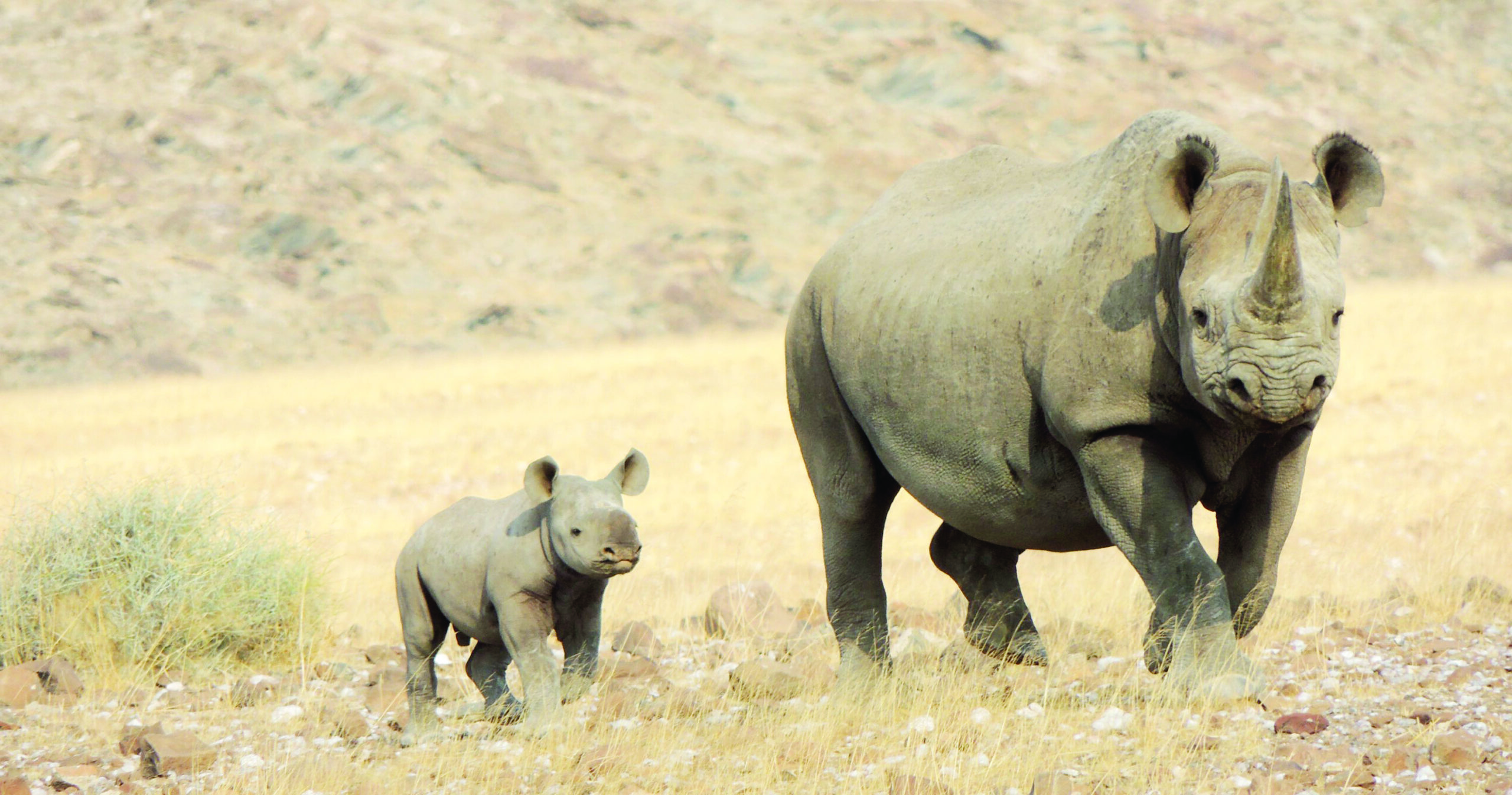

Namibia’s long-running proposals for international trade agencies and organisations to reduce and, in some instances, entirely lift trade barriers for black and white rhino horns were overwhelmingly rejected at the recent 20th UN Convention on International Trade in Endangered Species meeting in Uzbekistan.
In its proposals, Namibia has for years been calling for amendment to the current rules and trade ban of black and white rhino horns on the international market, which Namibia believes would make it easier to trade rhino hunting trophies as well as government-owned stockpiles of white and black rhino horns.
But the gathering in Uzbekistan argued that had Namibia succeeded in downlisting black rhinos from Appendix I to Appendix II and amending the Appendix II listing for white rhinos to ease trade restrictions, the possibility of renewed future trade from Namibia could increase demand for rhino horns generally, incentivise increased supply, leading to a rise in poaching. Both proposals for the black rhino and for the southern white rhino were rejected, with only around 30 votes in favour of Namibia and 120 against. For a proposal to go through, a two-thirds majority is required.
Appendix I is the highest level of protection in international trade, while Appendix II listing imposes restrictions on international trade.
Appendix I is for species threatened with extinction because of trade, and prevents commercial international trade except in exceptional circumstances, while Appendix II allows trade under special conditions and is for species which may become threatened with extinction unless trade is subject to strict regulation.
Appendix II controls include permit requirements and a science-based determination that the export will not negatively affect a species’ long-term survival in the wild.
Namibia has become a stronghold for rhinos in Africa, with the second largest rhino population on the continent estimated to be over 4 000, which includes the largest population of black rhinos and the second largest population of white rhinos in all of Africa.
According to statistics from the Humane World for Animals agency, more than 10 400 African rhinos were killed by poachers between 2008 to 2020, of which 382 were killed in Namibia. Of that number, 70 were white rhinos, while it is estimated that 226 black rhinos were killed in Namibia between 2021 and 2024.
International market
Rhino horns are prized in traditional Asian medicine and are also status symbols in China, Vietnam, and some other Southeast Asian countries.
Black rhinos are listed as a critically endangered species by the International Union for Conservation of Nature (IUCN). In 2023, there were only 6 421 alive – a decline of more than 90% since 1960, according to an IUCN report.
The southern white rhinos are not in quite such danger – they are listed as nearly threatened, with a population of 15,752. But this is down 11% since 2023 and at its lowest point since the current rhino poaching crisis began nearly two decades ago.
Cites banned trade in the horns and other rhino parts in 1977, but their poaching continued, with more than 8,000 lost in the last decade, according to Save the Rhino International.
Although this was the first time that Namibia tabled the two proposals seeking the lifting of the ban on the rhino horn trade, the country has backed similar proposals by other southern African countries, including South Africa, Eswatini and Zimbabwe in the past.
The main reason why these countries have rapidly growing stockpiles of horns is believed to be the dehorning programme.
“Namibia and other pro-trade rhino range states have amassed large stockpiles of rhino horn they wish to trade. Namibia’s stockpiles are an estimated 6.45 tonnes of white rhino horn and an estimated 4.6 tonnes of black rhino horn. South Africa, on the other hand, likely has at least four times as much,” Taylor Tench, senior wildlife policy analyst with the Environmental Investigation Agency, told the gathering.
The idea is that if a rhino does not have a horn, it is of no value to poachers and so won’t be killed.
The horn is removed above the growth plate, just like humans cutting their nails, which means it is painless. But it also means that the horns grow back and need to be sawn off repeatedly.
As a result, their stockpiles are rapidly accumulating. “The reason for not destroying the horn is speculative stockpiling, by both governments and private individuals,” added Tench.
“Some countries, like Kenya, destroy their rhino horn stockpiles, while others, like Namibia and South Africa, stockpile the horn in the hopes of cashing in if international trade is ever legalised.”
– ohembapu@nepc.com.na