


Iuze Mukube
When we speak about human rights, particularly the right to access, we cannot depart from the foundational role of language.
These were the sentiments of Martin Matsuib, coordinator of the Namibian Education Coalition of Civil Society Organisations (NECCSO) and secretary general of Endangered Languages Association of Namibia (ELAN).
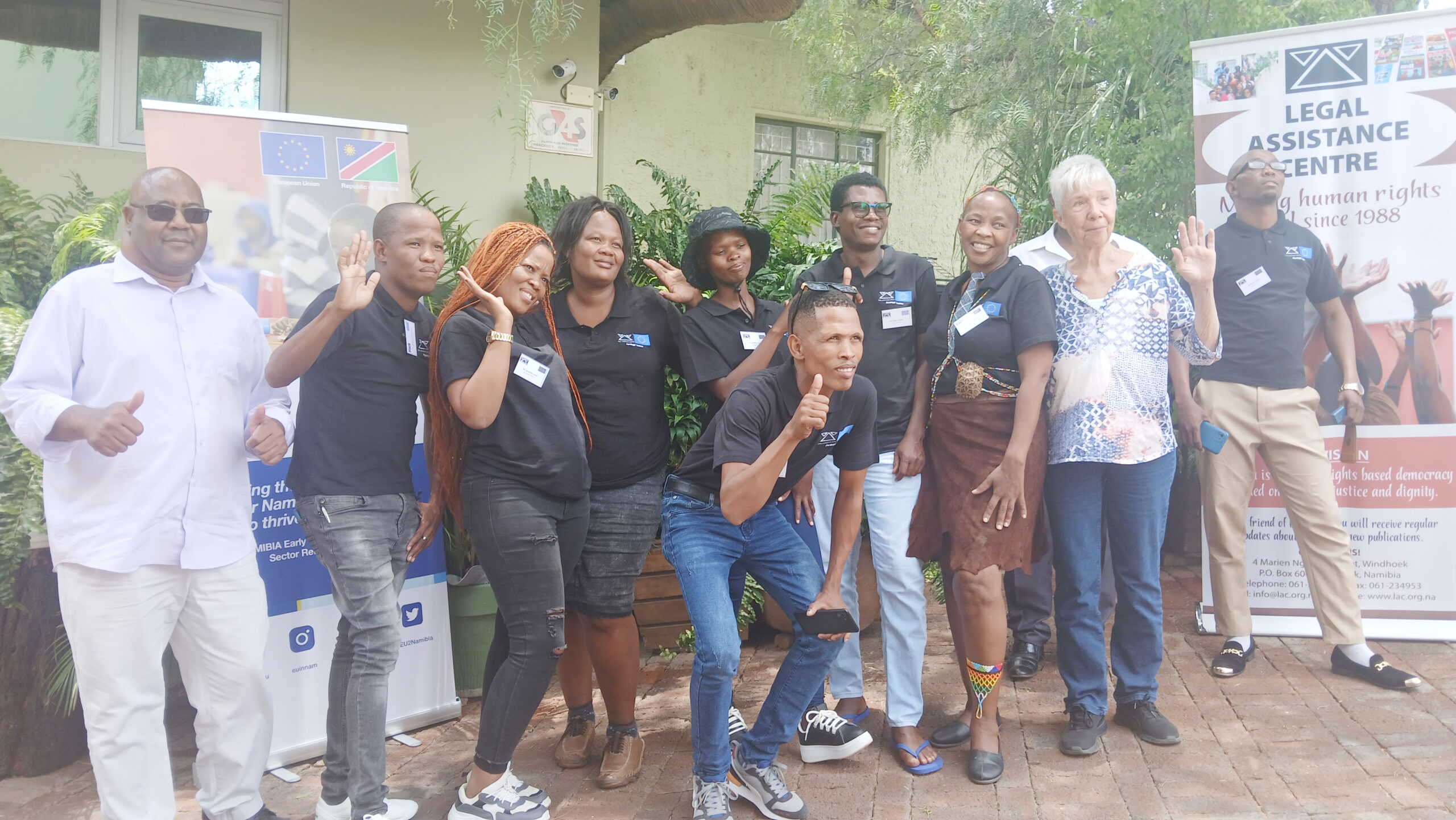
Speaking during a Human Rights Day workshop hosted by the Legal Assistance Centre (LAC) supported by the European Union (EU), Matsuib expressed that language is not merely a tool for communication. He stated that it is a core human right that shapes identity, preserves culture and enables individuals to participate meaningfully in society.
Matsuib said without language rights, the ability to access justice, education, healthcare and public services becomes severely limited.
The event took place on Wednesday in Windhoek under the theme “Empowering San Communities: Legal Capacity Building for Human Rights Access”, with attendees comprising San trainee paralegals. Matsuib stated that language is the key to inclusion because “When you lose your language, you have lost what you are, and you will not have identity, you are somebody else.”
Matsuib stated that most languages are in a state of extinction due to children not practising these languages, and most learners have dropped out of school because of learning other languages as their mother tongue instead of their own.
This will ensure that children are skilled in reading and writing in their mother tongue and able to explicitly express their complaints, concerns, and needs.
In this sense, language is a gateway right, and it allows all other rights to be realised in practice. He emphasised that language rights and San languages in particular matter for human rights and paralegal work, because it expose an individual to being included in accessing their rights regardless of the language they speak.
Liz Frank, Director of Women’s Leadership Centre (WLC), also spoke on the importance of capacity building for the San people in every facet of life. She stated that stereotyping the community members while ignoring the generational trauma that they experienced, the same as the Nama and Damara people during colonial times, is to take away the process of healing.
She stated that generational trauma is inherited pain and issues that affect the community are direct consequences of unresolved generational trauma in indigenous communities. The WLC, she said, is amplifying the voices of San people and other ethnic groups through a policy brief that would hold the government accountable to the call for protection and promotion of all rights, particularly for women and girls across the country.
The San paralegals, identified from within their communities from Omaheke, Etosha and Tsumkwe, would serve as local resource persons for rights to education, community mobilisation and support in accessing justice.
Trainees, Hendrik Naoatu (Farm Blouberg), Kobus Kaiseb (Oshikoto Lake), Lorraine Hedwig Mukuyu (Otjiwarongo) and Desmond Tumalano (Omaheke region) all expressed challenges the San in various clusters experience daily, such as on education, safety and protection [GBV], and discrimination.