


Adolf Kaure
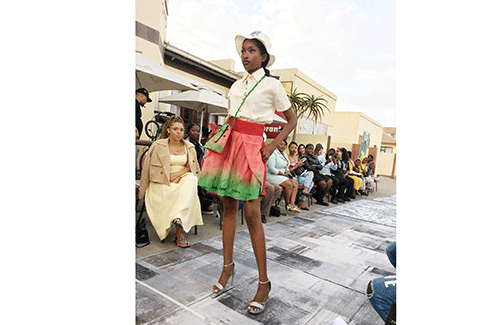
The 2025 Swakopmund Fashion Week (SFW) left fashionistas and fashion lovers mesmerised by the dazzling display of an array of stunning garments.
From start to finish, the event, which took place from 4 to 6 December, showed immense talent.
According to organiser Christ Laolange Shameulu, the showstopping event was a resounding success and an improvement from previous editions.
“This year’s edition appeared more ambitious. The programme expanded beyond just runway shows to include performances and networking events,” she said. “There was a stronger emphasis on sustainability, mentorship, and market access, signaling a shift from purely showcasing fashion to building infrastructure that supports talent growth, collaboration across borders, and real economic opportunity,” she added.
He said, this time around there was inclusion of designers from outside the country as South African and Botswana designers showcased their fashion.
“This points to increasing regional and international participation, which enlarges the platform and reach compared to earlier, more local‑focused editions,” said Shameulu.
The event was hosted at the Deutsches Haus Hotel, providing an unforgettable experience of haute couture, which blended culture and modern fashion.
The SFW positioned itself not just as a fashion show but as a celebration of Namibian and African identity, integrating heritage and contemporary design.
Mentorship opportunities
The event enabled mentorship, allowing young designers to develop and market their garments and learn from their peers.
One of the young designers is Enos Angula (18), a fashion design student at COSDEF Arts and Crafts Centre in Swakopmund.
He described the mentorship he received from his instructor, Kim Matheus, as helpful. “She showed me how to clean up my sewing, how to think deeper about my designs, and how to trust my own ideas. She really helped me grow,” said Angula.
“Because of her, I was more confident making my garments. She guided me on fabric choices, colours, and ensuring everything fits the theme. She also helped me stay focused and consistent, so the outfits came out clean and well-put-together for the show,” he added.
The fashion trainee added that despite various challenges, it is possible to be a sustainable designer in Namibia.
“It is not always easy, but it’s definitely possible. You just have to be creative with what you have. Namibia is still growing in the fashion industry, but people are increasingly supporting local designers. As long as you are original and you stay hungry, you can make it work,” said the budding designer.
Sustainability of fashion in Namibia
The Simply You Magazine Fashion and Lifestyle Awards Fashion Designer of the year, Kaino Matheus, affectionately known as Kim Matheus in the fashion industry, is also a level 2 fashion design instructor at the COSDEF Arts and Crafts Centre in Swakopmund. She said more needs to be done to professionalise the fashion industry in Namibia.
“The fashion, textile, leather, and accessories sector urgently needs a dedicated national policy and regulatory framework. Right now, we operate under generalised national acts that do not fully address the specific needs, risks, and economic potential of our industry,” she said.“Hundreds graduate annually in fashion, textiles, leather, and accessories, but without an established industry structure, these graduates enter an environment that is not yet secure or well supported,” she added.
She lauded President Netumbo Nandi-Ndaitwah’s commitment for placing art as one of the eight key national priorities as an encouraging gesture. Still, she stressed that a more systematic approach is needed.
“It is an encouraging step, but as specialists in the fashion and textile sector, we believe deeper engagement is needed to ensure our industry is fully represented. Fashion, textile, and leather design are often grouped together with general creative expression, such as music, film, and visual arts, yet our sector has distinct needs, high economic output, and strong value-chain influence,” she said.
The fashion and textile sector support retail outlets like Chinatown, Chelsea, Mulungushi, and boutiques. It also promotes local production, cultural preservation, and jobs for tailors, designers, patternmakers, models, and leather designers.
Matheus further stated that, to implement the President’s vision of prioritising art’s needs, the right people from the fashion and textile sector are needed to achieve greater impact.
“Without our industry, the entire supply chain would weaken. Many businesses operate without national support systems, yet they survive solely on creativity and demand. A dedicated policy that reflects our needs is essential for growth,” said Matheus.
The Swakopmund Fashion Week will return next year, aiming to grow and meet newer heights. –akaure@nepc.com.na