

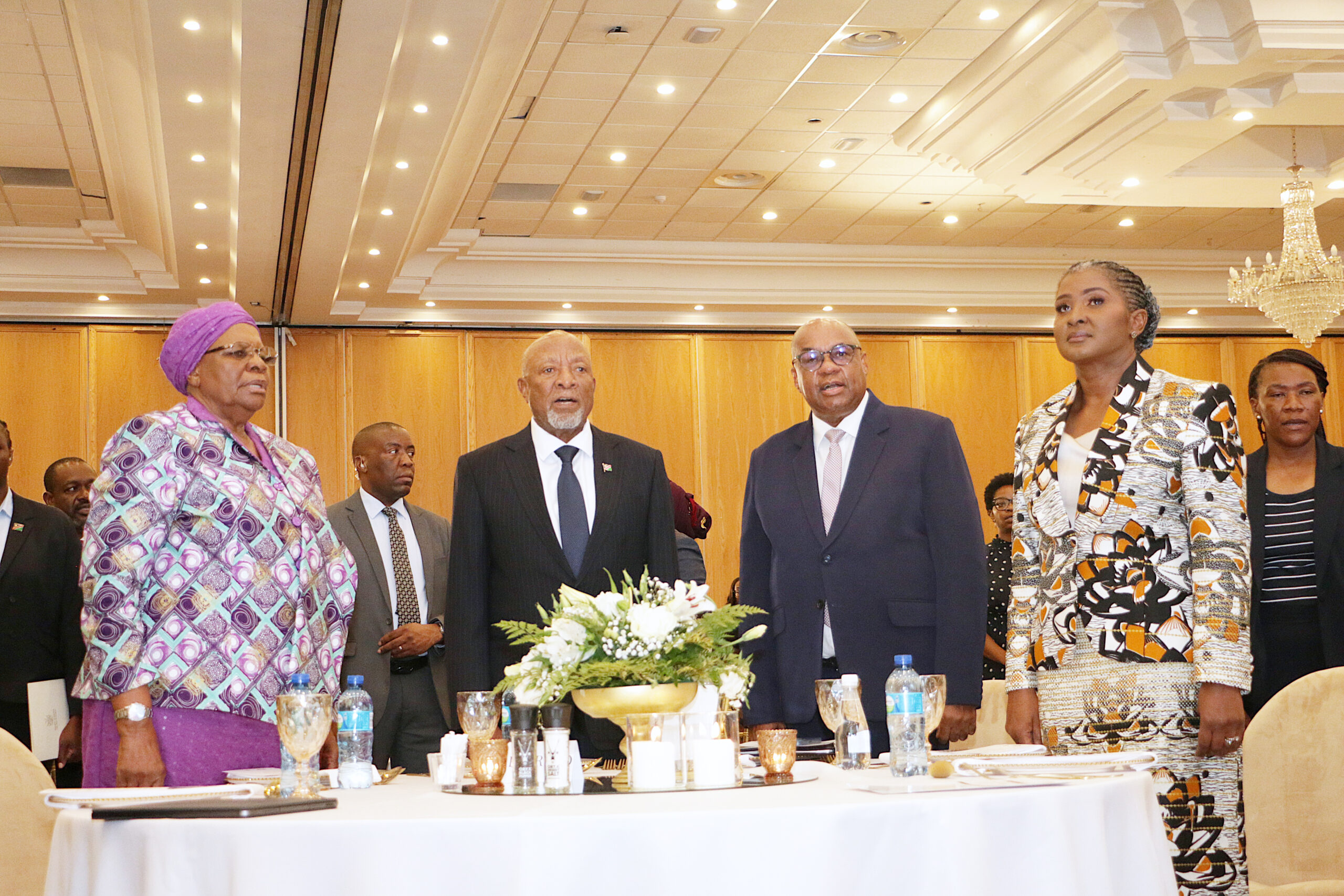

Outgoing Bank of Namibia Governor Johannes ǃGawaxab said the central bank is strong, stable, and well positioned for the future, following five years of turbulence, reform, and transformation.
Reflecting on his tenure, !Gawaxab said his time in office, which began in 2020 at the height of the COVID-19 pandemic, tested the country’s financial system in unprecedented ways. Namibia faced a global health crisis, economic shutdowns, climate shocks, rapidly changing technology, and rising global tensions. “When I took office, the economy did not slow down gradually. It collapsed overnight. That is when we knew this was not an ordinary recession, but a threat to the entire system,” he said.
In response, he said the central bank introduced bold relief measures, including a 250-basis-point cut in the repo rate, repayment holidays for borrowers, and relaxed liquidity rules for banks. He said quick and decisive action helped stabilise the economy and protect jobs and
businesses.
Under his leadership, the bank also focused on long-term reform. Three major laws were introduced: the Banking Institutions Act, the Payment System Management Act, and the Virtual Assets Act. These pieces of legislation strengthened oversight, promoted local decision-making within banks, modernised payments, and brought digital and crypto assets under regulatory oversight.
“We wanted a system that protects consumers, supports innovation, and keeps key decisions in Namibia,” he said.
BoN also advanced its digital transformation. An innovation hub was launched, and the country is preparing to roll out an instant payment platform to reduce costs and expand financial inclusion. As a result, the bank received a digital transformation award.
Transparency, wealth, accountability
Transparency became another key focus. The bank hosted its first-ever monetary policy dialogue, took policy announcements to regions, including Oshakati, and later won a transparency award. !Gawaxab said clear communication helps people and businesses plan and build trust in the central bank.
“Transparency is not extra. It is part of monetary policy,” he said.
During his tenure, the bank supported the establishment of Namibia’s sovereign wealth fund, the Welwitschia Fund, to manage future oil and gas revenues.
He said the fund is intended to protect the economy from instability and to ensure that future generations benefit from natural resources.
International cooperation was also strengthened through partnerships with central banks in Germany, Ghana, Kenya, and Zimbabwe. These partnerships helped train Namibian staff and share best practices.
At home, he travelled widely to engage with communities and explain the central bank’s role. He said many Namibians still confuse the Bank of Namibia with commercial banks, showing the need for continued public education. Financially, the bank performed strongly.
In 2024, it declared a record dividend of N$720 million to the government and helped support the repayment of a US$750 million Eurobond. !Gawaxab said this was driven by careful reserve management and improved investment strategies.
As he prepares to leave office, he said transparency, accountability, and central bank independence must remain non-negotiable. He also urged future leaders to embrace digital change and continuous learning. “The Bank of Namibia is well governed, culturally strong, and resilient. It is ready for the next chapter,” he said.
Colourful career
!Gawaxab was appointed Governor of the Bank of Namibia, the country’s central bank and national banking regulator, on 21 April 2020. He assumed his new office on 3 June 2020.
Early in his career, ǃGawaxab worked as an executive of Old Mutual, the South African-based financial services conglomerate. While there, he rose to CEO of Old Mutual Africa, a role he held for nine years.
In 2015, he retired early from Old Mutual and founded Eos Capital, a Namibian private equity firm with over N$500 million (US$30 million) in assets under management.
At the same time, he served on the boards of several parastatals and many private businesses, serving as the chairman, on most of them. The parastatals he chaired included the Namibian Social Security Fund and the National Petroleum Corporation of Namibia (Namcor), the government-owned oil and gas company.
As BoN Governor, ǃGawaxab replaced Ipumbu Shiimi, who was named the Finance Minister. In December 2021, !Gawaxab was reappointed for another five-year term, deputised by Ebson Uanguta and Leonie Dunn
-pmukokobi@nepc.com.na