
Mulisa Simiyasa
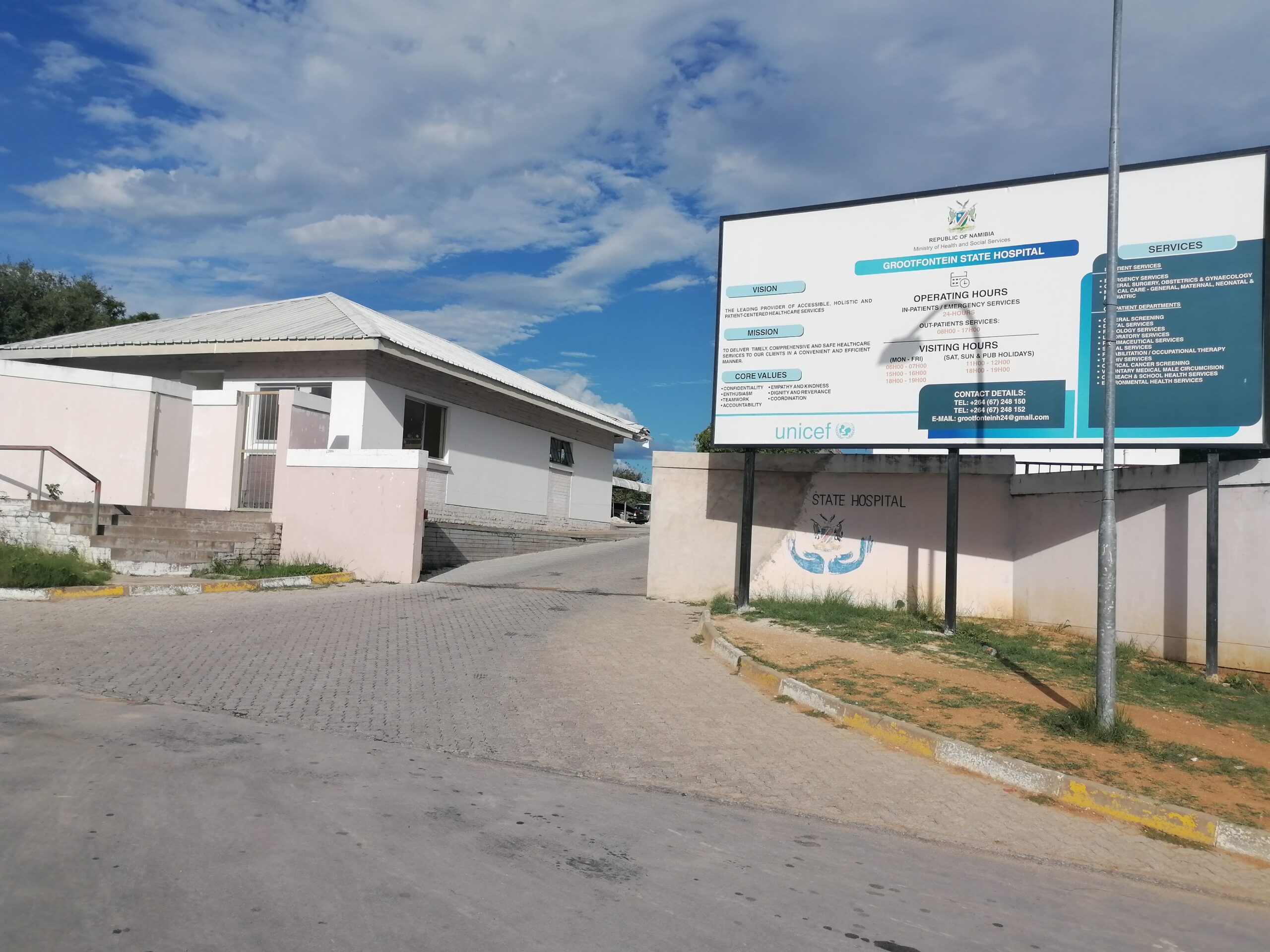
GROOTFONTEIN – Senior Medical Officer Dr Martinus Shaninga has expressed optimism regarding the eradication of cholera in the Otjozondjupa region following the establishment of a dedicated treatment centre at the Grootfontein State Hospital.
The new facility is designed to ensure all cholera-related cases are isolated and handled in a controlled environment, a move Shaninga believes will be the turning point in the local health crisis.
Speaking to Nampa recently, Shaninga confirmed that his team is effectively managing the outbreak. As of Monday, only two patients remained in quarantine, while all other positive cases had been successfully treated and discharged.
“There is no need for people to panic because of this outbreak. It is under control, as the Grootfontein State Hospital has all the needed resources to handle the disease. We are really hopeful, as we plan to intensify public awareness of the disease.
With Kap n Bou now having five taps and three 10 000-litre water tanks, we will manage,” he said. The outbreak originated in the Kap n Bou informal settlement, where the first case was recorded on 19 November 2025. Cholera, a bacterial disease typically spread through contaminated water, manifests as watery diarrhoea, vomiting, and muscle and joint cramps.
To combat the source of infection, the government has provided Kap n Bou with taps and water tanks that are regularly refilled to ensure a clean supply.
While the situation is stabilising, the scale of the initial spread was significant.
By 19 January 2026, the hospital’s disease surveillance office had confirmed 39 hospitalisations and 108 suspected cases.
The disease moved beyond its origin into the Soweto Location, Build Together, and Blikkiesdorp, eventually reaching the Juliana Government Resettlement Farm, located approximately 70 kilometres north of the town. Despite the spread, no fatalities have been recorded, and no transmissions have occurred among medical staff or hospital workers.
The response has evolved from a solo operation by the Ministry of Health and Social Services into a multi-sectoral operation. Last week, the Otjozondjupa Regional Council, the Grootfontein Municipality, and the security forces joined the fight.
Paulus Nekundi, the newly elected chairperson of the Otjozondjupa Regional Council, recently spent two days on-site conducting physical inspections.
Nekundi noted that, while the rapid increase in cases was concerning, the newly unified task force is focused on a two-step plan – total containment followed by complete elimination.
“We plan to contain it first and then eliminate the disease from our Grootfontein community,” Nekundi said during a briefing at the State hospital.
Grootfontein constituency councillor Nelao Amagulu, a member of the task force, noted that awareness campaigns in schools are a priority, ensuring that teachers and learners are sensitised to the symptoms and prevention methods. Awareness campaigns involve the distribution of leaflets that guide residents on how to care for the sick and maintain strict hygiene standards to prevent household transmission.
The impact of the efforts is visible among residents like 55-year-old Esther Shalihu, who noted that information about the outbreak is now “everywhere”, including on social media and at community meetings.
She said it is now normal practice in her house for people to wash their hands with soap and avoid shaking hands as advised by nurses.
However, some residents, such as Paulus Shipikita, remain concerned that free-roaming livestock in informal settlements may be contributing to the spread, calling on the municipality to impound animals.
Grootfontein mayor Morits Geingob acknowledged the systemic challenges facing the town, and noted that the current sewage infrastructure is severely outdated. Originally established in the 1960s to serve 3 000 people, the system is now under the pressure of a population nearing 40 000.
While the municipality has plans to extend sewage lines to Kap n Bou – a settlement Geingob himself helped create as an activist in 2017 – the current focus remains on immediate containment and managing the environmental factors that threaten public health.
-Nampa