

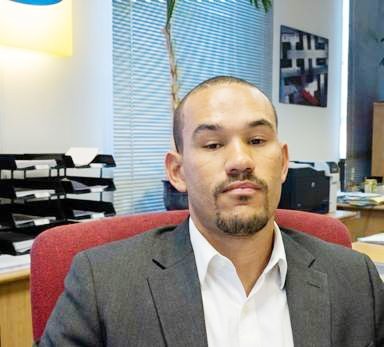

A senior accounting and financial advisor said industry experts and civil servants are dumbfounded and have been left searching for answers after what he called the dismantling of the government’s Payroll Deduction Management System (PDMS).
This was after the government last year decided to discontinue discretionary payroll deductions through the PDMS by 30 November 2025.
“The transition from a seamless digital platform to what is effectively a 1990s-era call centre marks a significant shift in Namibia’s technological trajectory.
In January 2026, the ministry of finance confirmed that no digital replacement system was ready to take over the functions of the now-defunct PDMS,” stated Mefflint de Waal, a senior accounting and financial advisor.
He added that the solution presented to the public is a “PDMS Helpdesk”.
Said De Waal: “A manual operation relying on mobile phones and human discretion to manage the complex financial enquiries of over 100 000 civil servants. This is not merely a process change; it is a fundamental step backwards in service delivery. Where automated rules once protected employees instantly, there is now “manual guesswork” and a high potential for administrative and human error. It also doesn’t fit in with Namibia’s drive and determination to become an ICT powerhouse in Southern Africa by 2030.”
Meanwhile, the government has stated that the discontinuation of the PDMS will not mark the end of salary-based repayment mechanisms for civil servants, as the Ministry of Finance has undertaken a review and consultations on alternative arrangements.
Finance ministry executive director, Michael Humavindu, late last year said the PDMS discontinuation was not punitive and should be seen as part of a longer process aimed at addressing over-indebtedness among government employees, procurement constraints, and regulatory concerns.
At the end of August last year, the finance ministry issued a directive informing government employees and financial institutions that all discretionary payroll deductions processed through the PDMS, operated by Avril Payment Solutions, would cease at the end of November. From that date, no new voluntary deductions were to be loaded onto the system, although existing loans already linked to PDMS would continue to be serviced until fully repaid.
Meanwhile, statutory deductions, including employee tax, pension, and social security contributions, would remain unaffected. Employees have been advised to use bank debit orders to service new loans, insurance premiums, union fees, and other voluntary financial commitments.
The phasing out of PDMS is expected to significantly alter how thousands of civil servants structure their finances and access credit. Lenders will now be required to conduct full affordability assessments and carry greater credit risk, as repayments will no longer be guaranteed through direct payroll collection.
At the time, Humavindu urged calm among affected workers, emphasising government is not “doing away with” payroll-linked repayment mechanisms altogether. He said the decision to discontinue followed earlier industry-led efforts to curb excessive borrowing by public servants.
“It does not help to provide loans to someone and that person ends up with N$15 after all deductions per month,” Humavindu said at the time, noting that industry players, together with the central bank and the ministry, had identified the PDMS as a contributor to over-indebtedness in the 2000s.
He pointed to the Enhanced Debit Order (EnDo) platform, introduced by the financial services industry in 2021, as a potential alternative. According to Humavindu, new loans should, in the interim, be processed through EnDo, which is open to all industry participants.
The ministry indicated that any current PDMS replacement system would have to comply with Central Procurement Board requirements.
The impact of the decision is already being felt across the financial sector. Agribank recently announced an immediate moratorium on salary-backed loans for government employees, citing the termination of services with Avril Payment Solutions.
Similarly, Letshego Holdings Namibia, along with its subsidiaries Letshego Bank and Letshego Micro Financial Services, suspended all new salary-backed loans to government employees in response to the ministry’s directive.
Meanwhile, the finance ministry intends to consult unions, financial institutions, and regulators while encouraging industry players to migrate to the EnDo platform. Humavindu added that work is also underway on a national consumer credit law, in collaboration with Namfisa, to better balance the interests of debtors and creditors.
Local economists and lenders expect loan approvals to tighten, particularly for lower-income and rural civil servants as lenders adjust to higher risk. Interest rates and fees may also rise, potentially making even small loans more expensive under debit order arrangements.
-pmukokobi@nepc.com.na