


Pricilla Mukokobi
Edgar Brandt
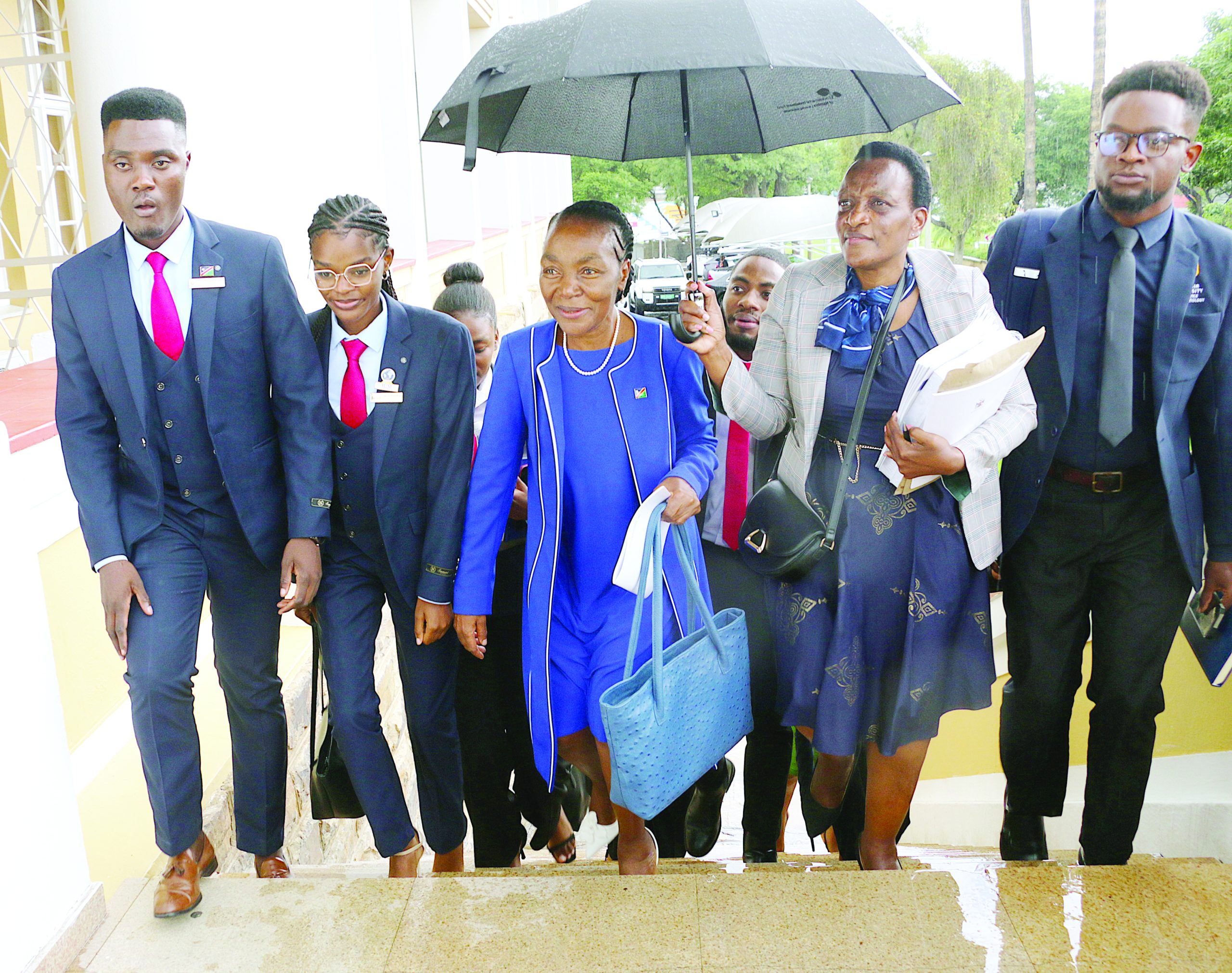
Many Namibians expected yesterday’s national budget, tabled in the National Assembly by Finance Minister Ericah Shafudah, to focus on economic sustainability, personal prosperity, social safety nets and the country’s self-reliance.
When reading her 2026/27 budget speech, Shafudah admitted that drawing up this national appropriation bill was not an easy task as she had to delicately manoeuvre constrained fiscal space to focus on the theme of “People, Productivity and Prudence”.
With total expenditure for the 2026/27 national budget at N$105 billion, some of the most notable allocations by Shafudah included N$28 billion for Education, Innovation, Arts and Culture (including N$2.8 billion for subsidised tertiary education).
It also included the N$13.1 billion for Health and Social Services, N$8.1 billion for the Ministry of Home Affairs, Immigration, Safety and Security as well as N$12.8 billion for the finance ministry that includes N$447 million to cater for a N$100 increase in pension for the elderly, effective from 1 April 2026.
An additional N$58 million was allocated towards the improvement of the salary structures of political office bearers, and N$140 million for contingency provisions.
“This budget is about restoring balance, between ambition and affordability, between growth and stability, and between today’s needs and tomorrow’s obligations. The choices before us are difficult, but they are necessary,” said Shafudah.
The finance minister continued that this budget prioritises macroeconomic stability, debt sustainability, and value for money, while protecting critical social and economic investments.
“Through disciplined budgeting, improved project selection, and outcome-based spending, the government is laying the foundation for sustainable growth and job creation during the current MTEF (Medium-Term-Expenditure Framework) period 2026/27 to 2028/29,” said Shafudah.
Addressing tax policy, the minister outlined a number of improvements and amendments, including adjusting income tax brackets to reduce fiscal drag and improve fairness.
Adjustments
The finance ministry also intends updating personal income tax rates and thresholds to ensure continued progressivity and adequacy of revenue over two financial years.
Minister Shafudah also emphasised that Special Economic Zones (SEZ) will be reviewed and updated for the introduction of tax incentives to
ensure they deliver on intended investment and job creations.
She also mentioned that the Petroleum Income Act will be amended to address new developments in that sector while Namibia’s Value Added Tax (VAT) legislation will be amended to bolster key priority sectors, such as agriculture input imports and the creative industry. Additional tax measures include modernising the VAT Act and implementing e-invoicing to improve legislative clarity, enhance compliance, and reduce fraud.
Meanwhile, some of the other main budgetary provisions across the different sectors and programmes in the 2026/27 Appropriation Bill include the Social Sector, that encompasses education, health, social safety nets, and youth empowerment and remains the largest area of government spending.
“For the 2026/27 FY, this sector is allocated N$54.3 billion, accounting for 61.7% of the total budget, excluding Interest Payments. The prioritisation of education and health in this budget reflects the government’s firm commitment to the objectives of NDP6 (National Development Plan 6). These investments are strengthening human capital, improving productivity, and supporting inclusive growth,” Shafudah added. In addition, the overall budget deficit is expected to decrease to 5.5% of GDP in FY2026/27, gradually narrowing to 3.8% in FY2027/28 and reaching 3.3% by FY2028/29.
“The total government debt is projected to increase from N$174.6 billion (which constituted 65.2% of GDP) in FY2025/26 to N$217.3 billion by FY2028/29. Total debt as a percentage of GDP is projected to stabilise around 67.5% throughout the MTEF period. Domestic debt constitutes the majority, bolstering financial stability, while foreign debt, though moderate, plays a crucial role in diversifying funding sources.”
Political reactions
Leader of the Affirmative Repositioning Movement, Job Amupanda, said it was the first real chance to see the minister’s own direction in a budget presentation.
“We wanted to see the Shafudah touch. But we don’t want to commit ourselves before reading the details,” he said.
He also welcomed the minister’s plans to check if projects are ready before they are actually added to the development budget.
“In the past, projects were listed and stayed there for 10 or 20 years without being done. Now they say they will check feasibility, costing and readiness. That is a good thing. It shows they are listening,” Amupanda added, emphasising that a budget speech only provides a broad picture. Information minister Emma Theofelus described the budget as people-centred and forward-looking.
“It is a budget that focuses on people, productivity and prosperity. It gives us an opportunity to advance our national plans and bring us closer to Vision 2030,” she said. Also providing his first impression, Works and Transport Minister Veikko Nekundi welcomed the budget. “It speaks to the social advancement of our people and the economic development of our country. It will help uplift people from poverty and support the growth of young people and the economy,” he said.
Nekundi added that the budget is expected to address challenges faced by civil servants, including through salary adjustments. “I think it is a good budget. Now it must be implemented with urgency so that ordinary people can feel its impact, whether through infrastructure or social services,” Nekundi stated.
Photo: Heather Erdmann