


Reparations are meant to acknowledge and repair the causes and consequences of damages, human rights violations, wars, or genocide.
Material reparations, therefore, refer to tangible, economic, or physical measures provided to victims, communities, or nations to redress past wrongs.
Unlike symbolic reparations, such as apologies or monuments, material reparations involve measurable assets or services intended to repair the economic, physical, or social damage endured by the victims.
Symbolic reparations are non-material measures by governments or institutions to acknowledge past harms, often through public actions like memorials or museums, including educational activities.
They aim to restore victims’ dignity and promote truth instead of financial compensation, seeking to heal affected communities.
This includes commemorations that memorialise historical truths essential for addressing the non-material “moral” injuries of mass atrocity or genocide, which money cannot fix. They acknowledge past wrongs, facilitate social healing, foster solidarity, and help repair social fabric alongside material reparations to prevent future injustices.
While material reparations like money and housing meet immediate needs, symbolic reparations heal moral, physiological, and social wounds of genocide, turning memory into a tool for peace and reconciliation.
However, if not implemented properly, they can seem like empty gestures.
Fact is, Germany falls short of its reparatory justice in terms of material and symbolic reparations of the historical atrocities for the 1904-1908 genocide of the Ovaherero and Nama people.
Building reparations framework
After a pause in negotiations from 1904-1908 genocide, the Namibian government now actively prepares to seek reparations from Germany if they decide to pay for the Ovaherero-Nama genocide.
Building a credible genocide reparation framework needs a comprehensive, victim-centred approach that combines material compensation, structural reform, and restorative justice.
It should address root causes, enduring effects, socio-economic inequalities, and political marginalisation, focusing on restitution, rehabilitation, and guarantees of non-repetition rather than a paternalistic bureaucratic process.
Programs for reparations should involve victims actively to ensure measures meet their needs.
Victims or their descendants must give informed consent to ensure the process serves them, not political goals.
The claim
A genocidal intent is well-established. Ovaherero and Nama communities, as genocide victims, strongly seek material and symbolic reparations from Germany to restore dignity and validate their suffering, beyond mere monetary payments. Victims’ needs should take precedence over political convenience, or reconciliation will remain elusive.
Modalities
Modalities for genocide reparations must be prompt, adequate, and appropriate to the gravity of the violations. This would “repair the irreparable” by addressing the psychological and social damage caused by genocide. These are critical for the closure of this gruesome chapter of our history.
Modalities of genuine genocide reparations include legal, financial, and symbolic measures to repair harm caused by genocide.
Under international law, they aim to provide restorative justice to victims and communities, focusing on restitution, compensation, rehabilitation, satisfaction, and non-repetition guarantees.
Reparation in international law is a state’s obligation to fully redress harm caused by wrongful acts, aiming to restore the situation as if the act hadn’t occurred. Any breach automatically requires reparation. These rules apply to disputes between states, non-state entities, and individuals, including those in occupied territories or affected by violations. The 1928 Chorzów Factory case established that reparation must “wipe out all consequences of the illegal act.”
Reparations are a victim’s fundamental right and legal obligation, not just a voluntary gesture, aiming to restore victims to pre-atrocity conditions. The German state must adopt key reparations, essential for genocide closure. Victims deserve dignity and equitable reparations, not merely general aid.
Namibia-German genocide negotiations have lasted 11 years with no meaningful results or parliamentary action. Reparations must be made promptly.
When governments settle without affected communities, results are often unsatisfactory. Long delays diminish reparations’ impact, sometimes taking decades.
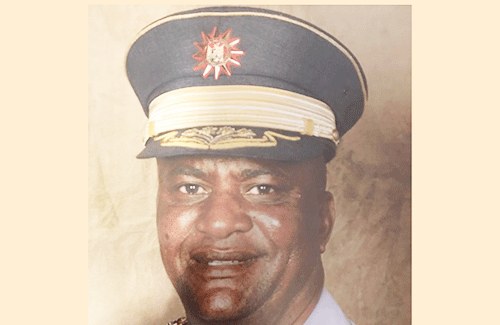
*Maj. Gen. (Rtd) J. B Tjivikua is a descendant of victims of the 1904-1908 genocide.